Written water test
Grain count, iron, and chlorine readings
Whole-House Water Filtration Diamond Bar CA treats every gallon that enters your home, not just the kitchen sink. Diamond Bar sits on some of the hardest water in Los Angeles County, and that mineral load leaves spots on glassware, shortens water heater life, and clogs fixtures. We size, install, and service whole house water filtration system Diamond Bar CA setups for homes and small commercial buildings across the 91789 and 91765 ZIP codes.
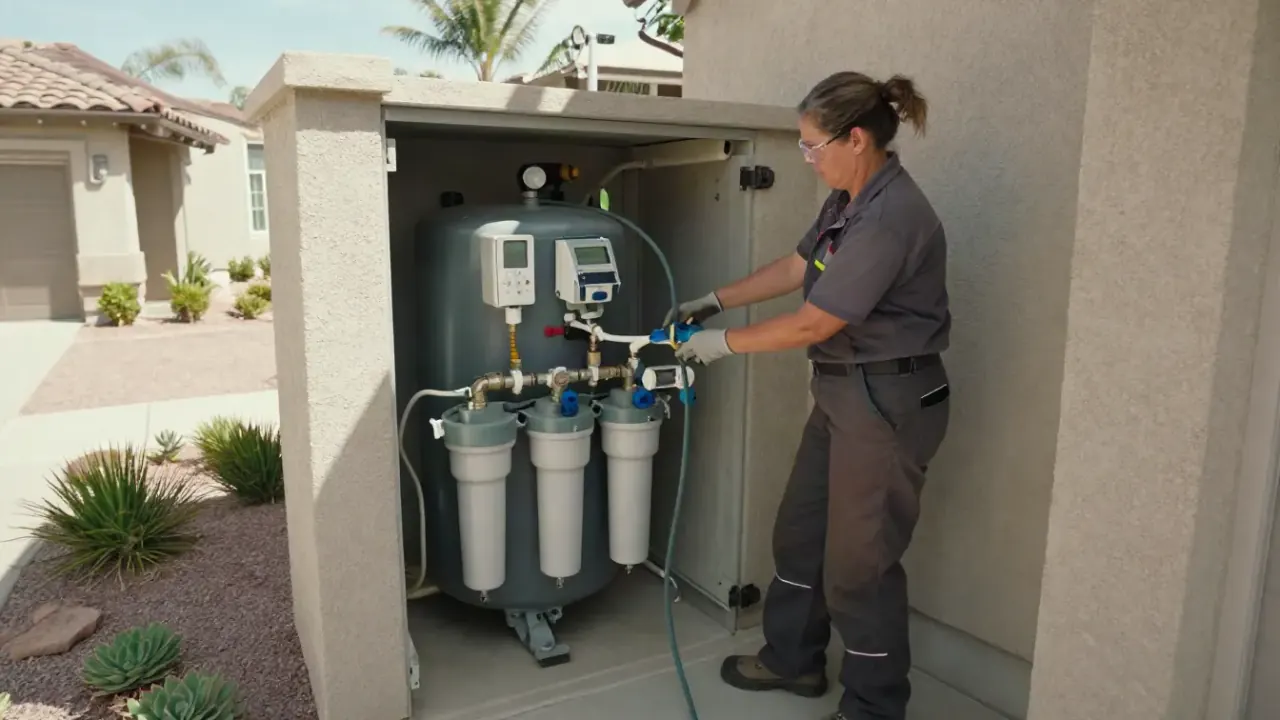
Every whole-house installation covers the equipment, the main line tie-in, startup, and a walkthrough. We handle the full job from water test to first regeneration. Add-ons like reverse osmosis or a second resin tank are quoted separately once we see your test results and household demand.
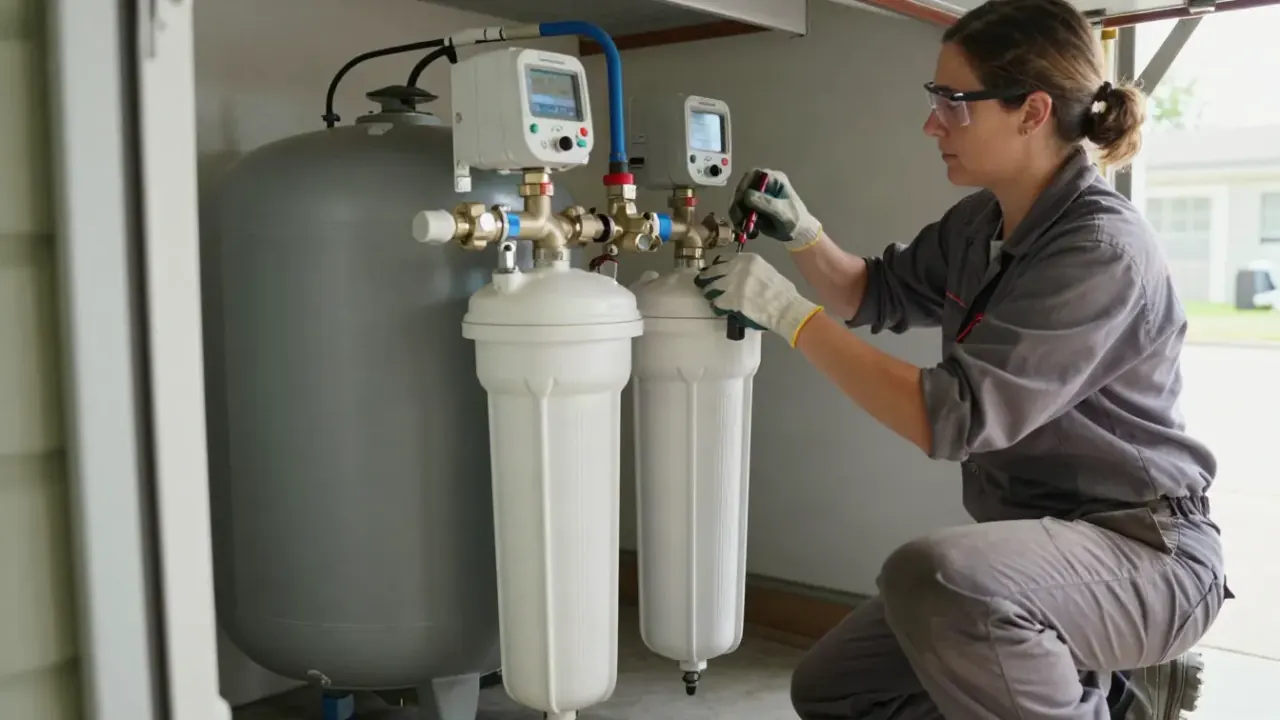
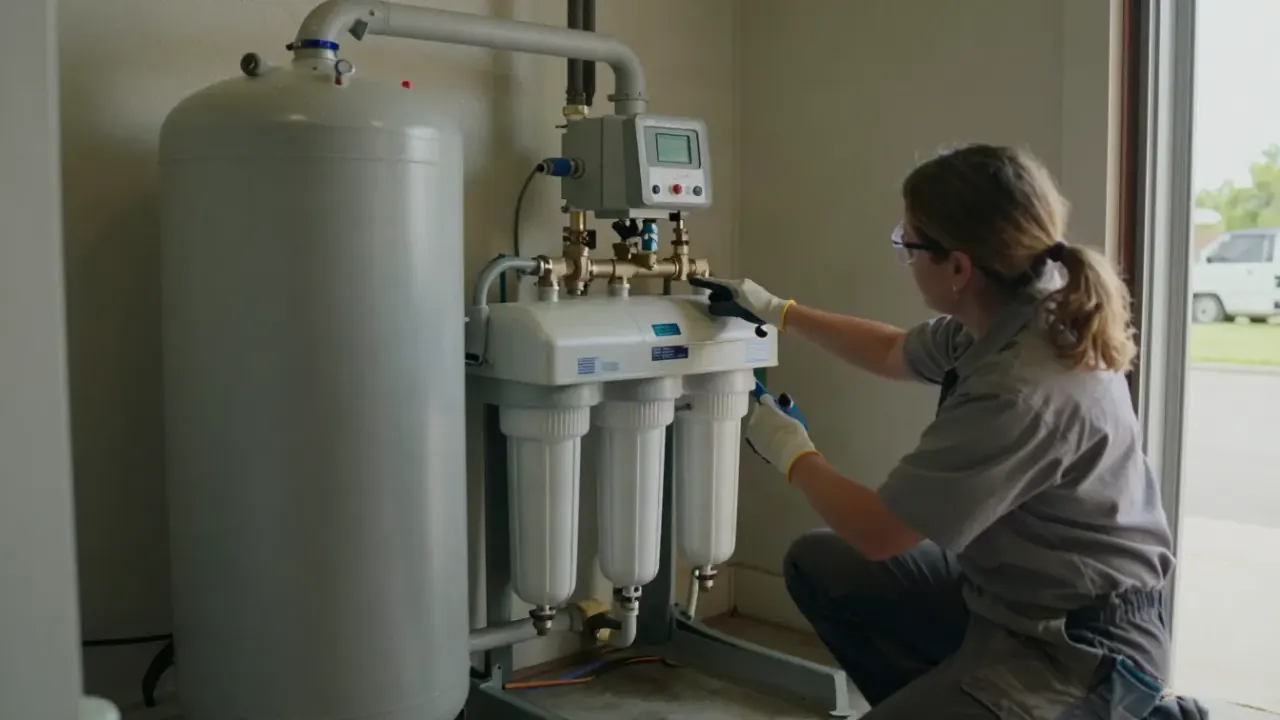
We install whole-house systems for homeowners and renters across Diamond Bar. Every job starts with a main line water test so the tank and valve match your household.
We set up filtration for property managers and small commercial buildings in the Diamond Bar area. Systems get sized for peak demand so tenants and staff get treated water at every fixture.
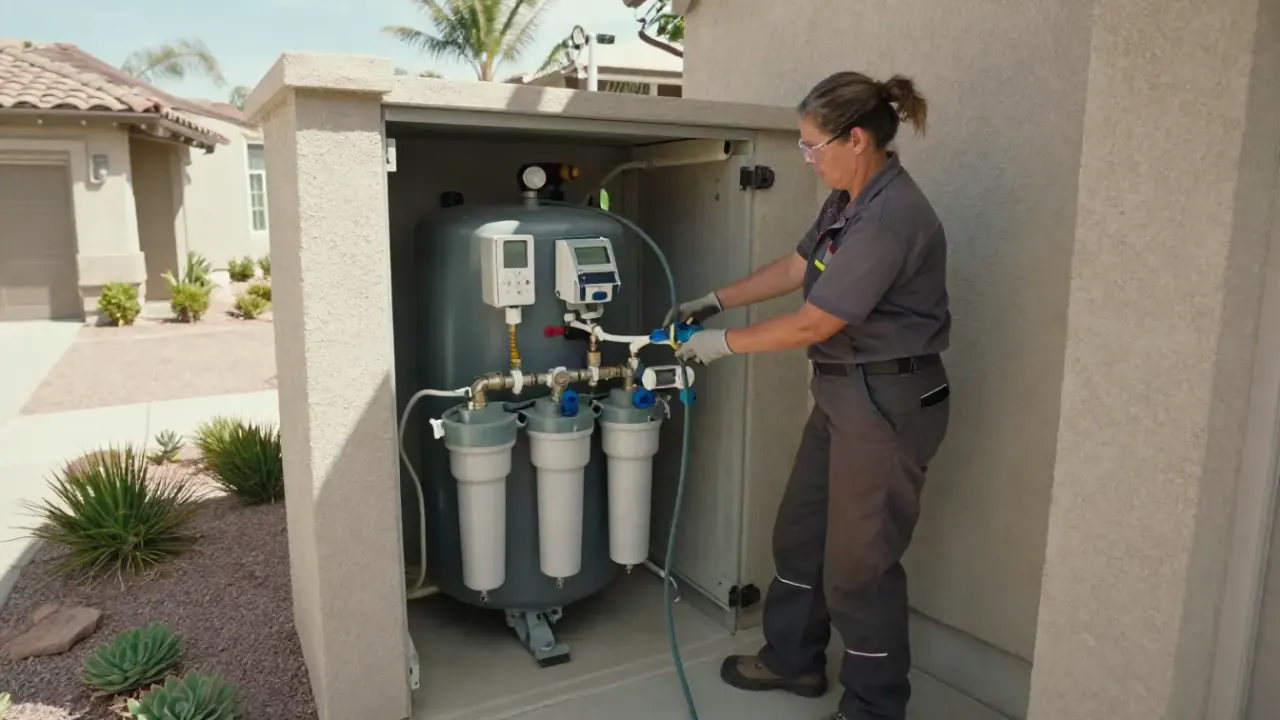
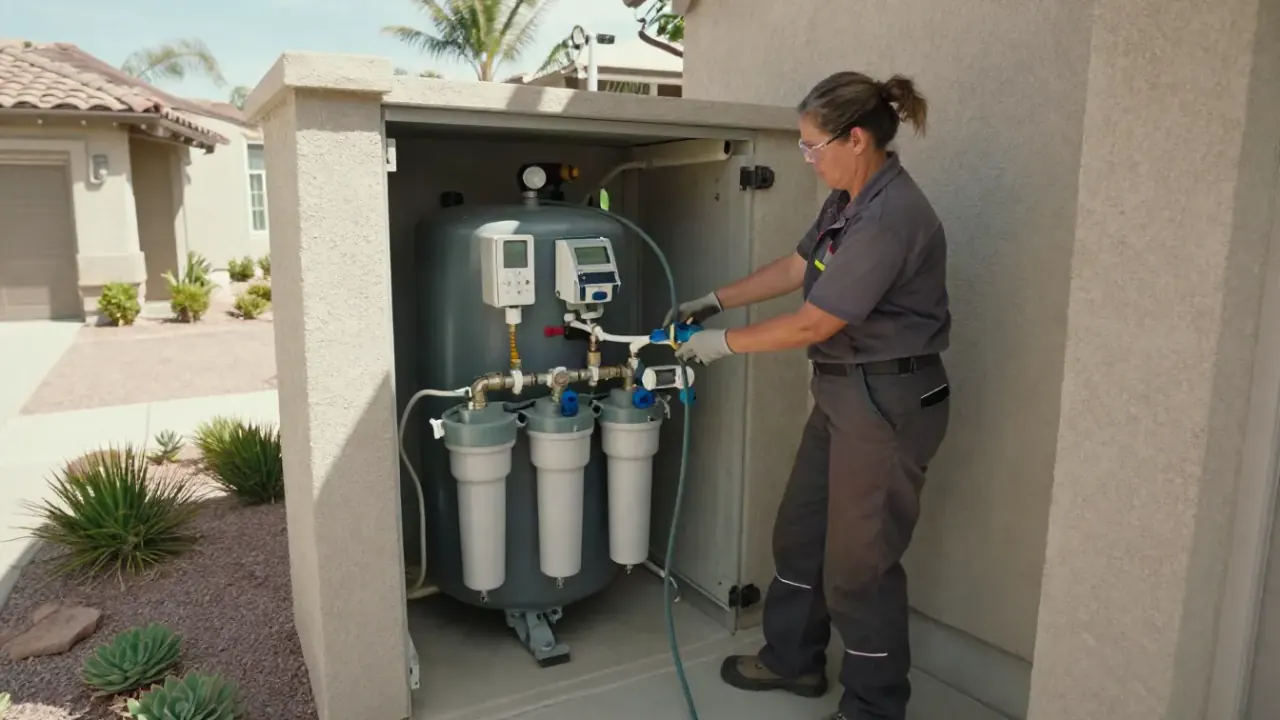
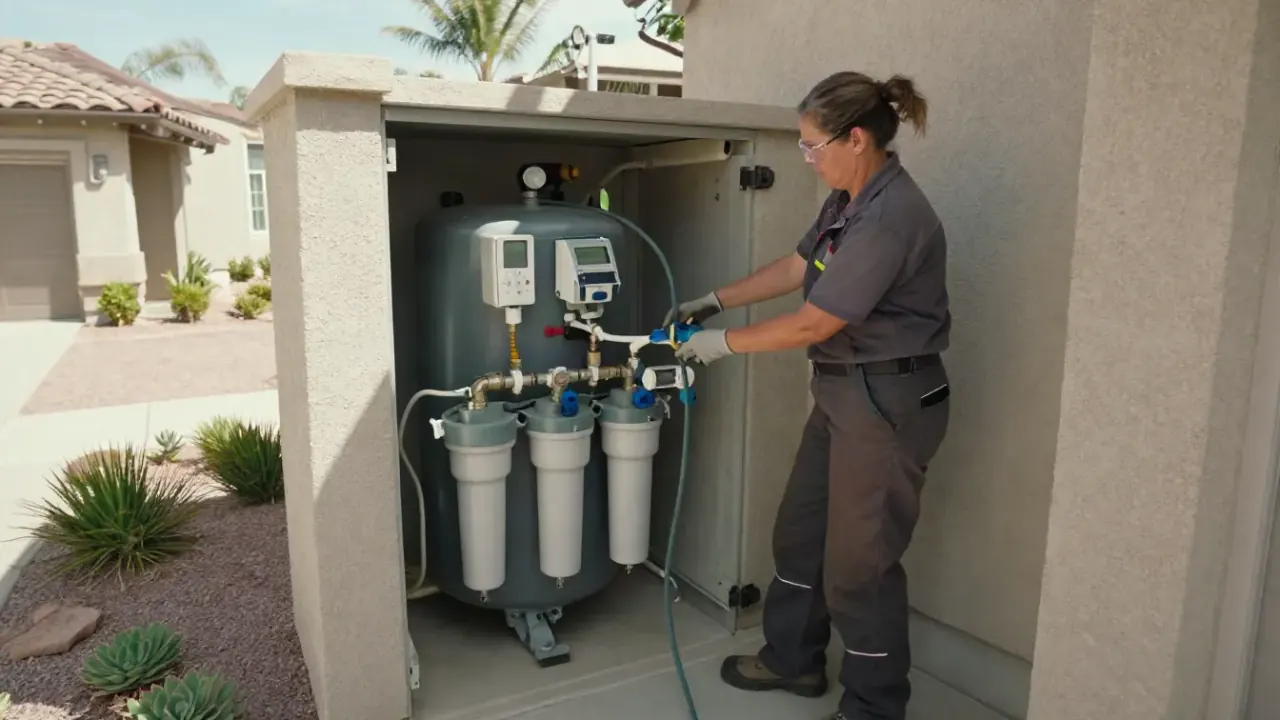
Whole-House Water Filtration Diamond Bar CA is a point-of-entry treatment system that removes sediment, chlorine, and hardness minerals before water reaches any faucet, shower, or appliance. A typical setup pairs a sediment filter and carbon filter with an ion exchange resin tank, a brine tank, and a control valve that regenerates on a set schedule. Water enters the unit at the main line, passes through each stage, and exits conditioned and filtered. Everything downstream, from the water heater to the ice maker, gets treated water.
Diamond Bar homes pull from a mix of imported Colorado River water and local groundwater, and that blend runs 12 to 18 grains per gallon of hardness. That is hard enough to scale a tankless water heater in under three years. A whole home water filter near me Diamond Bar search usually starts after someone replaces a second failed faucet cartridge or scrubs another round of hard water spots off the shower glass. If you are pricing whole house water filtration cost Diamond Bar, the number depends on tank size, valve brand, and whether you add softening.
We test the water first, then size the system to what your home actually needs.
Every installation follows the same five stages. Most single-family jobs in Diamond Bar finish in one day, and we walk you through the control valve settings before we pack up.
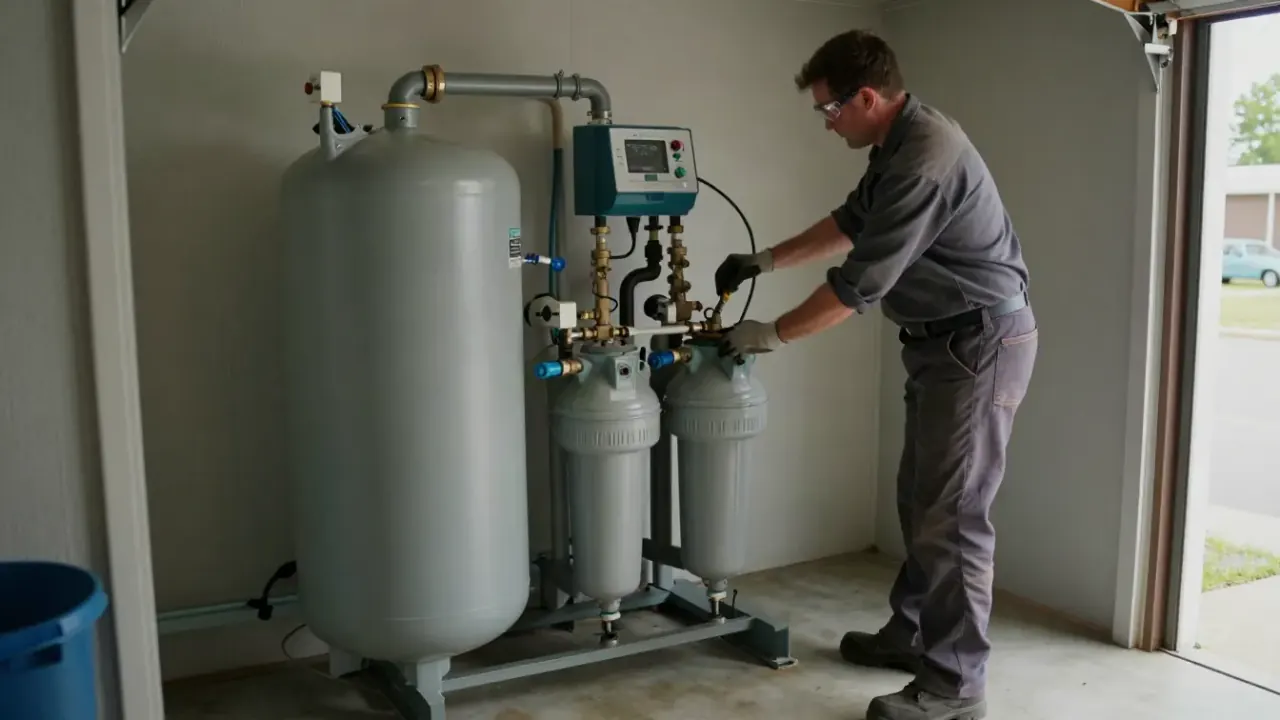
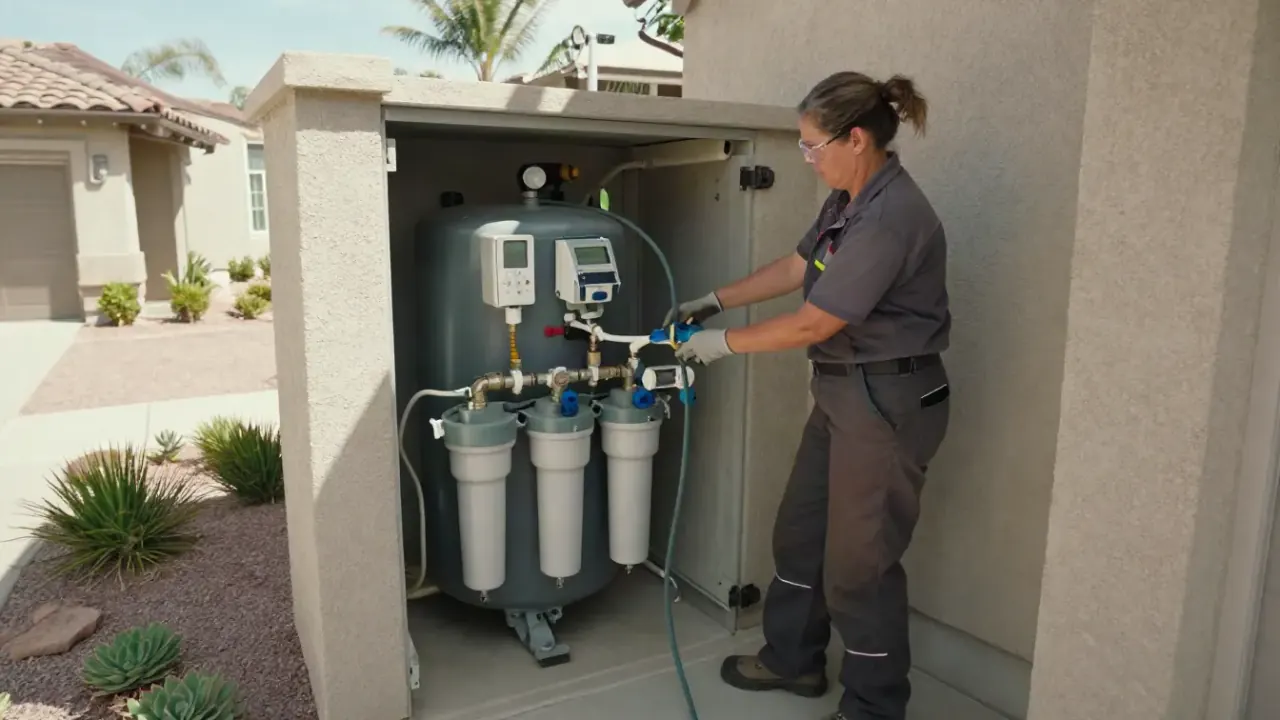
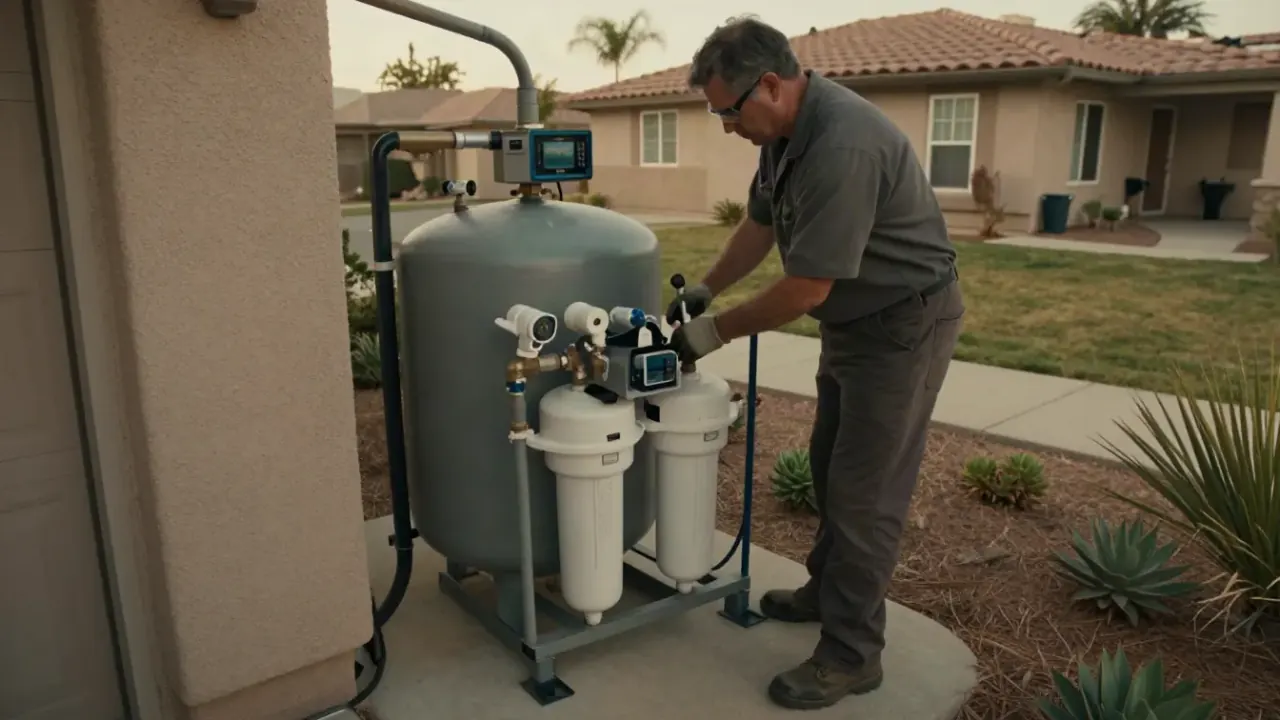
We pull a sample at the main line and run it through a water hardness test kit and a TDS meter. You get the actual grain count, iron level, and chlorine reading in writing. That data decides tank size, resin volume, and whether you need a sediment filter ahead of the carbon stage.
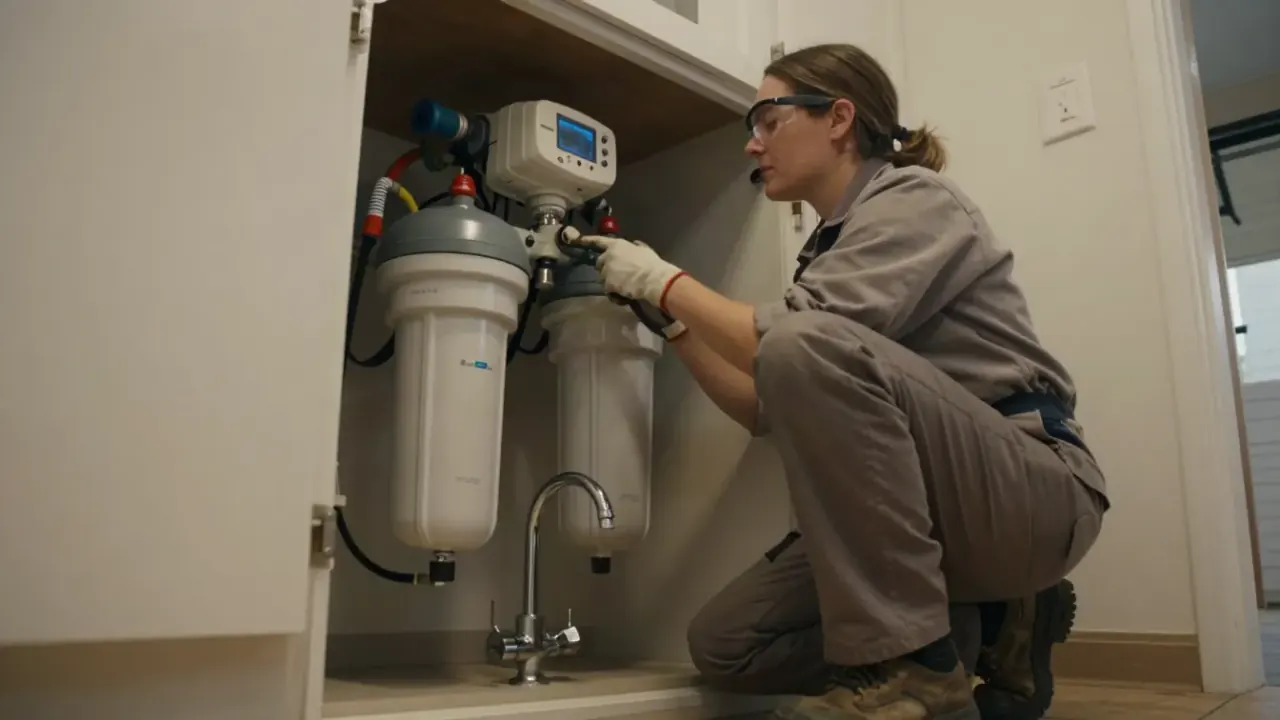
We match the resin tank and control valve to your household demand, usually 1 cubic foot of resin per two bathrooms. A Fleck or Clack control valve goes on most builds because parts are easy to source. You approve the layout before we cut anything.
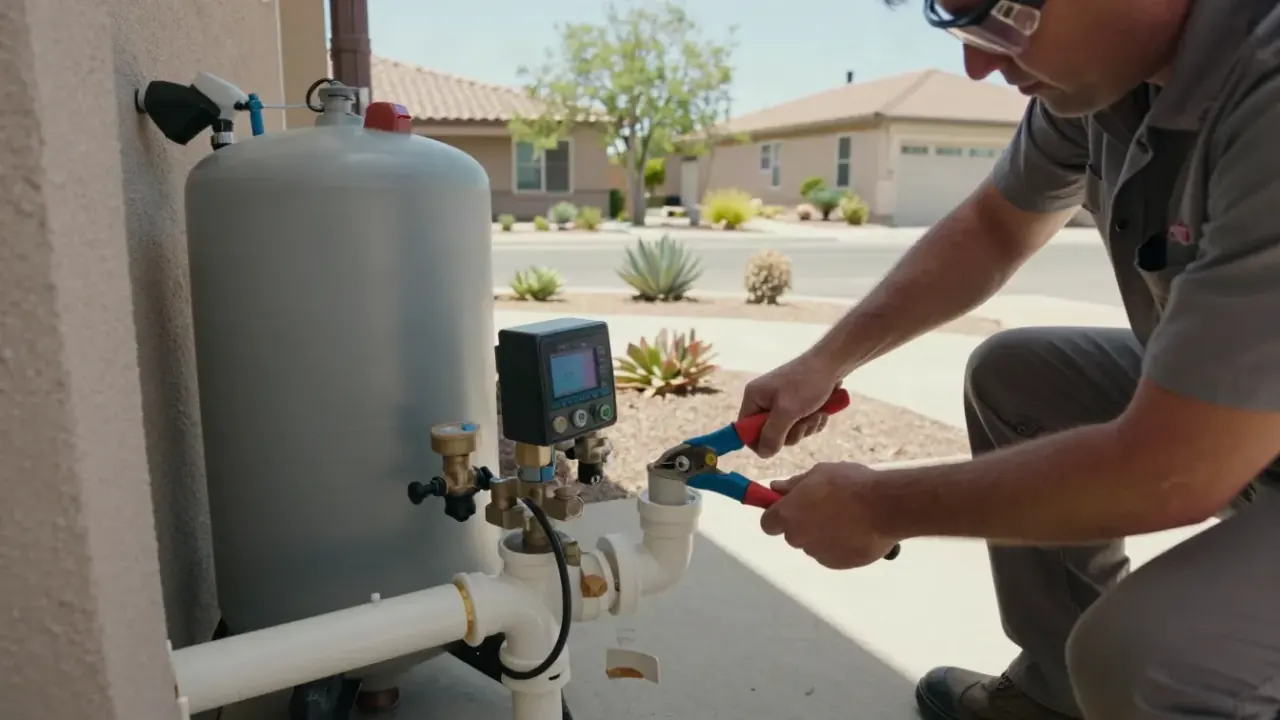
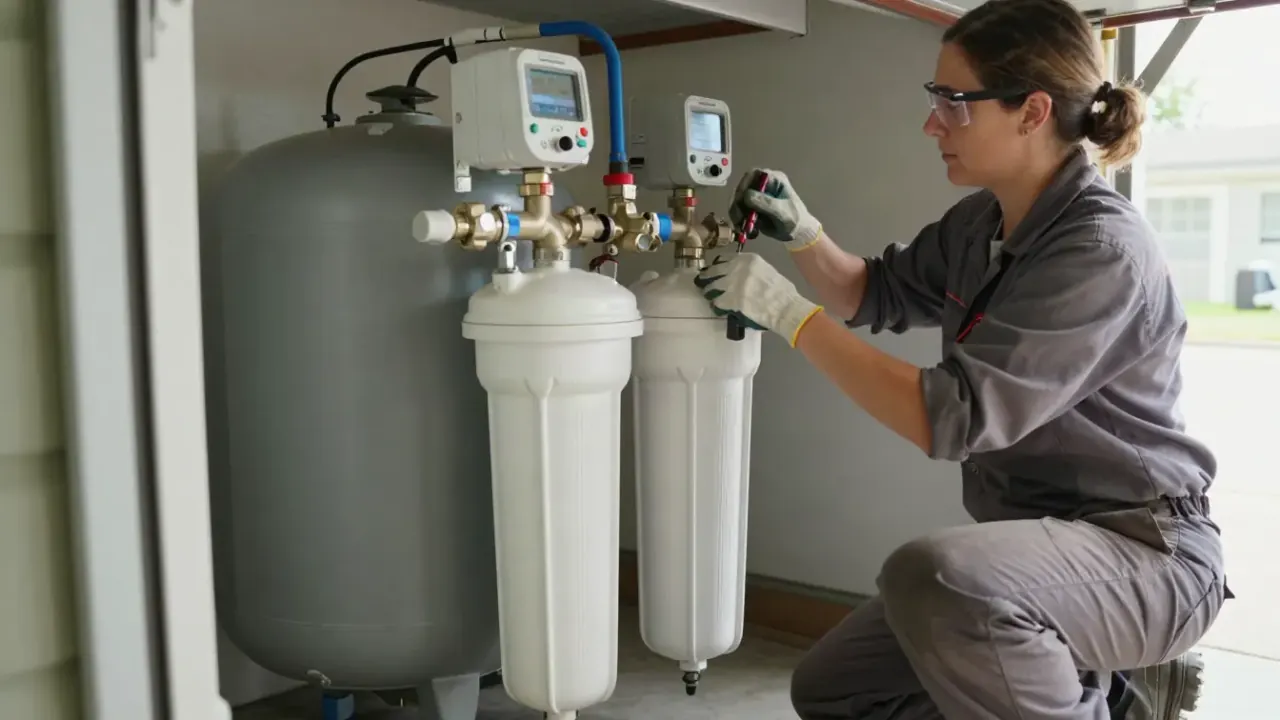
We shut off the main, cut into the supply line with a tubing cutter, and sweat the copper or set the PEX fittings with a soldering torch where needed. A bypass valve goes in so you can isolate the system for service without losing water to the house.
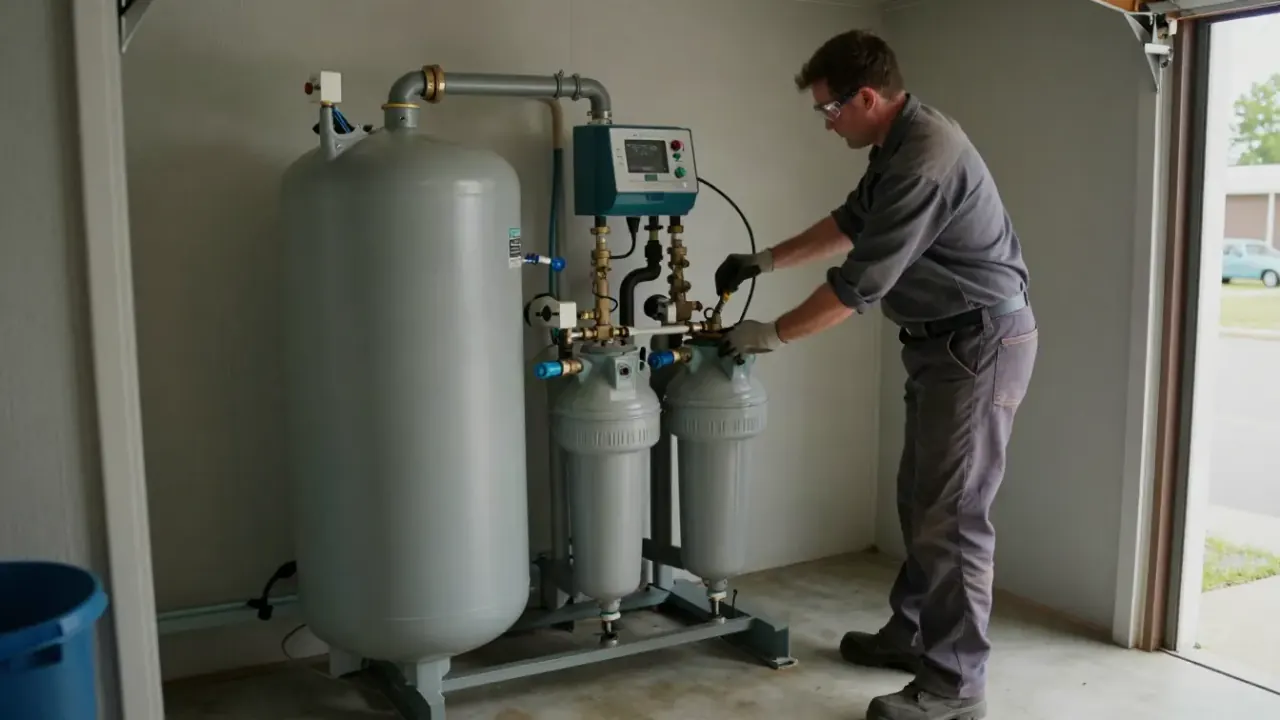
We charge the brine tank, run a manual regeneration, and flush the lines until the water runs clear. Then we set the regeneration cycle, check for leaks at every joint, and confirm pressure at the farthest fixture. Startup takes about 45 minutes.
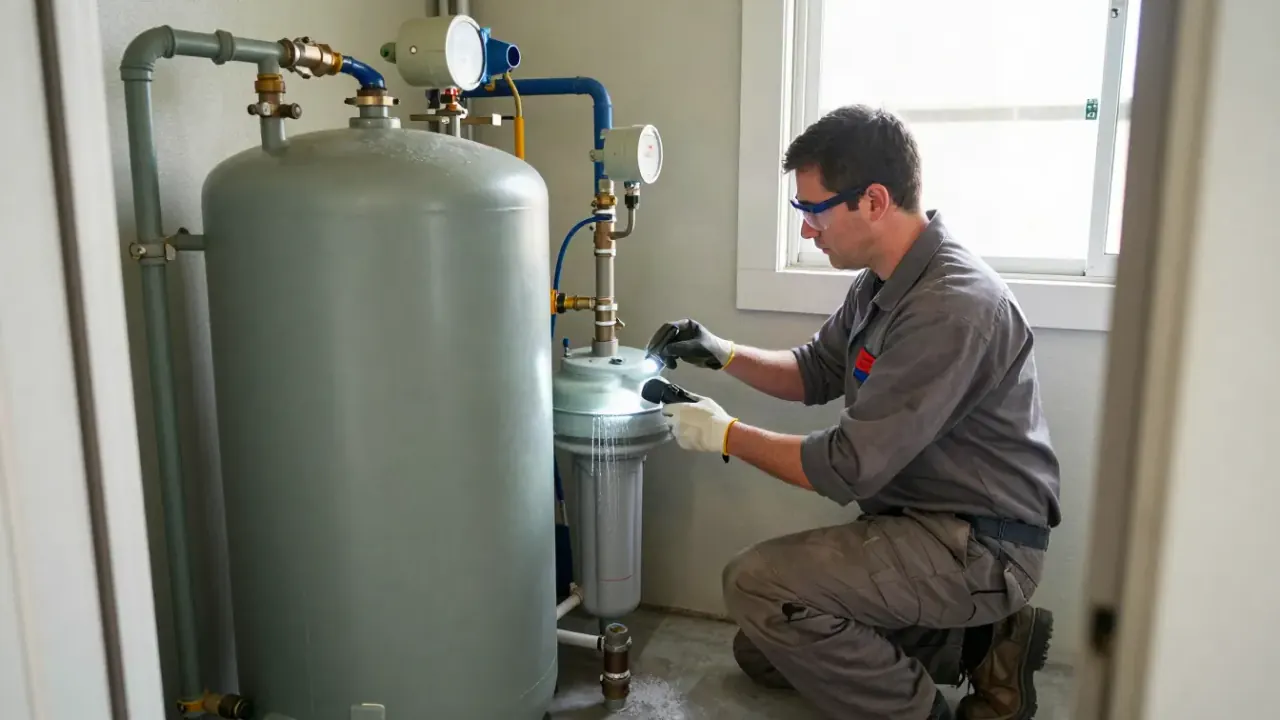
We show you how to read the control head, add salt, and spot a failing regeneration cycle. You get the settings sheet and our number. If the control valve throws an error code in the first month, we come back and sort it out.
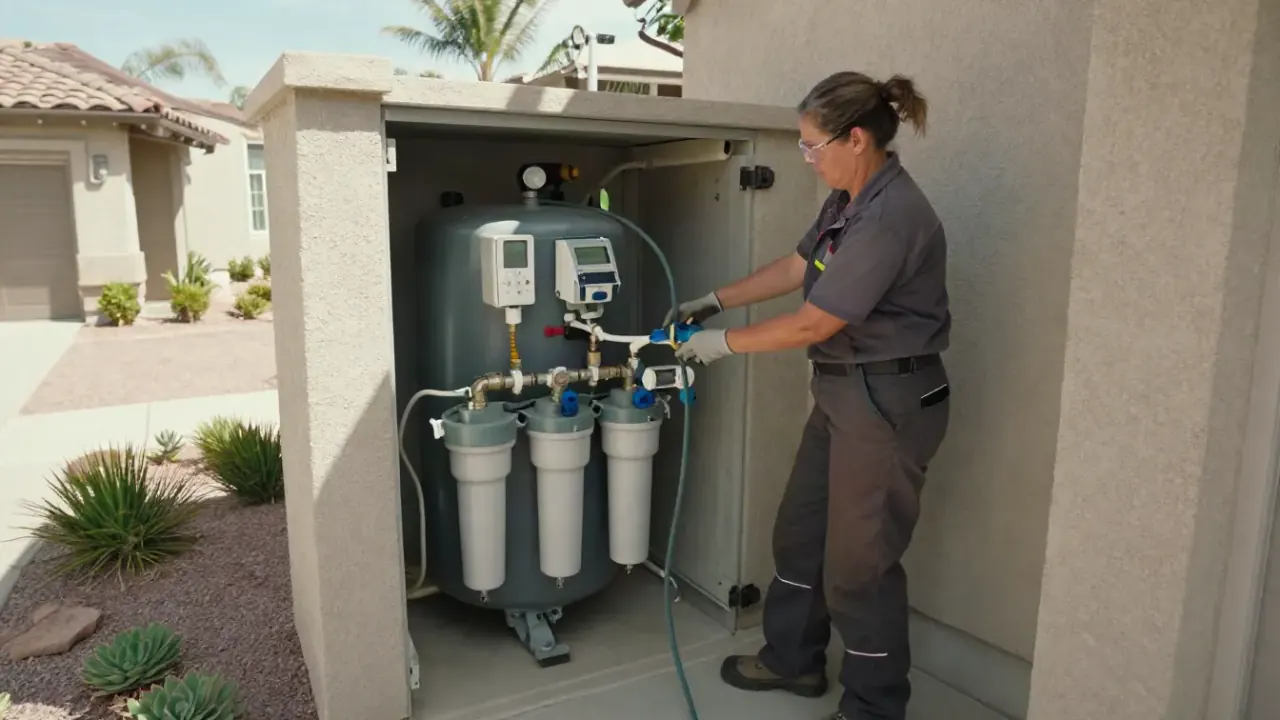
Measures grains per gallon at the main line so we size the resin tank correctly. A 12-grain home and an 18-grain home do not get the same setup.
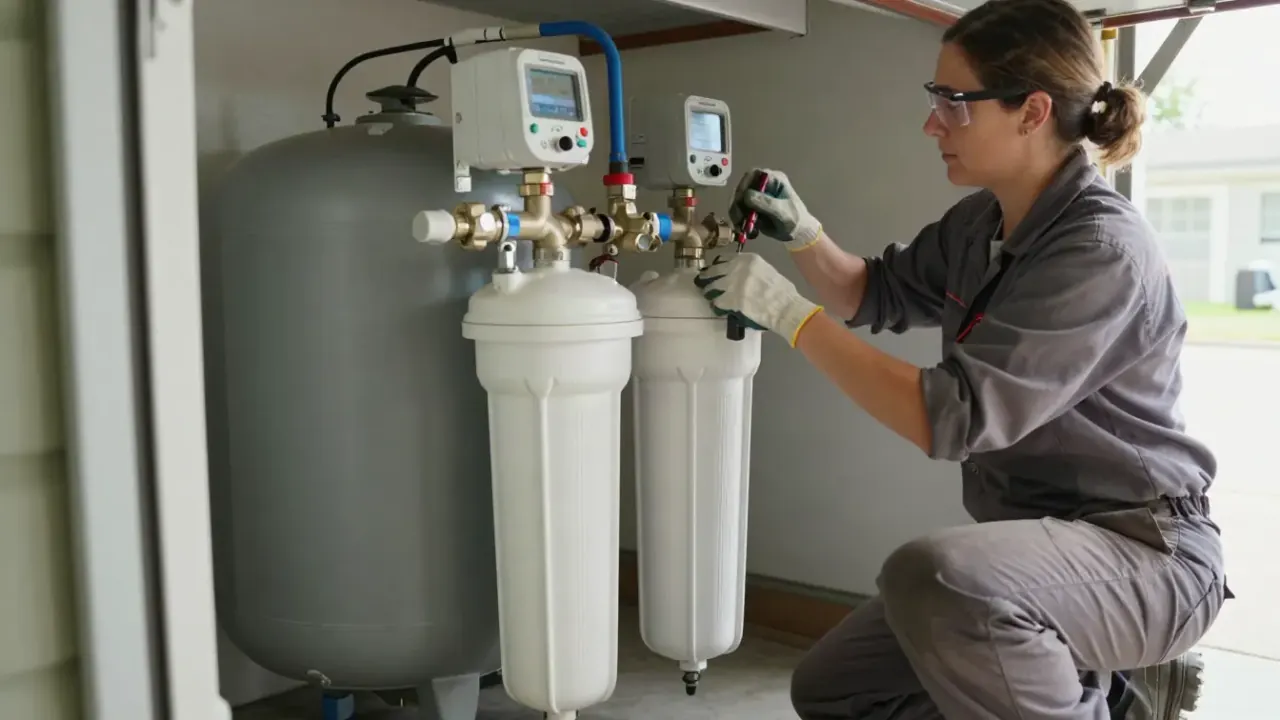
Reads total dissolved solids to confirm what the filtration stages are actually removing and whether the membrane or resin needs attention.
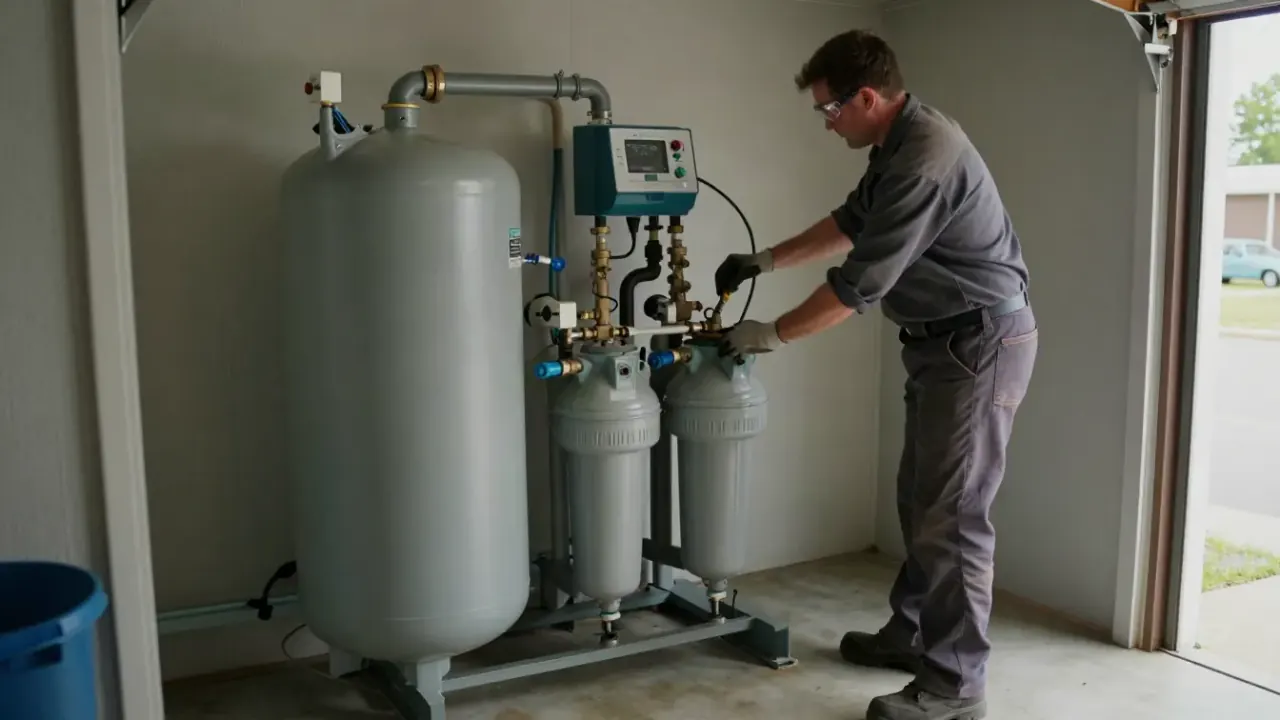
Used for clean copper tie-ins at the main line. The tubing cutter gives a square edge so the sweat joint seals on the first pass.
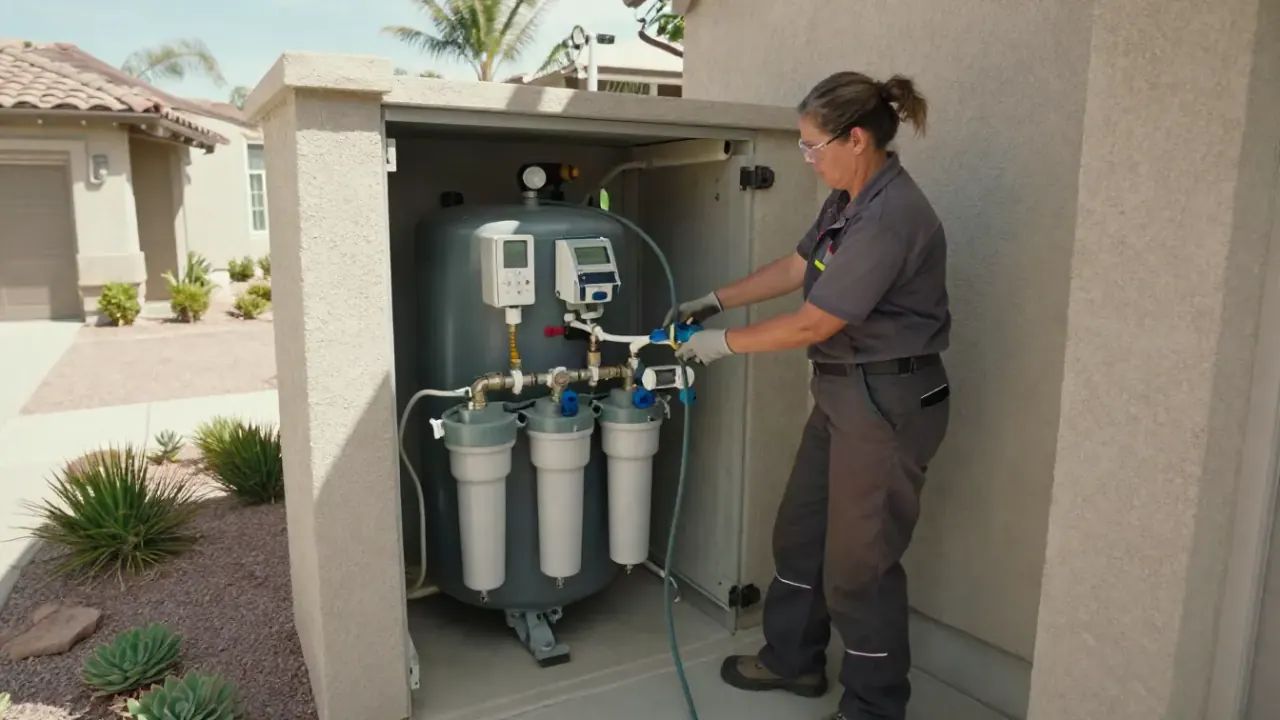
Lets you isolate the filtration system for service without shutting water off to the whole house. Every install gets one.
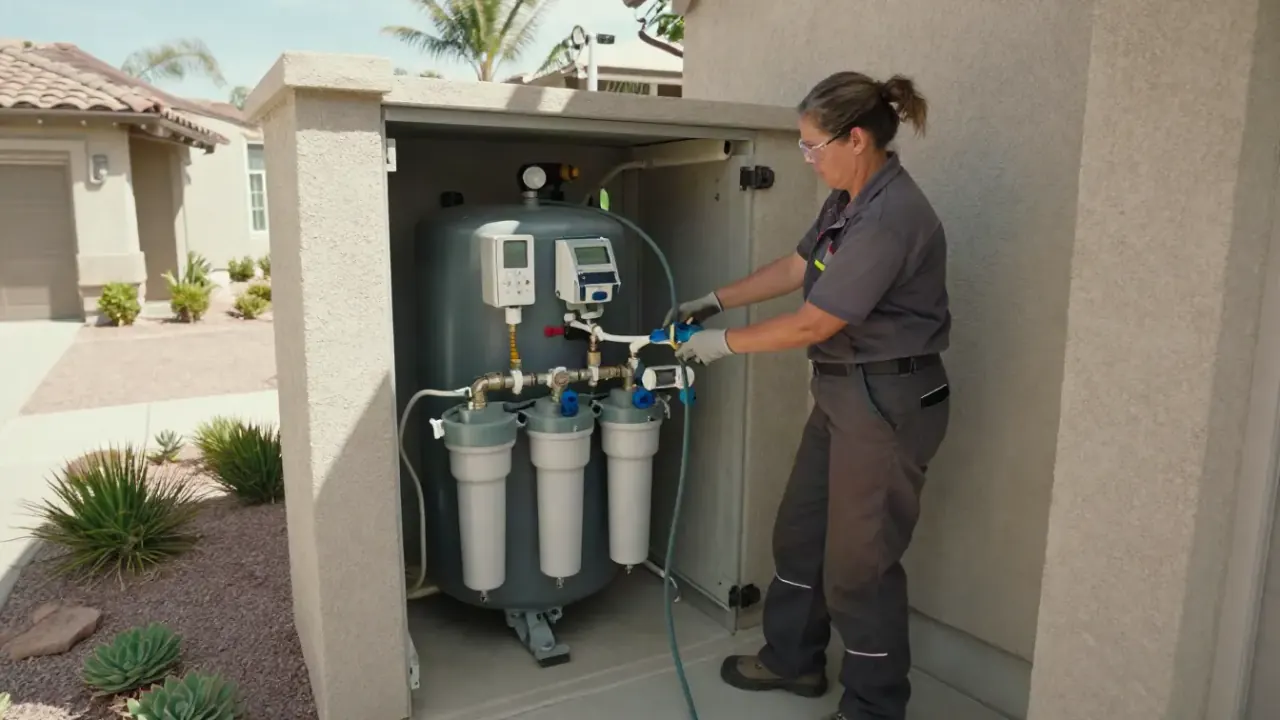
Pulls sludge and salt bridges out of the brine tank during maintenance so regeneration can actually draw brine.
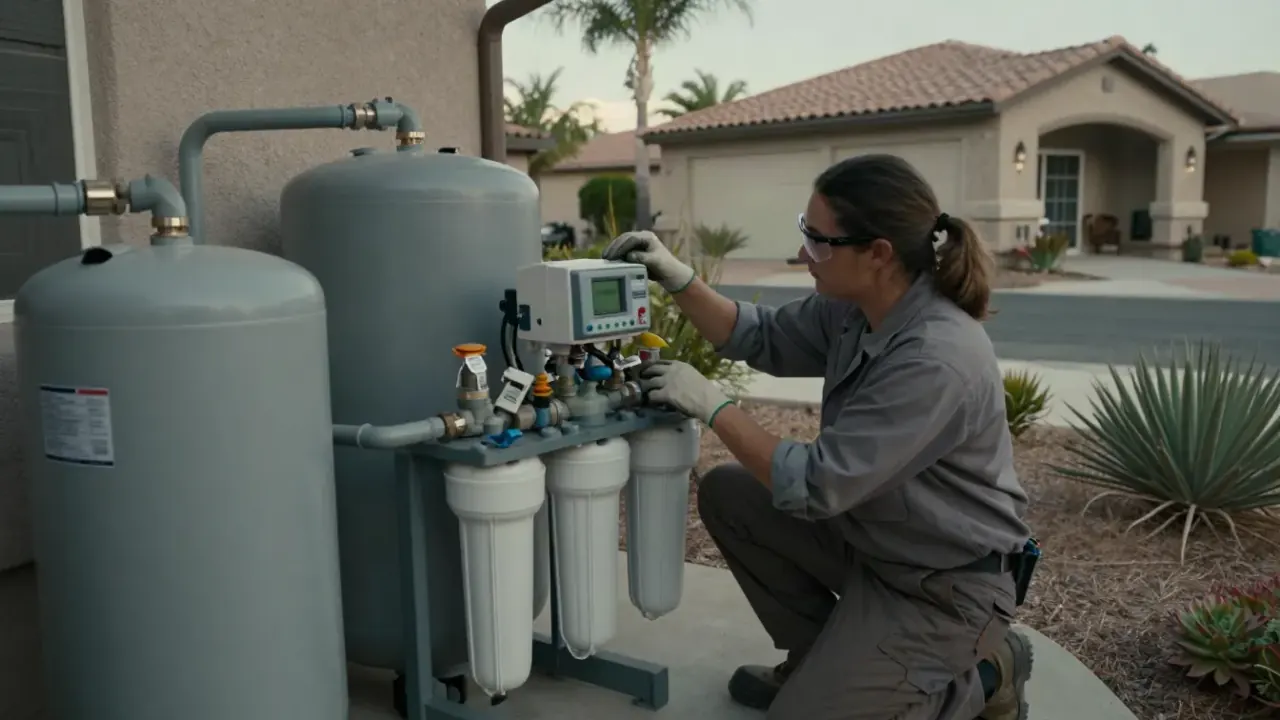
Opens the resin tank for inspection or media replacement without cracking the threads on older units.
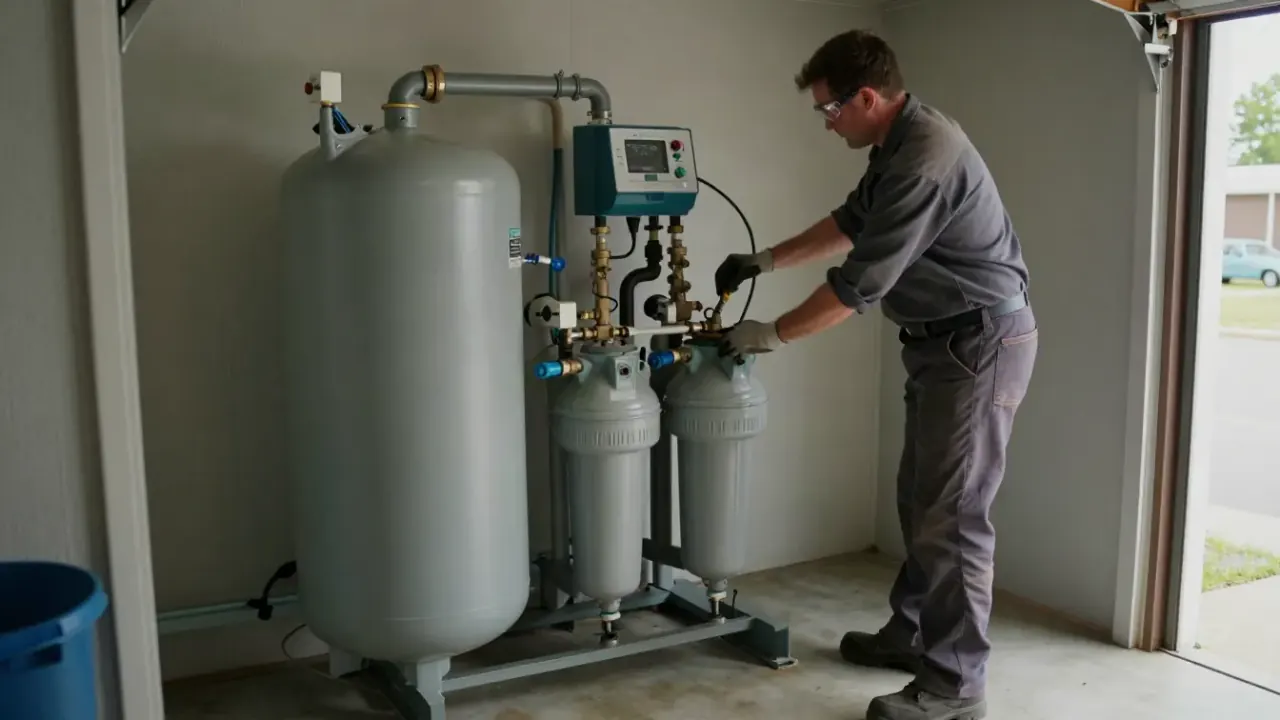
We spec control valves, resin tanks, and brine tanks that carry NSF/ANSI 44 and WQA Gold Seal listings. That matters for performance claims and for keeping your homeowner insurance clean if a line ever fails.
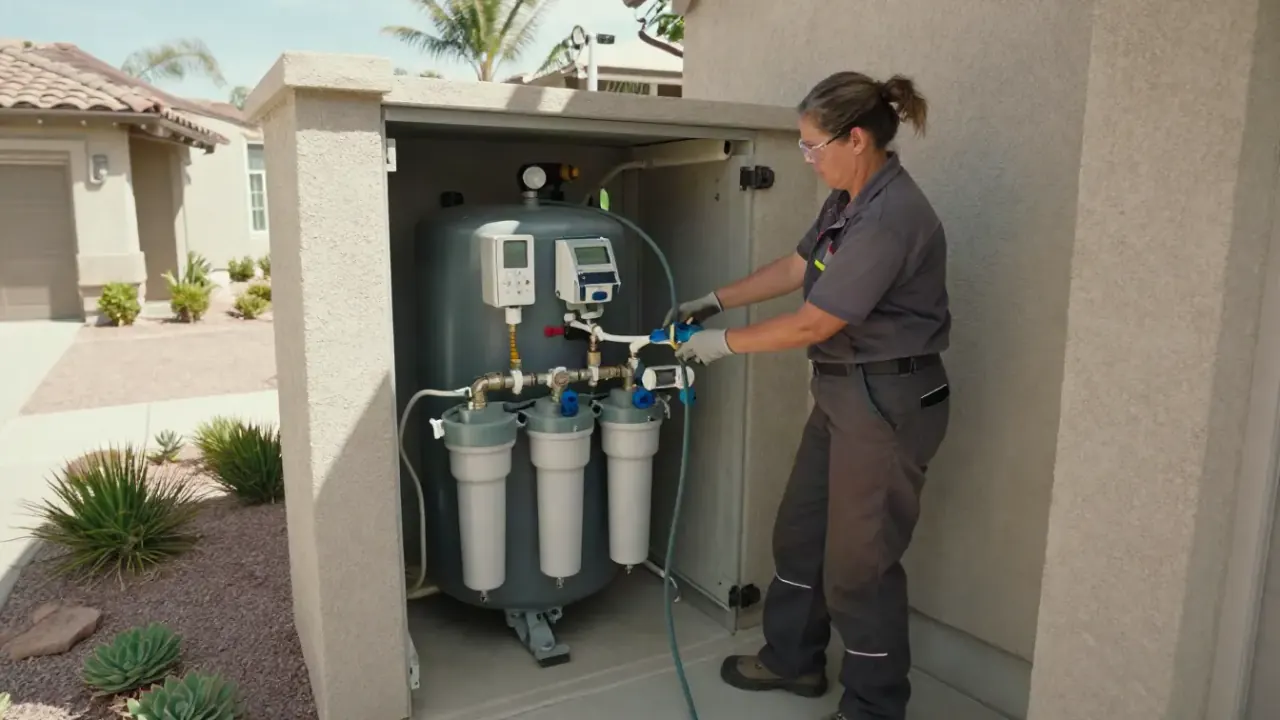
Resin beads swap sodium or potassium for calcium and magnesium. Regeneration recharges the resin with brine from the brine tank. It is the most proven method for the hardness levels we see in Diamond Bar.
We test at the main line, confirm the grain count, and size a system for the household. The install ties in ahead of the water heater so the existing plumbing gets protected from the first day you move in. New fixtures stay spot-free, and the water heater you inherited gets years added to its service life.
We install a whole house water filtration system Diamond Bar CA setup with ion exchange resin to remove the hardness minerals before they reach the heater. The carbon stage also handles chlorine, which is hard on internal seals. Descaling drops to every five or six years, and the unit stops throwing scale-related error codes.
We rough in the main line tie-in during the remodel, install the filtration system, and add a reverse osmosis membrane under the sink for drinking water. One bypass valve controls both units. Filtered, softened water at every fixture, plus polished drinking water at the kitchen tap and ice maker.
We inspect the resin tank and control head, and if the repair cost approaches replacement, we quote a new system. Most Diamond Bar swaps finish in under six hours with no gap in treated water. Lower salt usage, a working regeneration cycle, and a system that treats water reliably for the next 15 to 20 years.
Diamond Bar sits in Los Angeles County at the edge of the San Gabriel Valley, and the water here is a blend of imported Colorado River supply and local groundwater. That mix runs 12 to 18 grains per gallon, with iron showing up in some pockets near older developments. Homes built in the 1970s and 1980s typically have copper supply lines that handle a main line tie-in cleanly, while newer builds in Stonegate and Ridgeline often use PEX, which needs different fittings. We handle both. Summer demand spikes when irrigation and pool fill pull hard on the system, and that is when a properly sized resin tank earns its keep. If you are looking for the best whole house water filter Diamond Bar California has to offer, the answer is almost always a system sized to your actual test numbers, not a box off the shelf. We also see winter problems: cold snaps can crack a poorly insulated brine tank line, and we insulate every outdoor run we install. Most of our work stays inside the 91789 and 91765 ZIP codes, with some calls spilling into Walnut and Chino Hills.
A family of five was replacing faucet cartridges every 12 to 18 months and scrubbing hard water spots off shower glass weekly. The water heater was six years old and already popping. Water tested at 16 grains per gallon with moderate iron.
We installed a system with a sediment filter, carbon filter, and 1.5 cubic foot resin tank on a Fleck control valve. Within a week the popping stopped. At the one-year mark, no cartridge replacements and the shower glass stays clear with a quick wipe.
Annual brine tank cleaning, salt top-offs every six to eight weeks, and a control valve check each spring. Resin should last 12 to 15 years at this water chemistry.
A homeowner was paying for tankless water heater descaling every 18 months. The unit threw scale-related error codes twice in one winter. Water tested at 18 grains per gallon, the hardest reading we see in Diamond Bar.
We tied a whole-house filtration system in ahead of the heater with a 2 cubic foot resin tank and a Clack control valve. Two years later, the heater has not thrown a single scale code and descaling is on a five-year schedule.
Salt checks monthly, regeneration cycle set to 12 days, and an annual valve inspection. The carbon filter gets swapped every 12 months.
A property manager was replacing water heaters across four units every six to seven years. Tenants complained about spots on dishes and stiff laundry. Two of the four units had softeners that stopped regenerating and nobody noticed.
We installed filtration at each building and set up a single annual maintenance contract. Two years in, zero water heater replacements. The brine tank cleaning visit each spring keeps all four systems regenerating on schedule.
One annual service visit per building covering brine tank vacuum, control valve check, and resin inspection. Salt delivered in bulk twice a year.
Diamond Bar water runs 12 to 18 grains per gallon, and that mineral load shows up in predictable places. These are the four calls we get most often, and what happens if you let them ride.
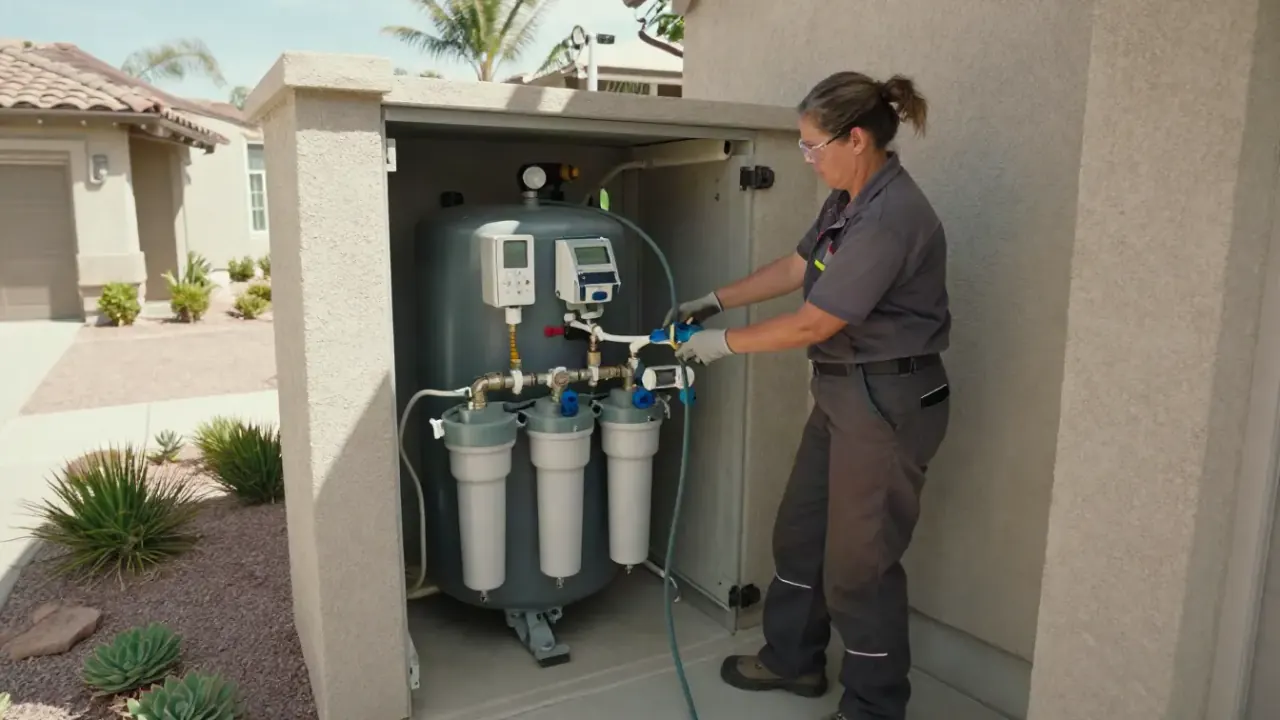
We install ion exchange resin that pulls calcium and magnesium out before they reach a fixture. A water filtration system for hard water Diamond Bar CA setup stops new scale from forming, and existing deposits in the water heater start breaking down within a few regeneration cycles. Scale bonds to chrome and glass within weeks, and scrubbing only removes the surface layer. Left alone, the same minerals coat the inside of your pipes and restrict flow.
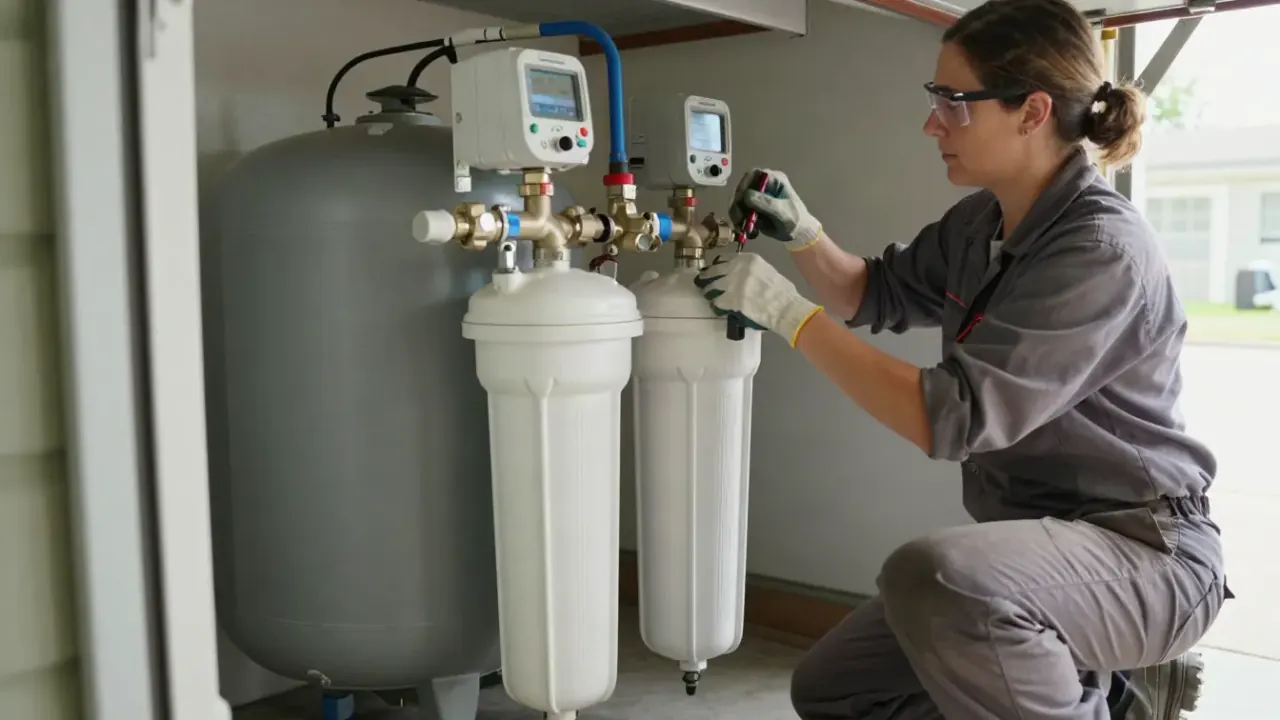
Whole-house treatment protects the heater from day one. We tie the system in ahead of the water heater so every gallon entering the tank is already conditioned. Customers typically see the popping stop within a week and get years back on the tank. Sediment and scale insulate the heating element, so the tank runs hotter and longer. That popping sound is steam trapped under the scale layer. Most hard-water heaters fail at six to eight years instead of twelve.
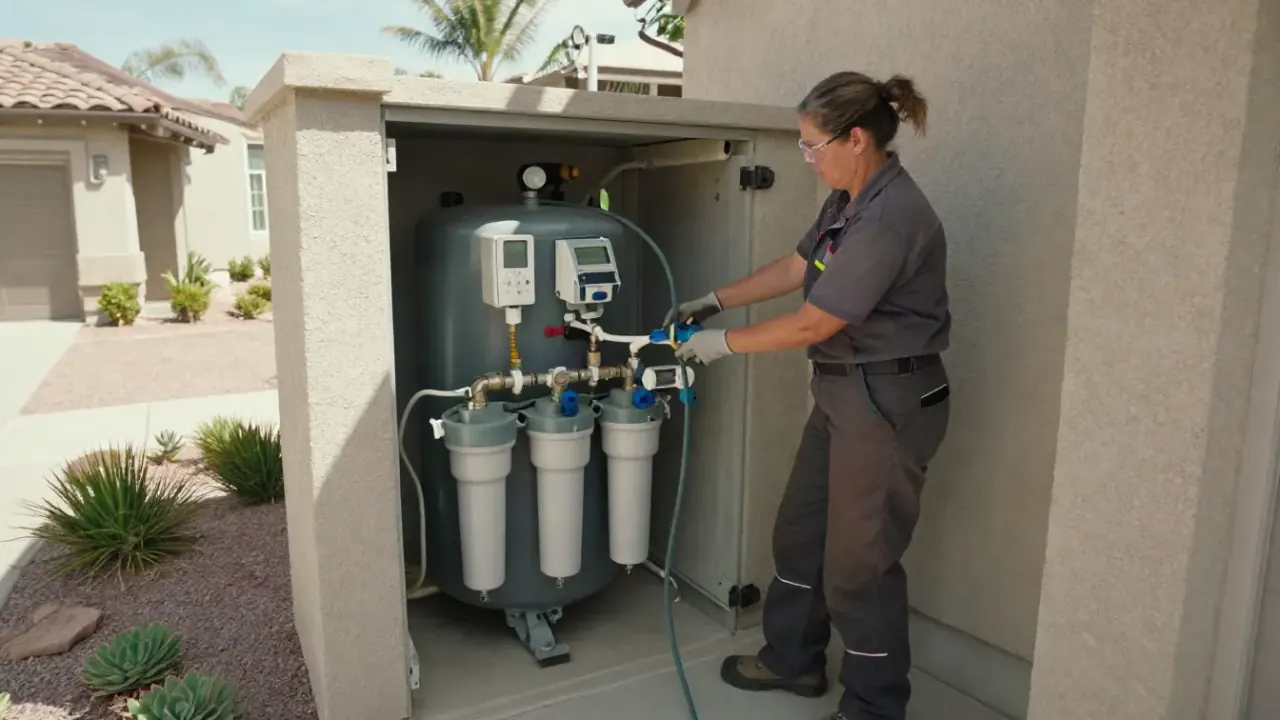
We repair and replace control heads on Fleck, Autotrol, Clack, and Kinetico units. Our techs carry common valves on the truck, so most Diamond Bar calls are diagnosed and fixed the same day, and we reprogram the cycle to your household demand. When the control head stops cycling, the resin stops recharging and the system quietly passes hard water. Most homeowners do not notice until the spots come back, which can be weeks later.
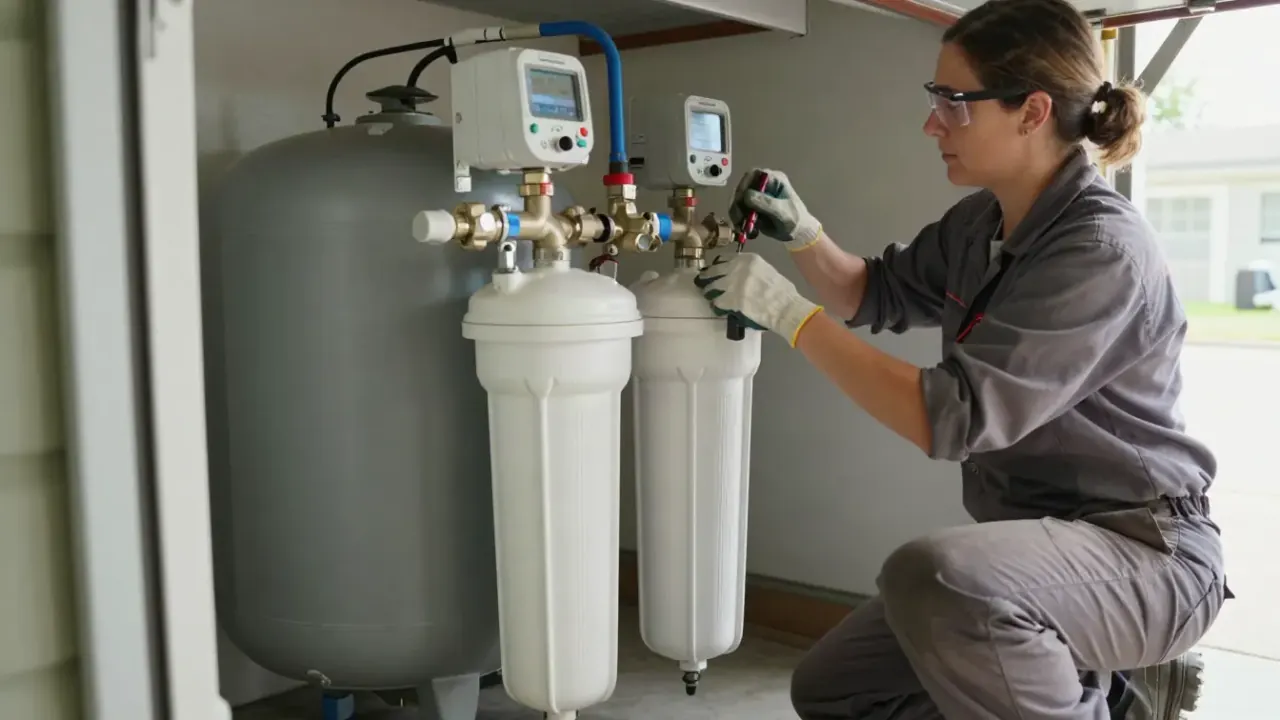
We vacuum out the tank with a brine tank vacuum, break up the crust, inspect the brine well, and refill with fresh water softener salt or potassium chloride. A 12 to 15 day regeneration cycle keeps it from coming back. Sludge and salt bridges stop the brine from dissolving, so regeneration runs dry. The system burns through salt without softening anything, and you end up with hard water and a full tank of wasted salt.
Ion exchange resin pulls calcium and magnesium out of the water before they can bond to pipe walls and heating elements. A tankless water heater that used to need descaling every 18 months stretches to five or six years. Shower glass stays clear, and faucet aerators stop crusting over.
Dishwashers, washing machines, and water heaters all fail early on hard water. Scale buildup in pipes and on heating elements forces equipment to work harder and run hotter. Treated water cuts that load, and most Diamond Bar customers report their dishwasher rinse cycle alone gets noticeably cleaner.
The carbon filter stage strips chlorine and its byproducts before they hit your glass. Coffee and tea taste cleaner, and you stop buying bottled water for everyday drinking. If you want the last step for cooking and ice, a reverse osmosis membrane under the sink handles the final polish.
Soft water lathers with roughly half the detergent, so you use less shampoo, dish soap, and laundry powder. The system itself uses water softener salt or potassium chloride during regeneration, and a properly sized brine tank on a 12 to 15 day cycle keeps that cost predictable month to month.
Typical 2026 pricing for a whole-house installation in Diamond Bar runs $1,850 to $4,200, depending on tank size, control valve brand, and whether you add softening. A basic sediment and carbon setup sits at the low end. Adding ion exchange resin, a larger brine tank, and a premium control valve pushes toward the top. Repairs like a control valve swap or resin replacement usually land between $250 and $700. We give you a written number after the water test, before any work starts.
What your estimate is based on
$1,850 - $4,200 installed, with repairs from $250 - $700 A whole-house system protects every appliance and fixture in the home, not just one tap. Spread over 15 to local experience life, the monthly cost is less than most streaming subscriptions, and it ends the cycle of replacing faucets and water heaters early.
Clear records you can keep and share.
Grain count, iron, and chlorine readings
Control valve cycle and regeneration schedule
Flush confirmation and pressure check
A carbon filter removes chlorine and taste. A softener removes the hardness minerals that cause scale. Most Diamond Bar homes need both stages working together.
Carbon handles chlorine and taste compounds. It does nothing for hardness. Replacing the carbon filter on schedule keeps the taste benefit consistent.
Ion exchange resin grabs calcium and magnesium. Regeneration recharges it with brine. This is the stage that stops scale in pipes and water heaters.
A sediment filter ahead of the carbon stage catches particulate. Running it in the right order keeps the carbon from fouling early and extends its life.
Outside these areas? Call and ask about your street. (909) 415-2296
Most whole-house installations in Diamond Bar run $1,850 to $4,200 in 2026, including the resin tank, control valve, bypass valve, and startup. A basic sediment and carbon filter setup sits at the low end; adding ion exchange softening and a larger resin tank pushes toward the top. Repairs like a control valve swap or resin replacement usually land between $250 and $700.
Yes, if your water tests above 7 grains per gallon, which most Diamond Bar addresses do. At 12 to 18 grains, you will see scale buildup in pipes, early water heater failure, and hard water spots on every fixture. A quick water hardness test kit reading at your main line tells you in about five minutes whether treatment is worth it.
For this water, a system with a sediment filter, a carbon filter, and an ion exchange resin tank outperforms carbon-only units. The carbon stage handles chlorine and taste; the resin handles the hardness that causes scale. Pair it with a properly sized brine tank and a Fleck or Clack control valve, and you get a setup that lasts 15 to 20 years with routine maintenance.
A standard single-family install takes four to six hours, and we finish in one day. That covers the main line tie-in, bypass valve, tank and control valve setup, brine tank charge, and a full manual regeneration to flush the lines. Larger homes with multiple resin tanks or a commercial setup can run into a second day.
We test your water, size the system, and give you a written number before any work starts. Most installations finish in one day. Call (909) 415-2296 and we will get you on the schedule.
Call (909) 415-2296 or email us and we will get back to you the same business day. We answer questions about hardness readings, salt use, and system sizing before you book anything. Serving Diamond Bar and Los Angeles County.