Hardness reading
Before and after numbers from the tap
Water Softener Installation in Diamond Bar removes the calcium and magnesium that spot your glassware and scale your water heater. We size the resin tank to your household, plumb the bypass valve, and set the control head before we leave. Most homes in 91789 and 91765 run 12 to 18 grains per gallon, so a correctly sized system pays for itself in soap and appliance life.
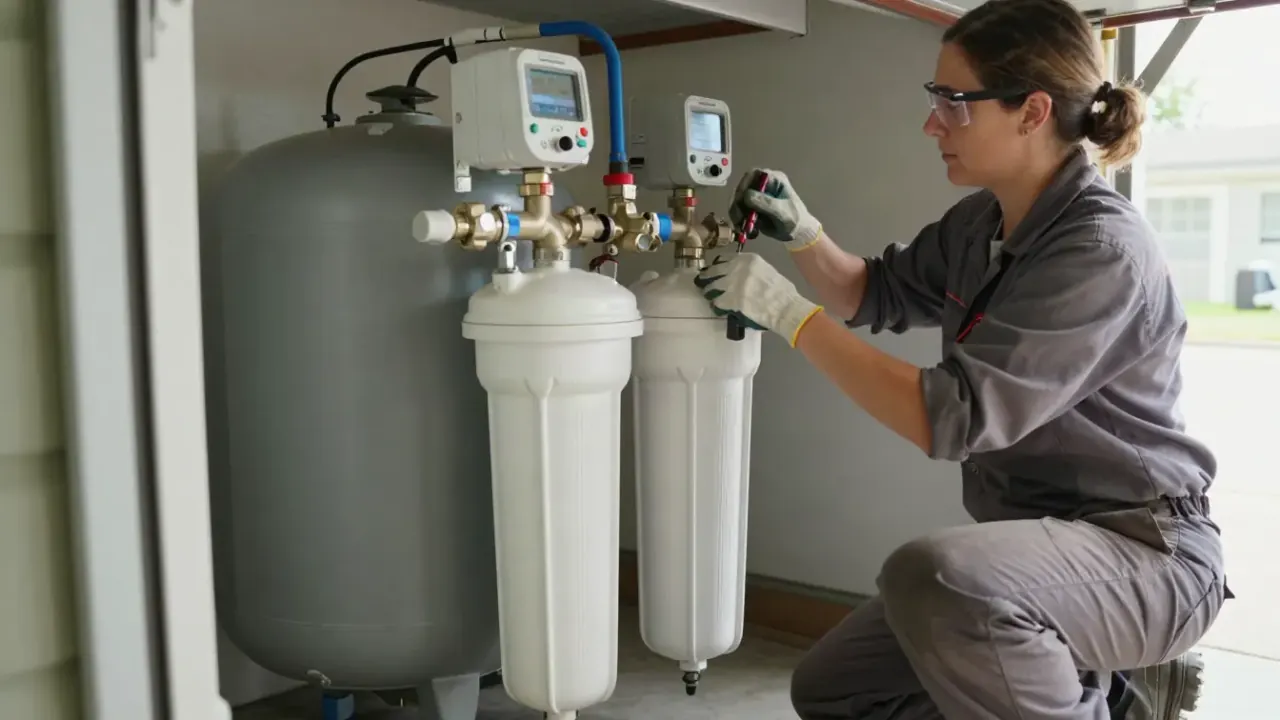
Every install covers the system, the plumbing connection, the programming and the test. Add-ons like filtration or reverse osmosis are quoted separately so you only pay for what you need.
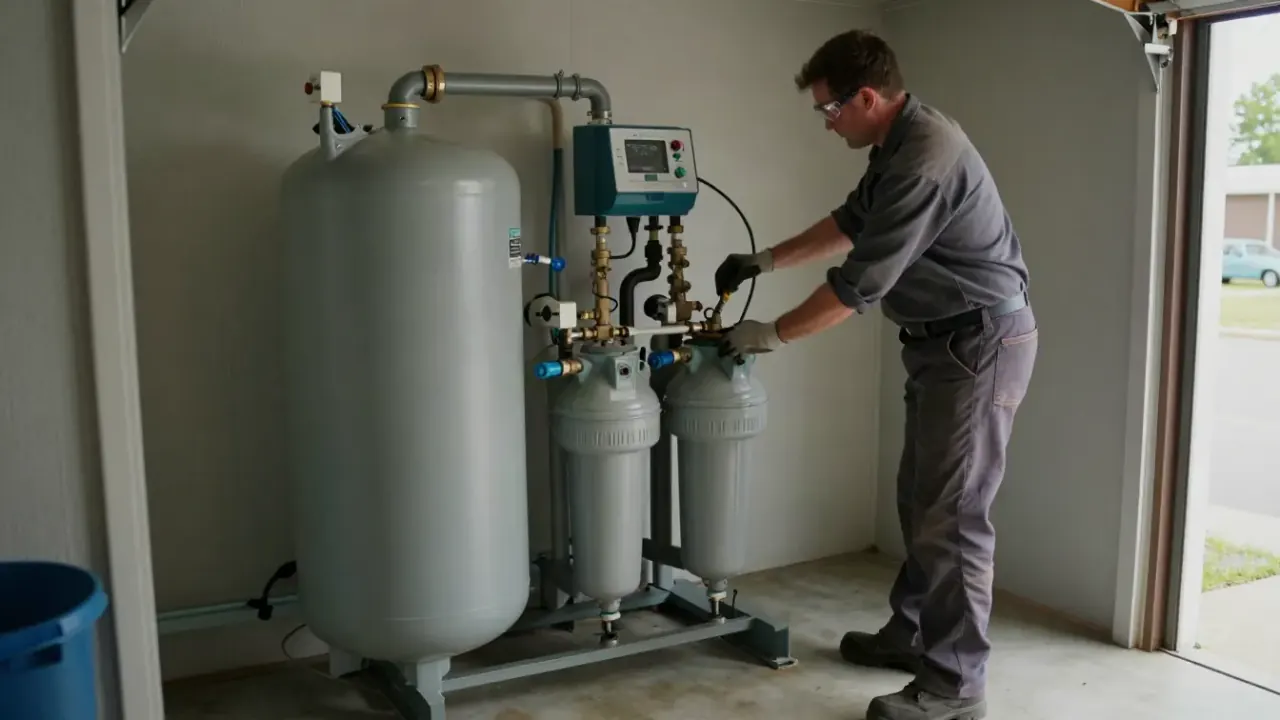
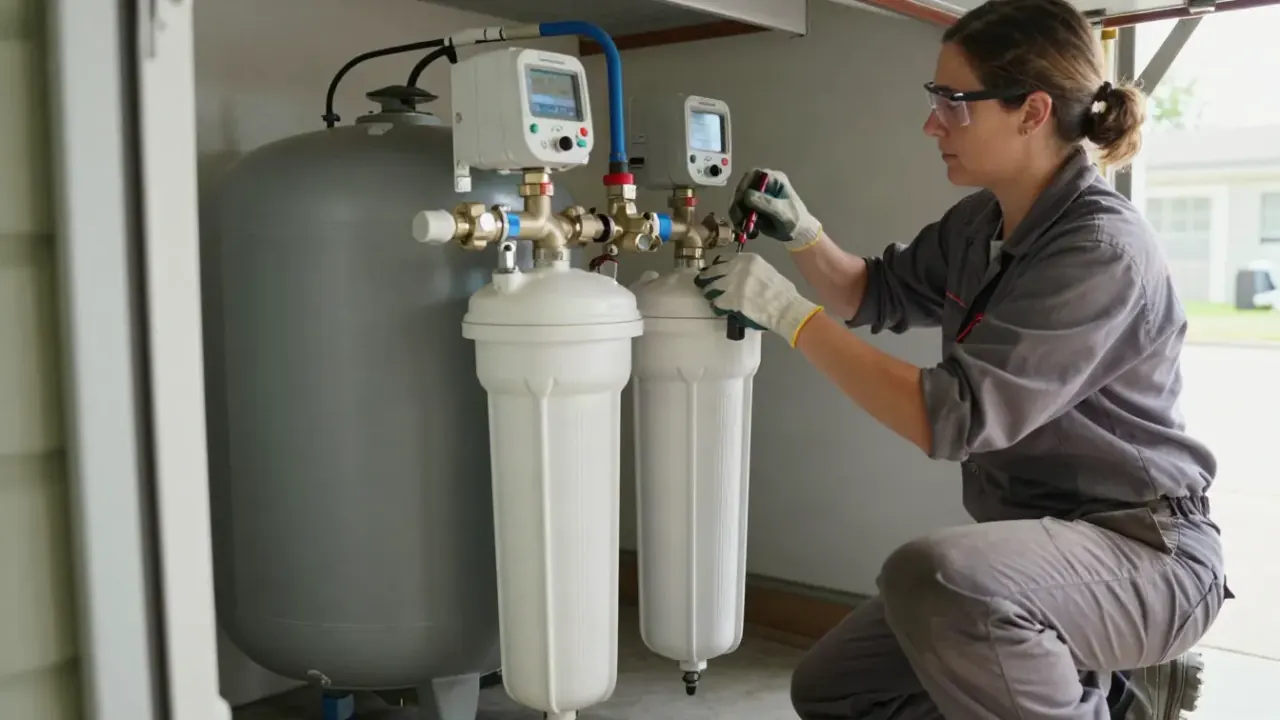
We install softeners in single-family homes, condos and rentals across Diamond Bar. Most jobs are done in one visit with a working bypass valve and a walkthrough.
We install and service softeners for small commercial properties and rental portfolios in Diamond Bar. We size for actual water use, not a guess.
Water Softener Installation in Diamond Bar is the plumbing work that puts a resin tank, brine tank and control valve between your main supply line and the rest of the house. The resin beads swap calcium and magnesium ions for sodium or potassium, so water leaves the tank soft. We cut into the main line, solder or thread the bypass valve, set the drain line, and program the control head for your household size and hardness level. A TDS meter and water hardness test kit confirm the numbers before and after.
Diamond Bar sits on hard Colorado River and local groundwater blends, and homes built in the 1980s and 1990s still have the original copper runs that scale up fastest. If your showerhead clogs every few months or the water heater rumbles, that is scale buildup in pipes, not a bad appliance. We install water softener Diamond Bar California homeowners can actually maintain, with a brine tank you can fill without pulling the lid off a cramped closet.
Test the water first, size the tank second, install it clean.
We test first, size second, install third, and verify last. Here is what a typical job looks like from your side of the door.
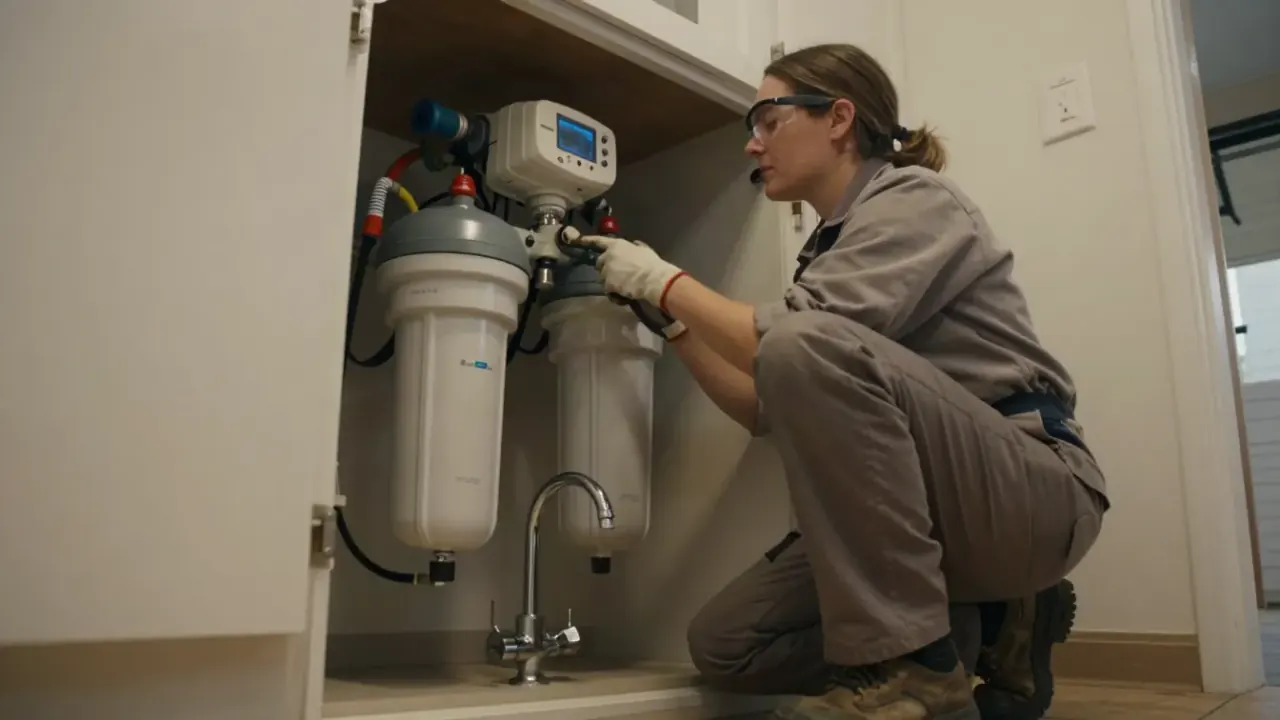
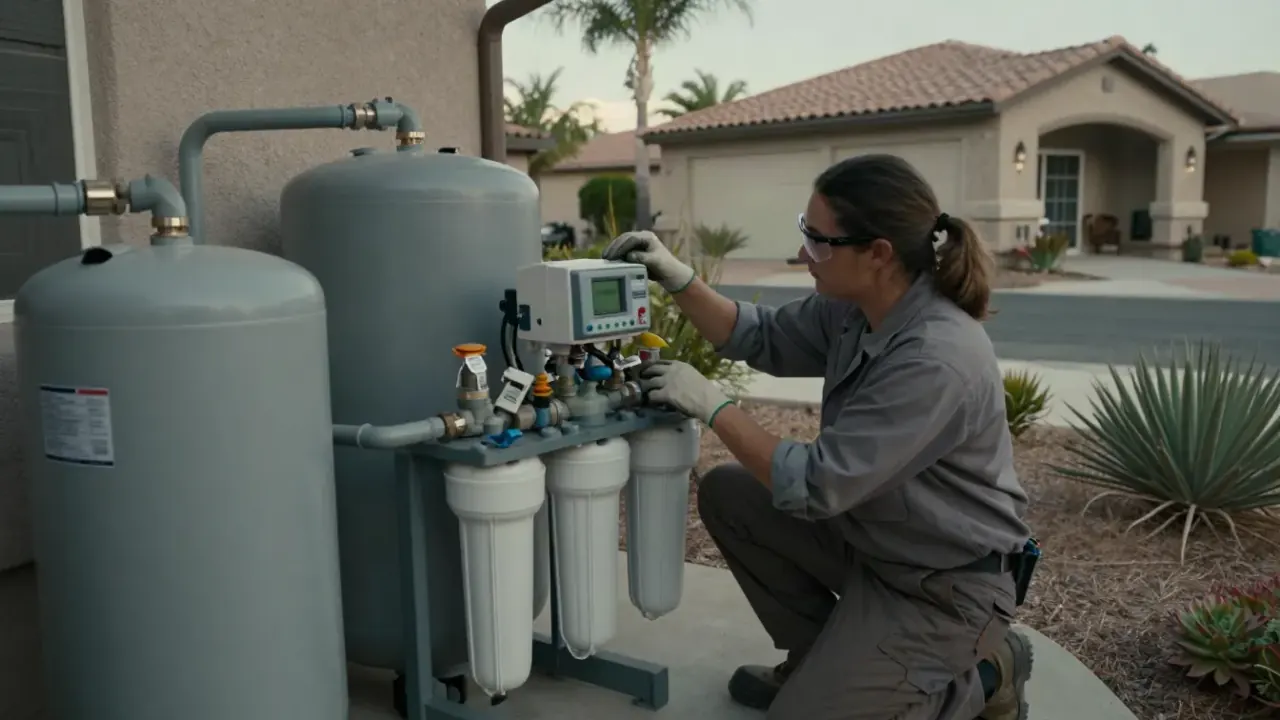
We test your raw water with a water hardness test kit and a TDS meter at the hose bib, then check flow rate at the main. You get the actual grains per gallon and gallons per minute, not a guess. This takes about 15 minutes and tells us exactly what size resin tank you need.
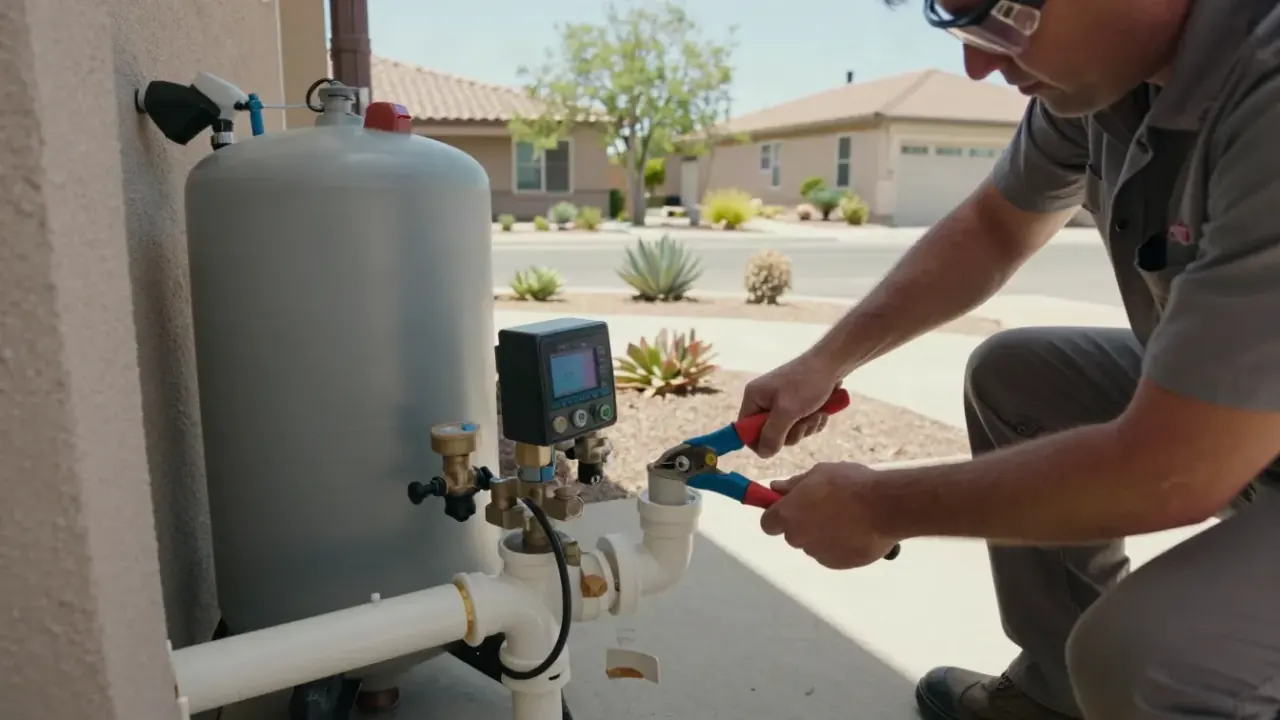
We match the resin tank and control valve to your household count and hardness. A family of four at 15 grains needs a bigger tank than a couple at 8 grains. We walk you through Fleck, Clack and Autotrol valve options and where the brine tank will sit so it is easy to fill.
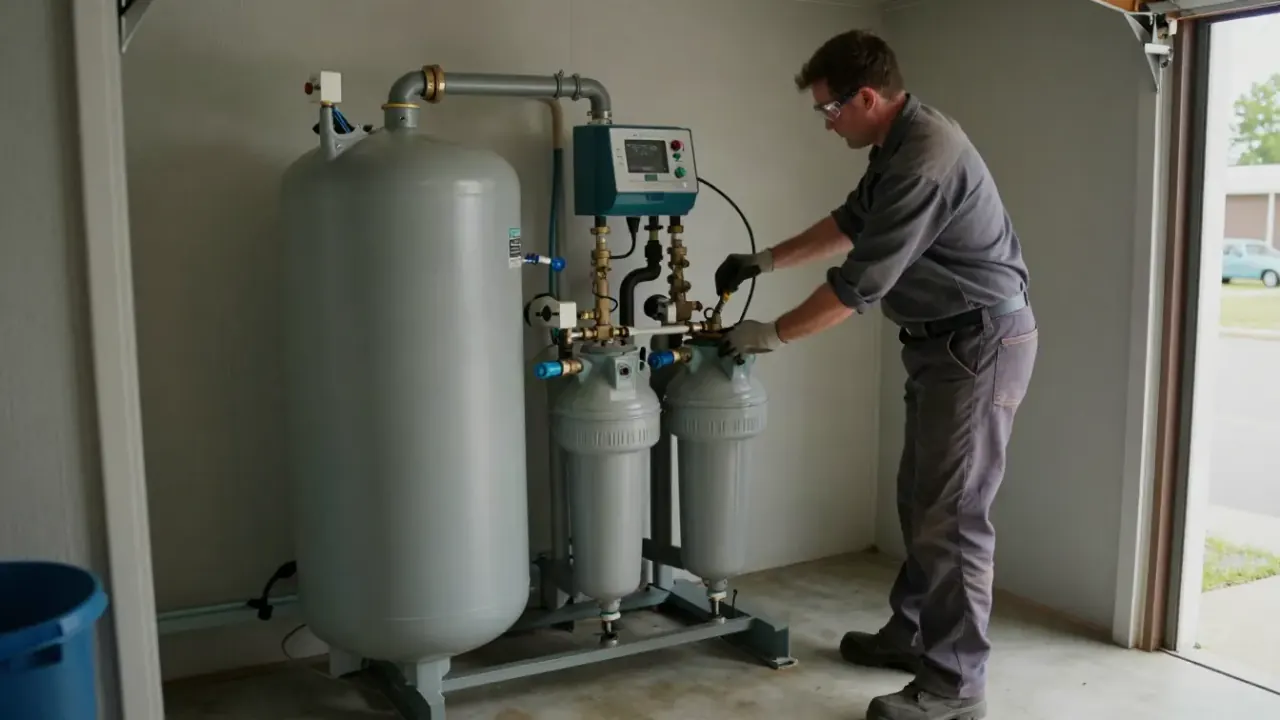
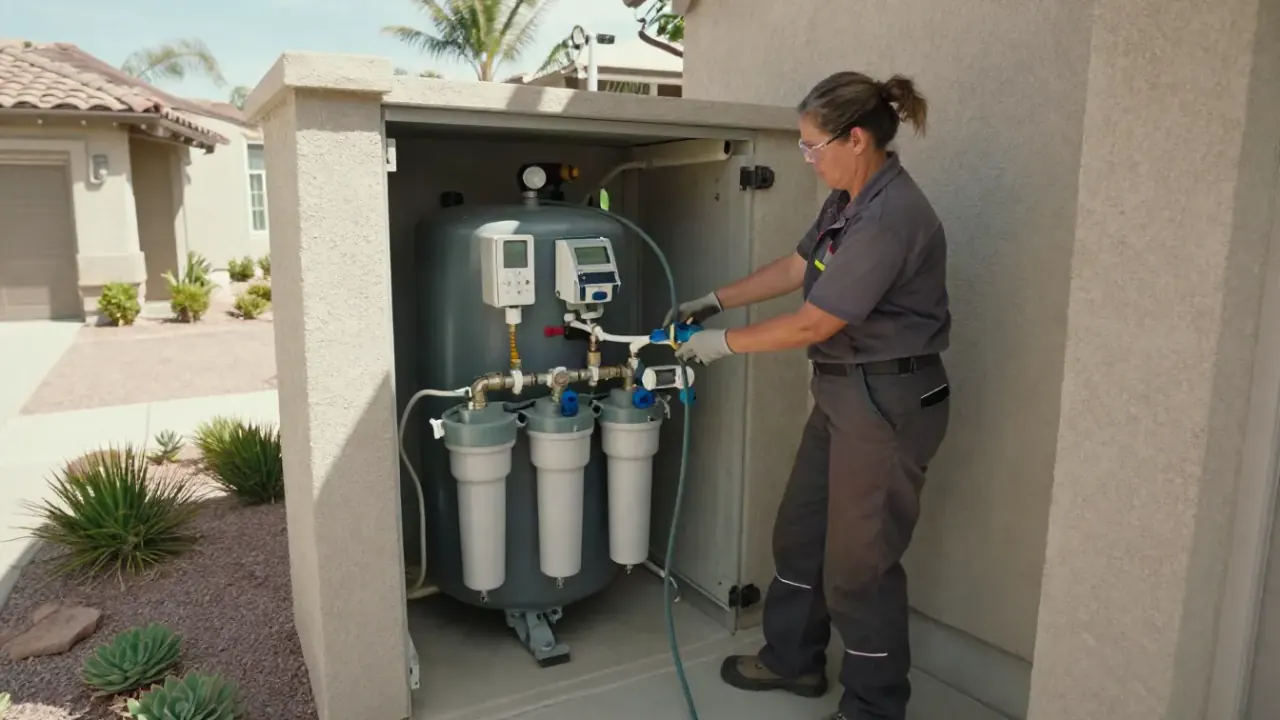
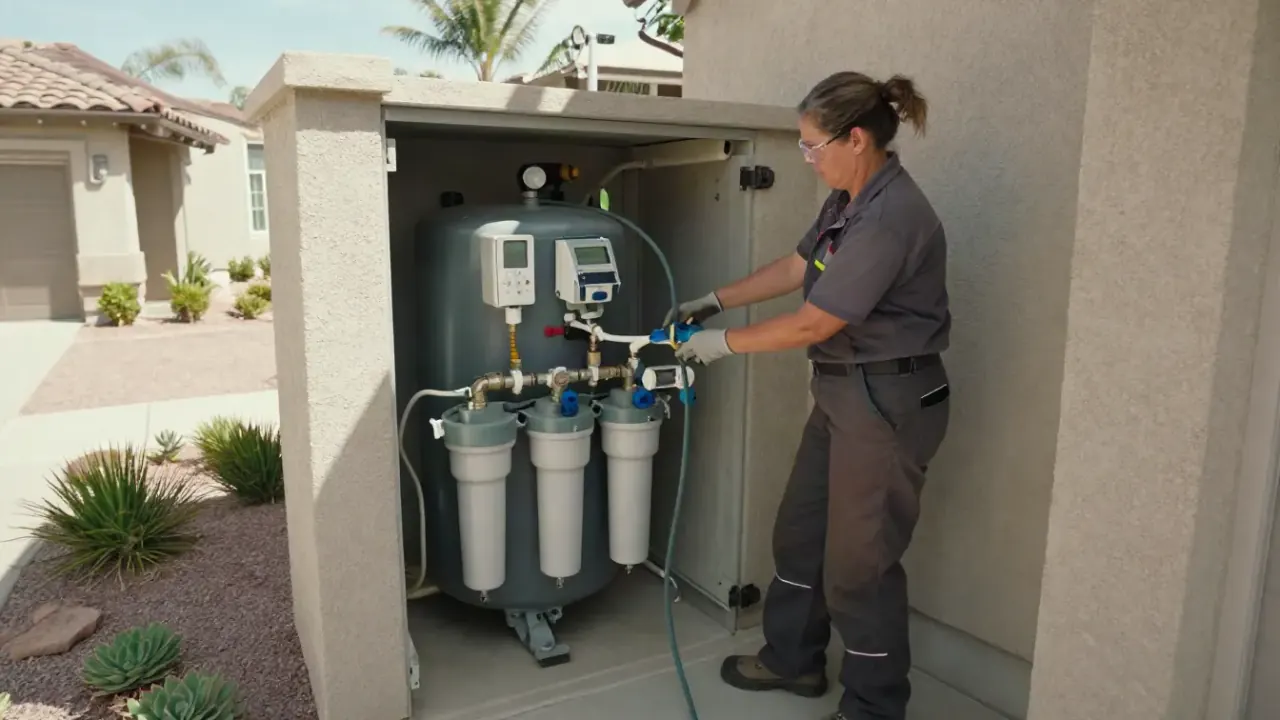
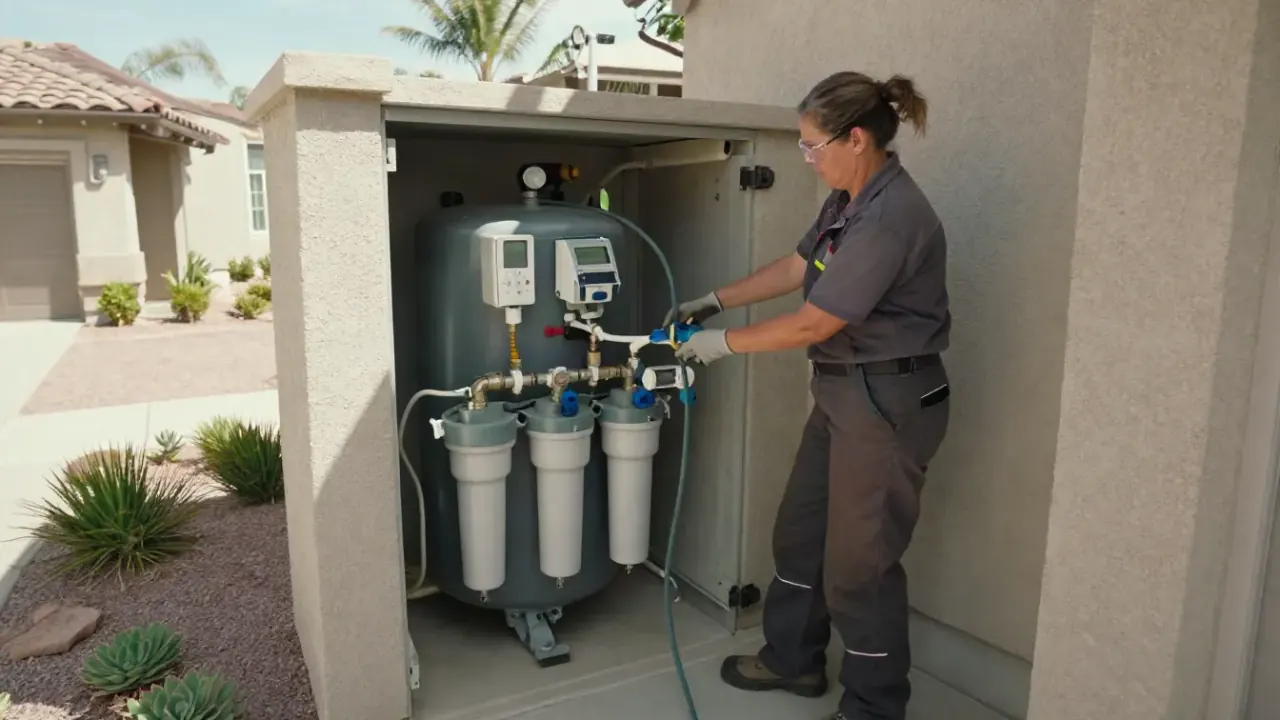
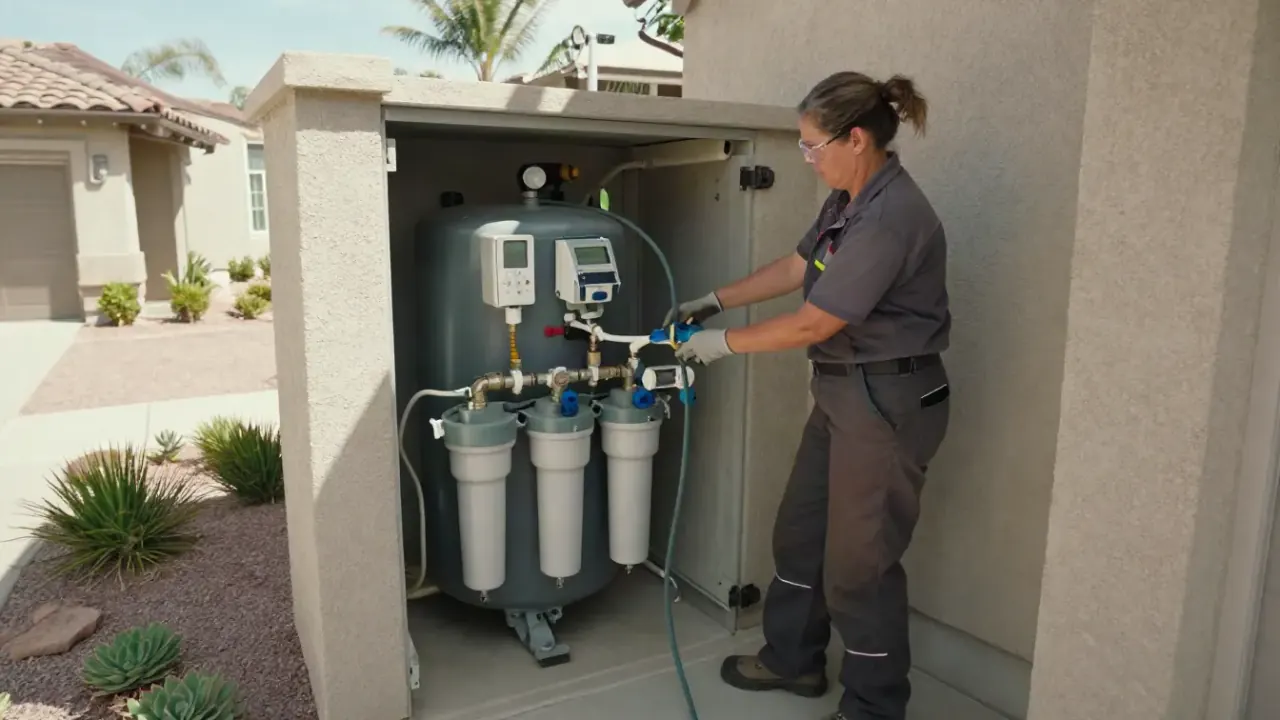
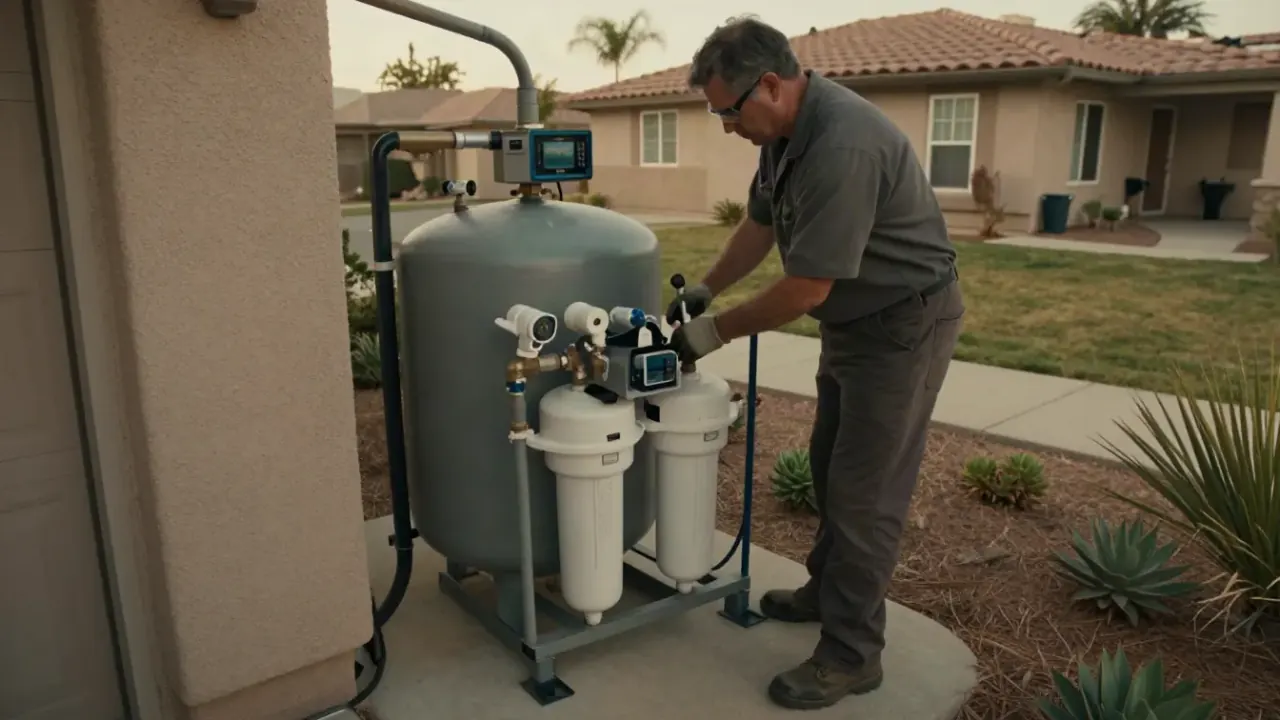
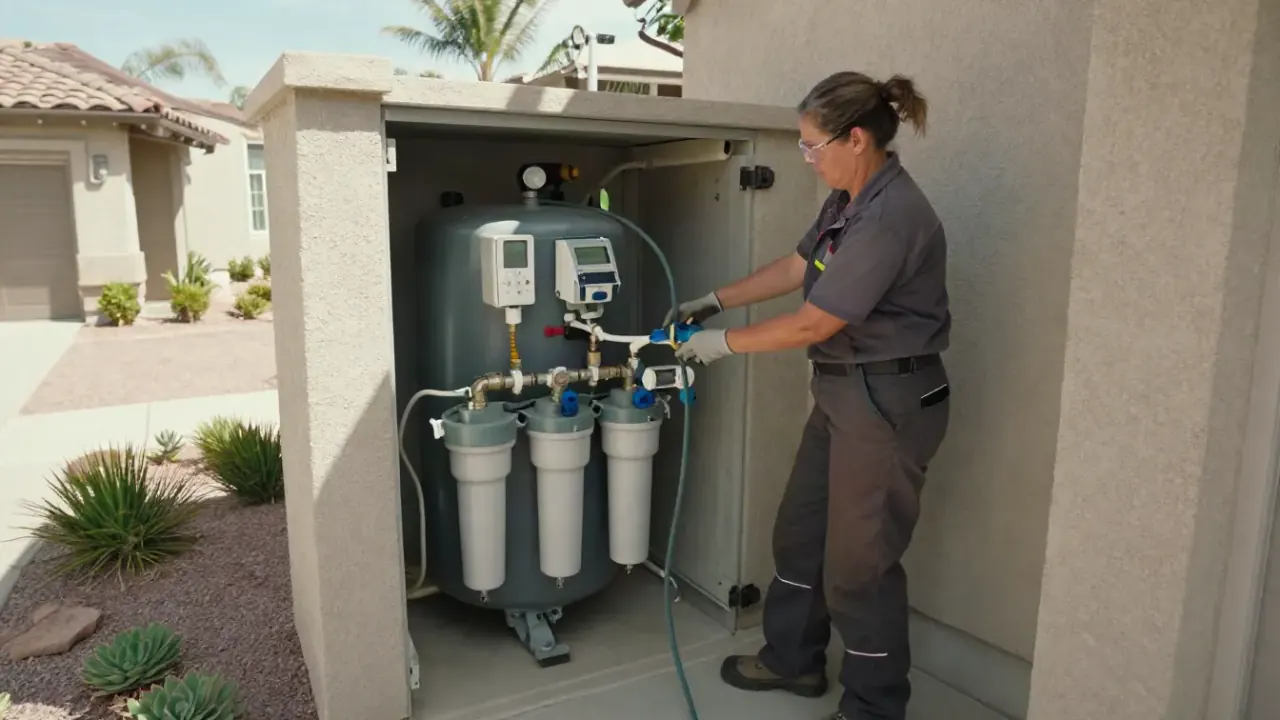
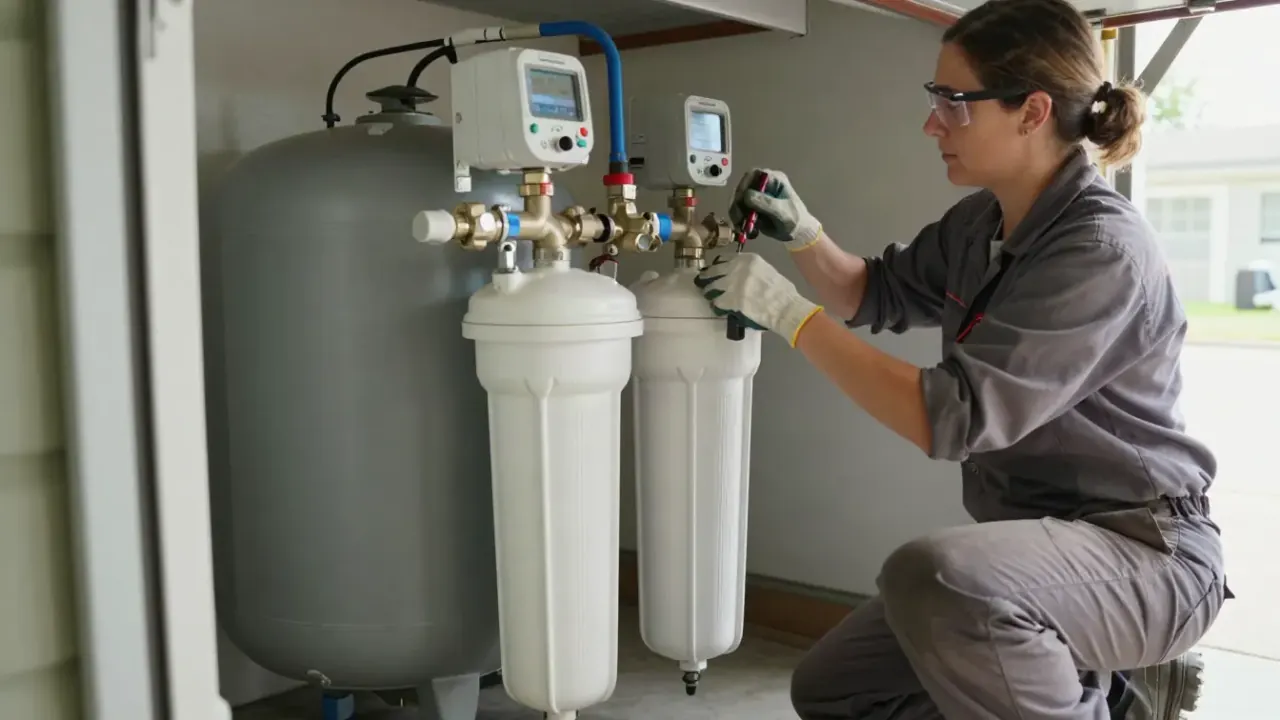
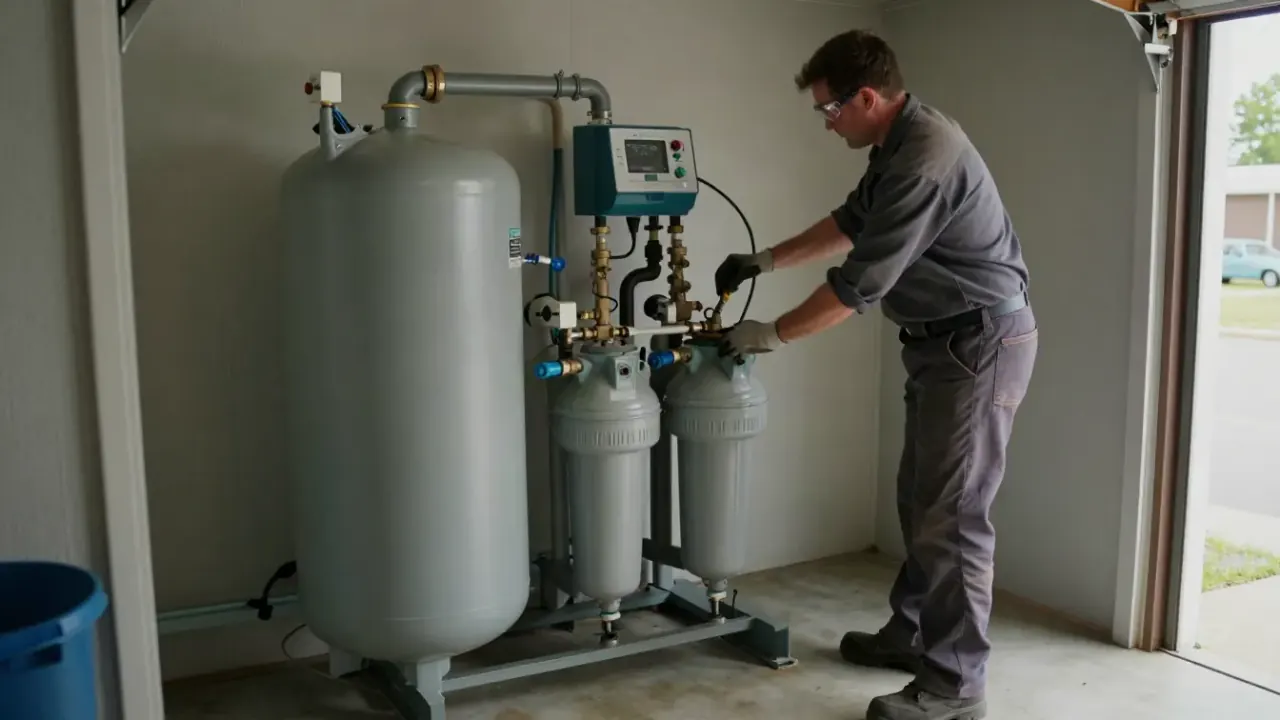
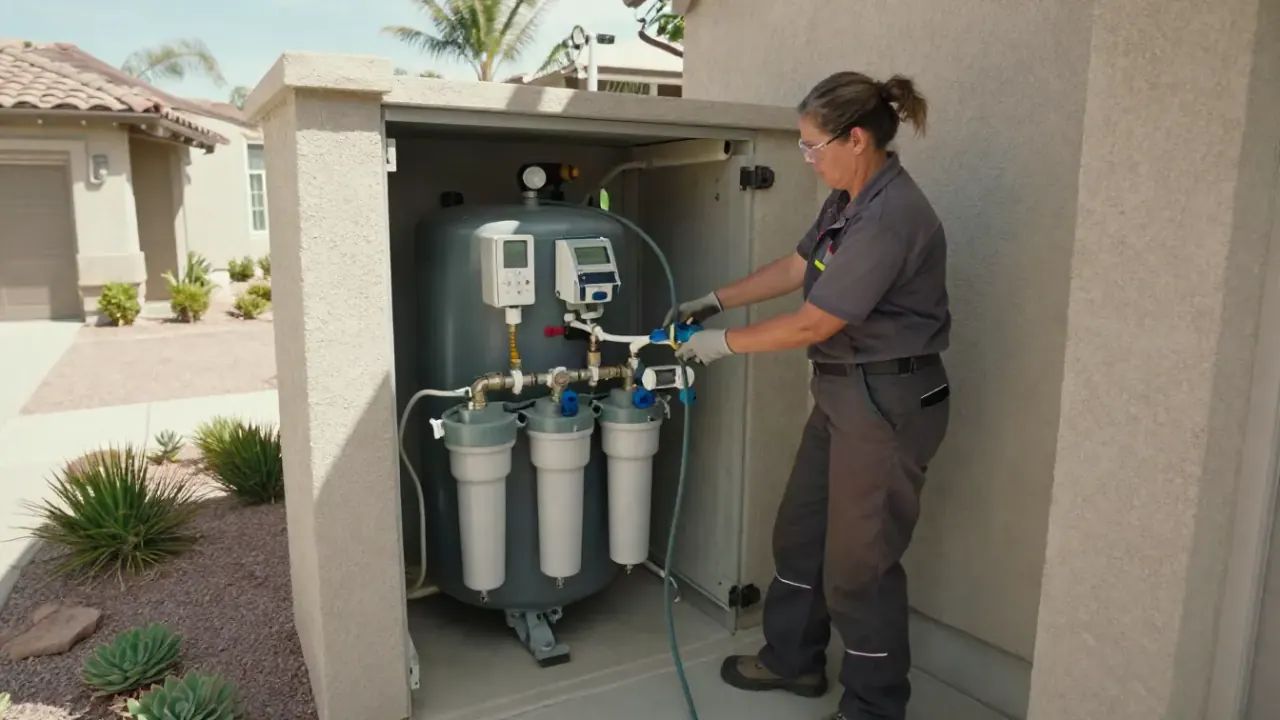
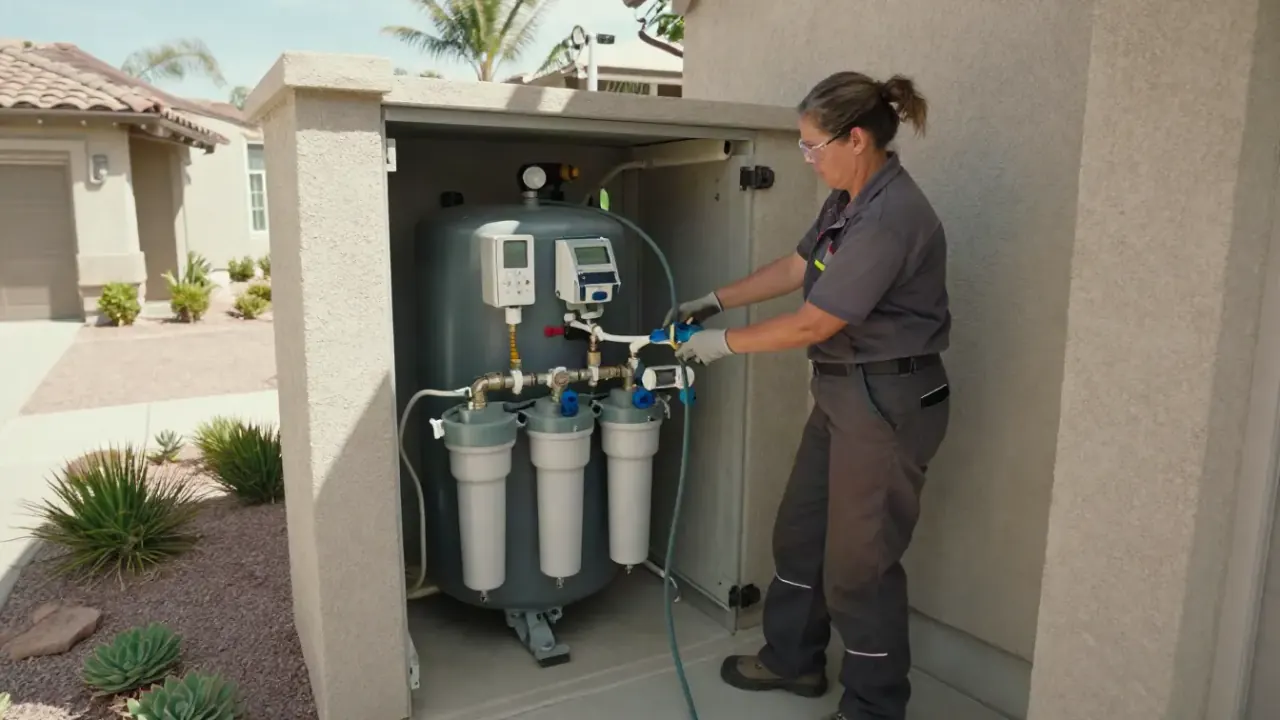
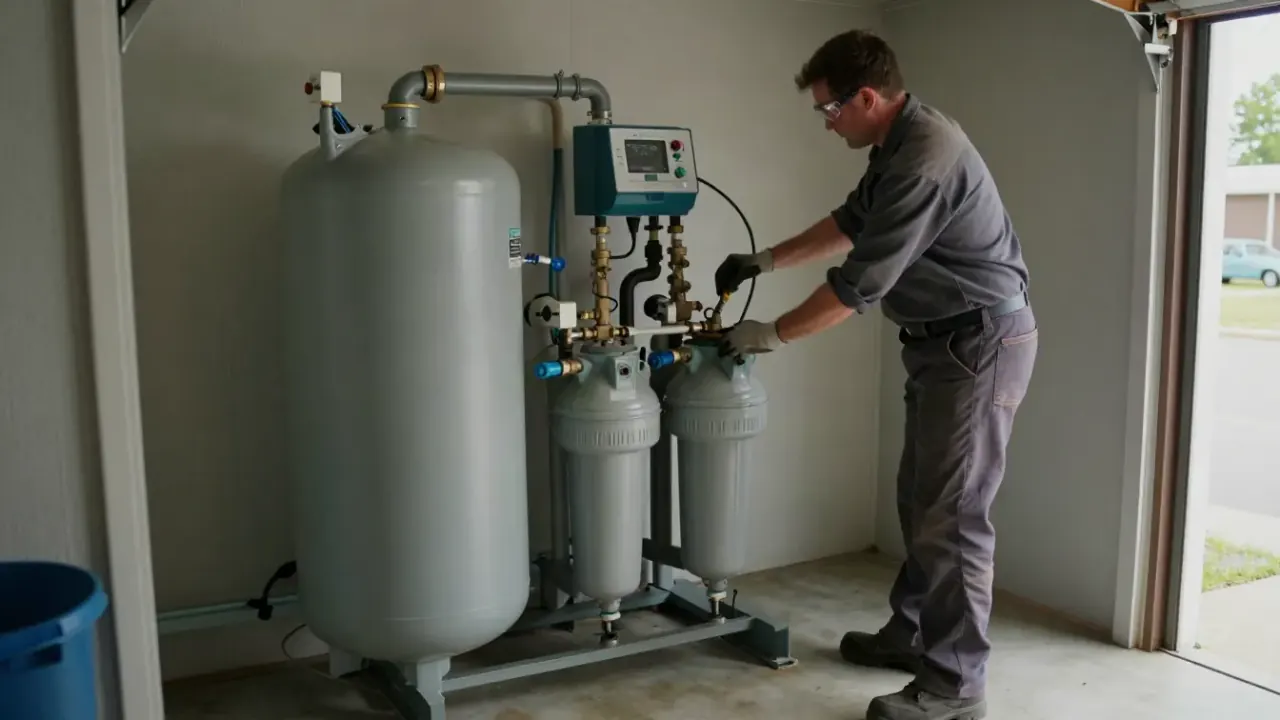
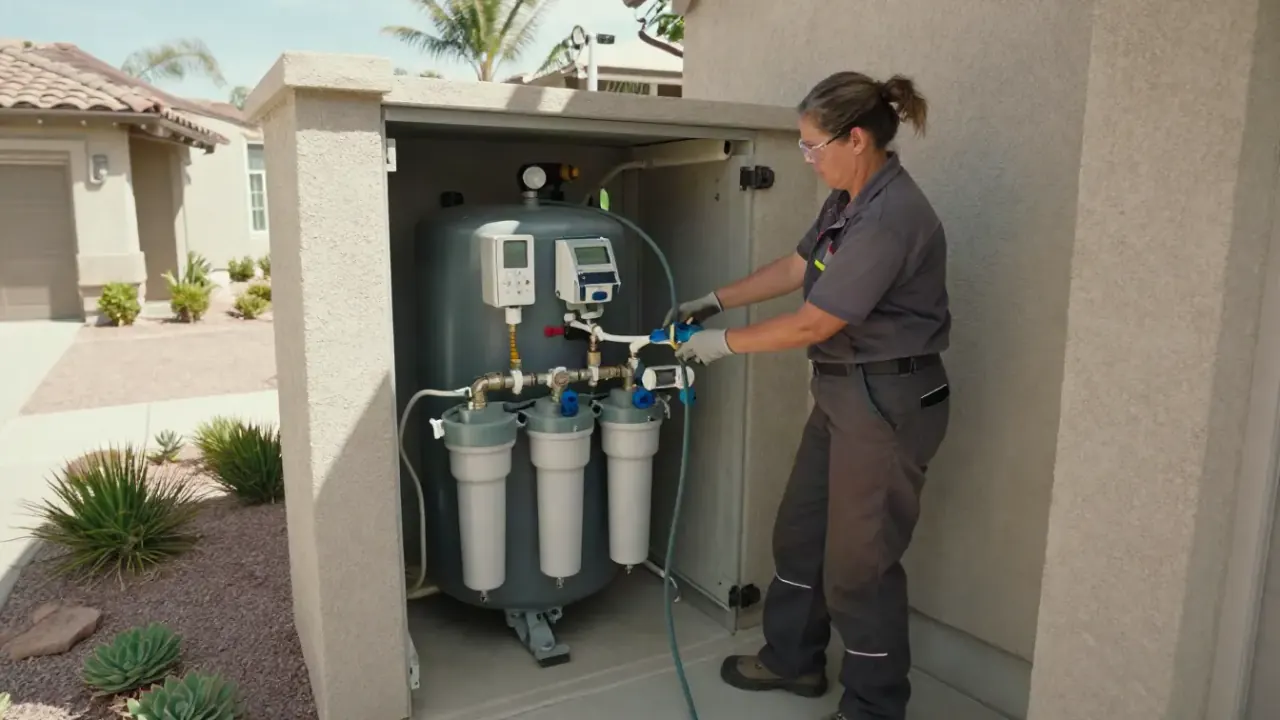
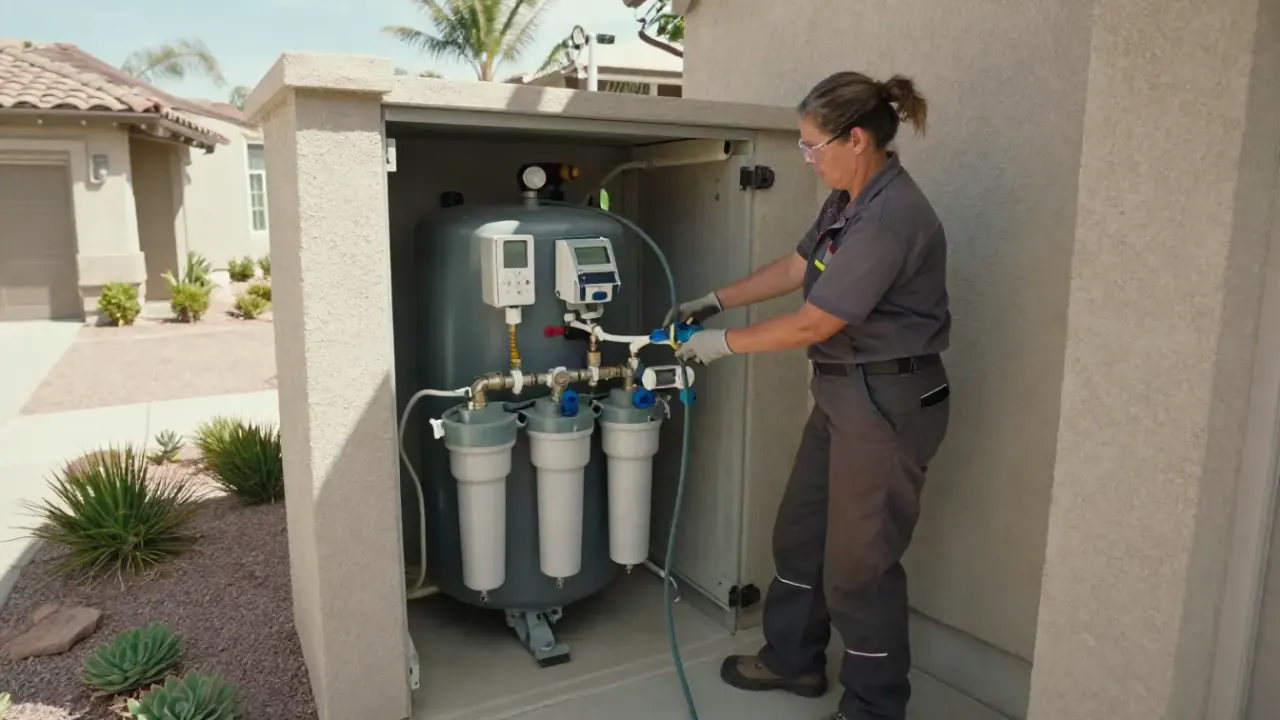
We shut off the main, cut the supply line with a tubing cutter, and fit the bypass valve. Copper gets soldered with a torch; PEX gets crimped. The resin tank, brine tank and drain line go in, and we program the control head for your numbers. Most installs run two to four hours.
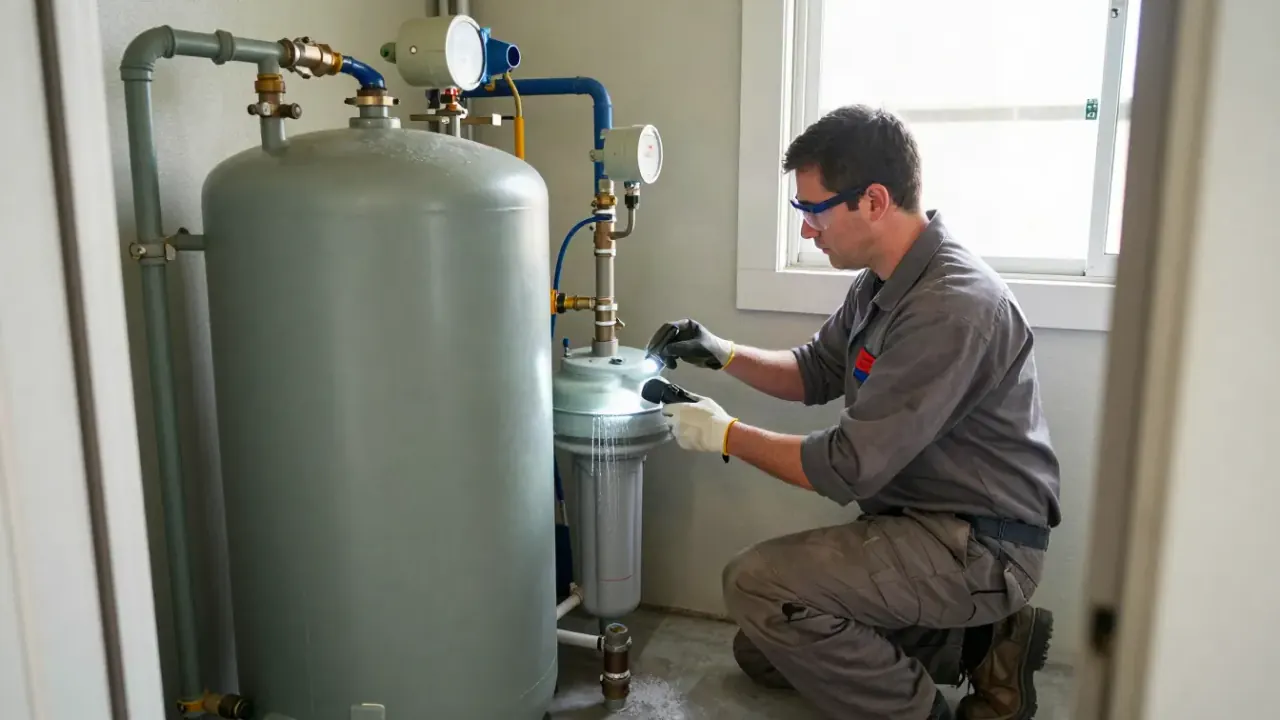
We run a full regeneration cycle, check for leaks at every joint, and flush the lines until the water runs clear. You get a hardness reading from the tap so you can see the before and after. If anything drips, we fix it before we leave the driveway.
We show you how to add water softener salt, what the regeneration light means, and how to bypass the system if you ever need untreated water. You get the settings written down and our number for questions. No charge for the follow-up call.
Measures grains per gallon at the tap so we size the resin tank correctly and prove the results after installation.
Reads total dissolved solids before and after the system, confirming the softener is actually removing minerals from your water.
Used to open the main line and cut copper or PEX cleanly so the bypass valve and fittings seat without leaks.
Joins copper supply lines with a code-correct sweat connection that holds pressure for decades.
Opens the resin tank for media checks or replacement without cracking the neck or stripping threads.
Removes salt sludge and brine mush during cleaning so the system can draw brine properly again.
The metered valve heads we install most often because parts are available and they handle Diamond Bar hardness well.
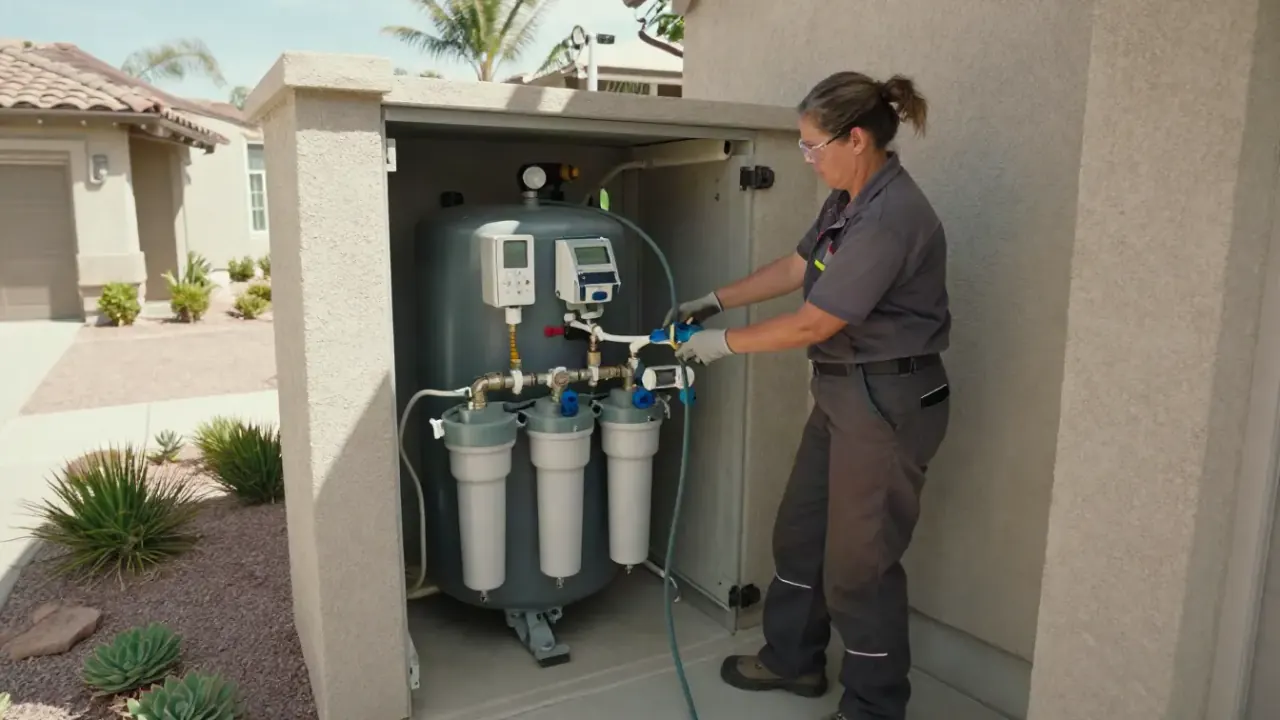
We install resin, tanks and valves that meet the NSF/ANSI 44 standard for water softeners. That means the materials are tested for safety and performance, not just sold as a box with a label.
We test the water, size a 48,000-grain system with a Fleck control valve, and install it on the main line ahead of the heater. The brine tank goes in a spot where filling it does not require moving boxes. Soap use drops, the new heater stays scale-free, and the family stops replacing showerheads every year. The whole job is done in one visit.
We find a salt bridge and a clogged injector, vacuum the brine tank, replace the injector, and reprogram the control head. No new system needed. The unit regenerates properly again, salt use drops back to normal, and hardness at the tap returns to under 1 grain per gallon.
We install standard 32,000-grain units with bypass valves, label the lines, and walk each tenant through the salt schedule. We pull permits where the city requires them. Fewer plumbing calls, longer fixture life, and a documented setup that satisfies the home inspector at turnover.
We test with a TDS meter and hardness kit, then install a sediment filter and carbon filter ahead of the softener to catch iron and taste before it hits the resin. Staining stops, the resin bed lasts longer, and the water tastes clean from every tap. Filters get changed once or twice a year.
Diamond Bar water comes from a blend of Colorado River supply and local groundwater, and hardness swings from about 8 to 18 grains per gallon depending on the zone. Homes in 91789 and 91765 built in the 1980s and 1990s usually have copper supply lines and a garage or utility closet where the softener can sit. We install on the main line after the meter, before any hose bibs you want left hard, and we run the drain to a standpipe or laundry drain with an air gap. Summer demand is higher here because of irrigation and pools, so we size the resin tank with that in mind. If you are looking for affordable water softener installation in Diamond Bar CA, the biggest cost driver is not the tank, it is where the main line sits and how much plumbing we have to reconfigure. We handle permits when the city requires them and leave the bypass valve labeled so you can isolate the system for repairs.
A Windwood homeowner was replacing showerheads every eight months and the water heater was rumbling. The raw water tested at 16 grains per gallon with visible scale on the faucet aerators.
We installed a 48,000-grain system with a Fleck control valve and a bypass valve on the main. Treated water tested under 1 grain per gallon. Soap use dropped noticeably and the showerheads stopped clogging.
Add water softener salt every six to eight weeks, check the brine level monthly, and schedule an annual service to clean the injector and verify the control valve settings.
A Sycamore Canyon family was buying a 40-pound bag of salt every ten days and the water still felt hard. The brine tank had a thick sludge layer and a salt bridge blocking the brine well.
We vacuumed the brine tank, cleared the bridge, replaced the clogged injector, and reprogrammed the control head. Salt use dropped to about one bag a month and hardness at the tap returned to under 1 grain.
Keep the salt level about half full, break up any crust that forms on top, and have the brine tank cleaned every two to three years.
A homeowner in The Country moved into a house with a softener loop but no unit. Hard water was already spotting the new glassware and the tankless heater was showing scale warnings.
We tied into the existing loop, installed a 32,000-grain system with a Clack valve, and ran the drain to the laundry standpipe. The install took under three hours and the scale warnings stopped.
Test hardness twice a year with a TDS meter, keep the salt topped up, and have the resin checked after about ten years of service.
Hard water does not fix itself. These are the four calls we get most often, and what we do about them.
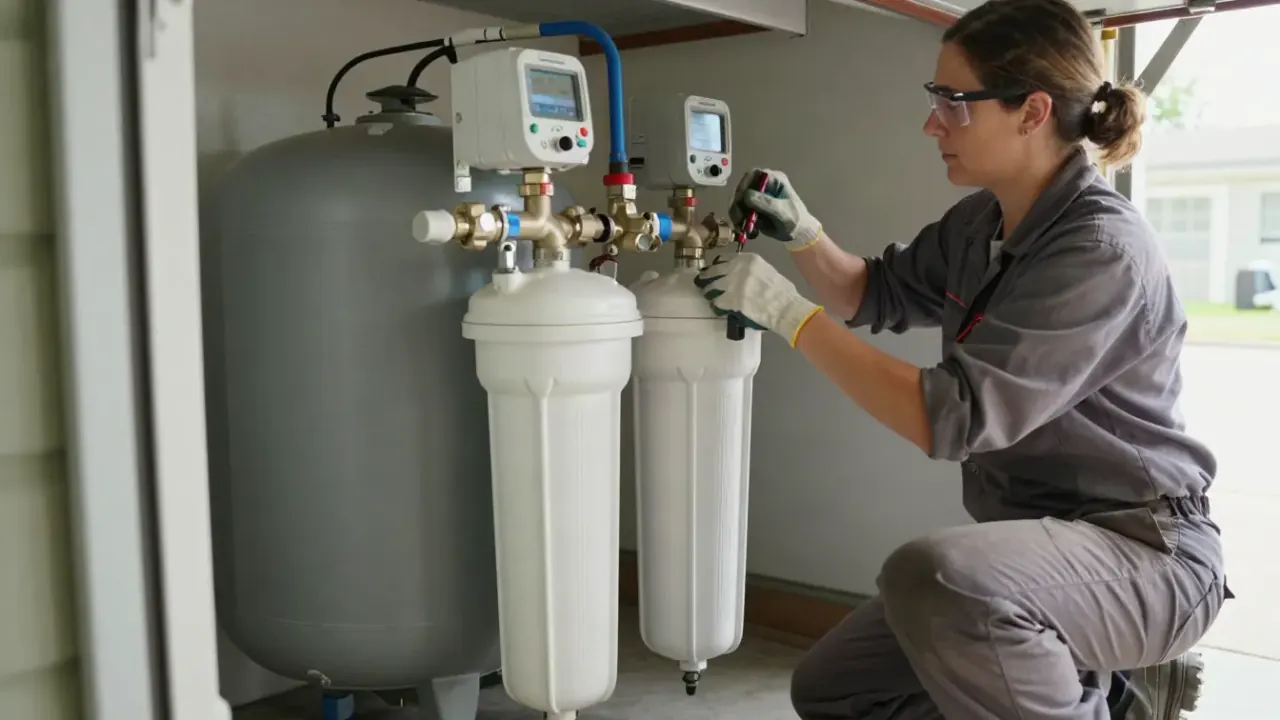
We install a correctly sized softener with NSF/ANSI 44 resin so the minerals are pulled out before they reach your fixtures. You will see the difference on the first dishwasher load, and glassware stops clouding. Calcium and magnesium leave a film that etches glass over time and makes every surface look dirty even after cleaning.
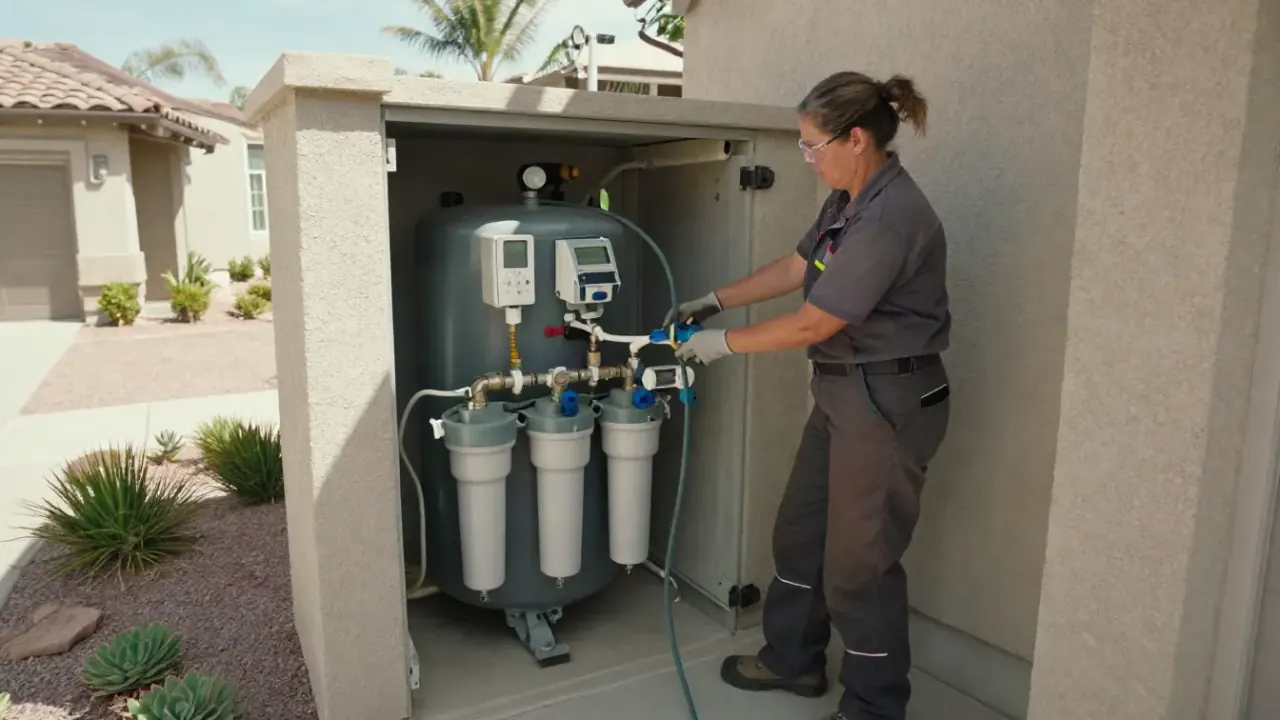
Soft water stops new scale from forming. We install the system on the main line so every fixture and appliance downstream is protected, and we test hardness after the install to confirm it worked. Scale narrows the pipe bore and coats the heater tank, cutting flow and forcing the unit to work harder until it fails early.
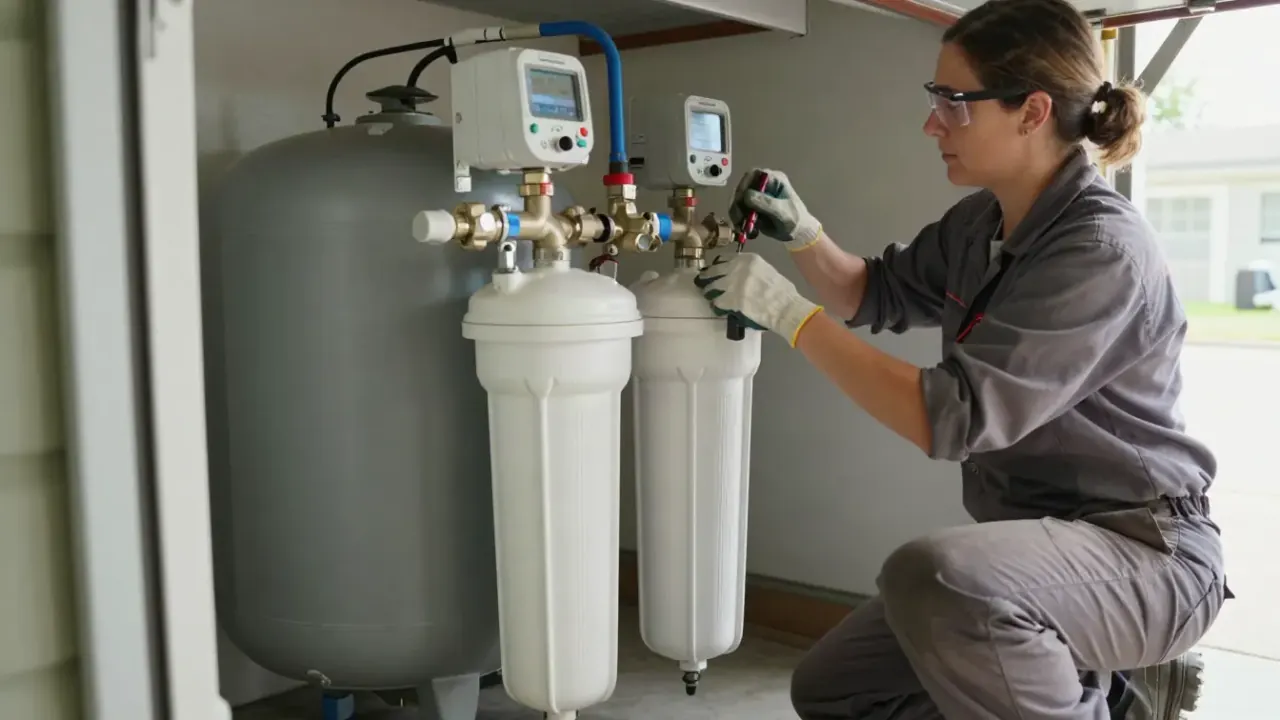
We diagnose the control head, clean or replace the injector, and reset the programming. If the valve is past saving, we replace it with a Fleck or Clack head and re-test the output the same visit. A failed control valve or clogged injector means the resin never recharges, so you are back to hard water within days without knowing it.
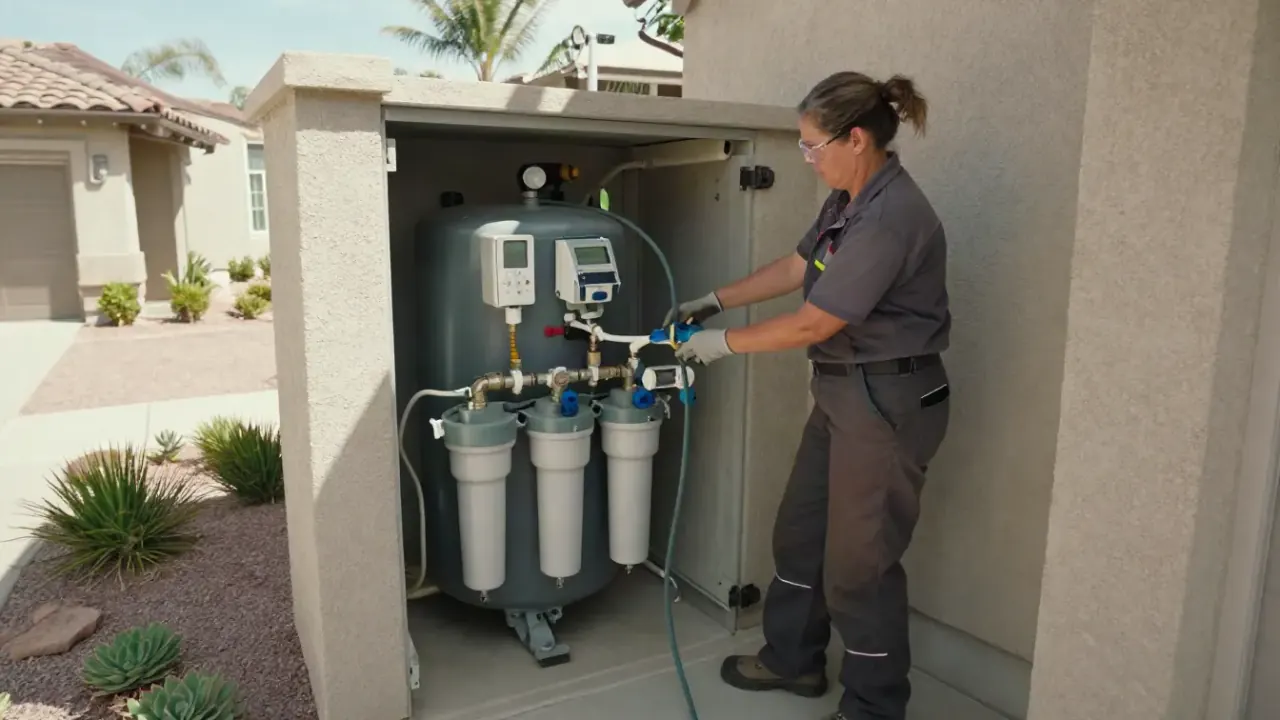
We vacuum out the brine tank, clear the salt mush, check the float and brine well, and recalibrate the regeneration schedule. Most customers cut their salt use by half after a proper cleaning and setup. A salt bridge or sludge layer stops the system from drawing brine, so it keeps running cycles and burning through bags of salt with no softening.
Dishes, shower glass and car paint stop spotting once the resin tank is online. A 12-grain-per-gallon household cuts soap use by roughly half, and you will see the difference on the first load of laundry. We confirm the drop with a TDS meter before we pack up.
Scale buildup in pipes and the heater tank is the number one killer of water heaters in Los Angeles County. Soft water keeps the tank liner clean, so you get the full service life instead of replacing a unit early. That is a real dollar saving, not a sales line.
A correctly sized system regenerates less often. We set the control valve for your actual hardness and household size, so you are not dumping 40-pound bags of water softener salt every two weeks. Potassium chloride is an option if you want to cut sodium.
Soft water stops the white crust on faucets, aerators and shower valves. It also protects the inside of your copper and PEX runs, which matters in older Diamond Bar tracts where low water pressure from scaling is already a complaint. One install protects every fixture downstream.
Typical 2026 pricing for a residential install in Diamond Bar runs $1,200 to $3,500, depending on tank size, valve brand and how much plumbing we have to change. A standard 32,000-grain unit with a Fleck valve sits near the low end. A whole house water softener installation Diamond Bar CA with a carbon pre-filter and an under-sink reverse osmosis tap lands higher. We test your water and give you a firm number before any work starts, so there are no surprises on the invoice.
What your estimate is based on
$1,200 - $3,500 depending on system size, valve and plumbing scope A softener protects your water heater, fixtures and pipes, and cuts soap and salt spending every month. Most Diamond Bar homeowners see the difference on the first utility cycle and the first load of dishes.
Clear records you can keep and share.
Before and after numbers from the tap
Programming written down for your records
Isolation valve marked for future service
A softener removes hardness minerals; it does not remove chlorine, sediment or iron. Knowing what your water has decides which filters go ahead of the tank.
Hardness is calcium and magnesium. Iron is a separate problem that stains fixtures and fouls resin. If you have iron, we add a filter ahead of the softener.
Standard softeners use sodium chloride pellets. Potassium chloride is a lower-sodium option that costs more per bag but works the same way in the tank.
A metered control valve regenerates based on gallons used. A timer head runs on a fixed schedule. Metered heads use less salt and water in most homes.
Outside these areas? Call and ask about your street. (909) 415-2296
Most residential installs run $1,200 to $3,500 in 2026, including the system and labor. A basic 32,000-grain unit with a Fleck valve sits near the low end; a whole house water softener installation Diamond Bar CA with a carbon pre-filter and reverse osmosis tap pushes higher. Hardness level, tank size and where the main line sits all move the number. We give you a firm quote after the water test.
A standard install takes two to four hours. That covers cutting the main line, fitting the bypass valve, setting the resin and brine tanks, and programming the control head. If we are adding a sediment filter or carbon filter ahead of the softener, add about an hour. We test and flush before we leave, so you are not waiting on a second visit.
Yes, when the schedule allows. Call before noon and we can often complete a same-day water softener installation Diamond Bar appointment with a standard tank size we carry on the truck. Custom sizes or jobs that need a permit may roll to the next business day. We confirm the window when you call (909) 415-2296.
If your showerhead clogs in under a year, your glasses spot after the dishwasher, or your water heater rumbles, you likely have hard water. Diamond Bar water often tests 12 to 18 grains per gallon. We check with a water hardness test kit and TDS meter on site. Above 7 grains, a softener usually pays for itself in soap and appliance life.
Call (909) 415-2296 and we will test your water, size the system and give you a firm price before we start. Most installs are done in a single visit, and we walk you through the settings before we leave. Same-day slots go fast, so call early.
Call (909) 415-2296 or email us and we will get back to you the same business day. We answer questions about hardness readings, salt use, and system sizing before you book anything. Serving Diamond Bar and Los Angeles County.