Hardness reading
Grains per gallon and TDS at your tap
Salt-Free Water Conditioners Diamond Bar CA give you soft-feeling water without bags of salt or a brine tank to babysit. If your fixtures are crusted white and your water heater is popping, we install a no-salt water conditioner Diamond Bar CA homeowners actually keep. We test your water first, then size the system to your home and hardness level.
Every install covers the equipment, the plumbing, and the testing that proves it works. Here is what comes standard and what we quote separately if your setup needs it.
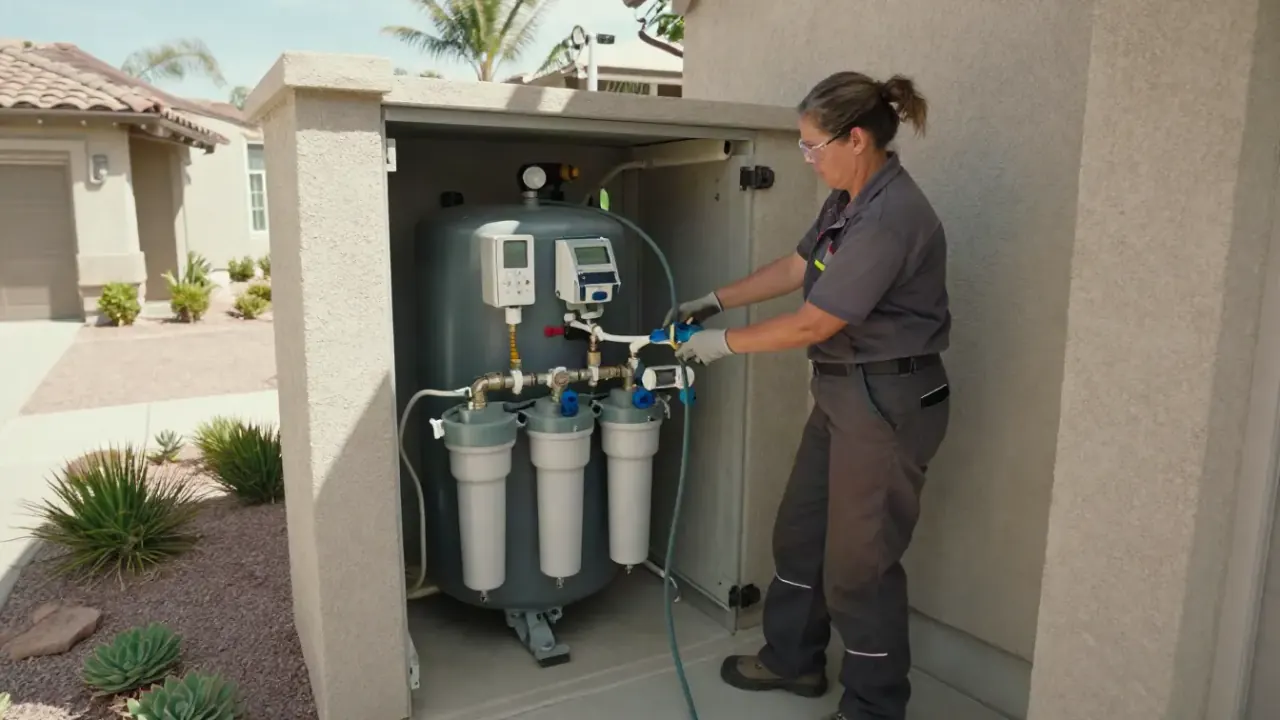
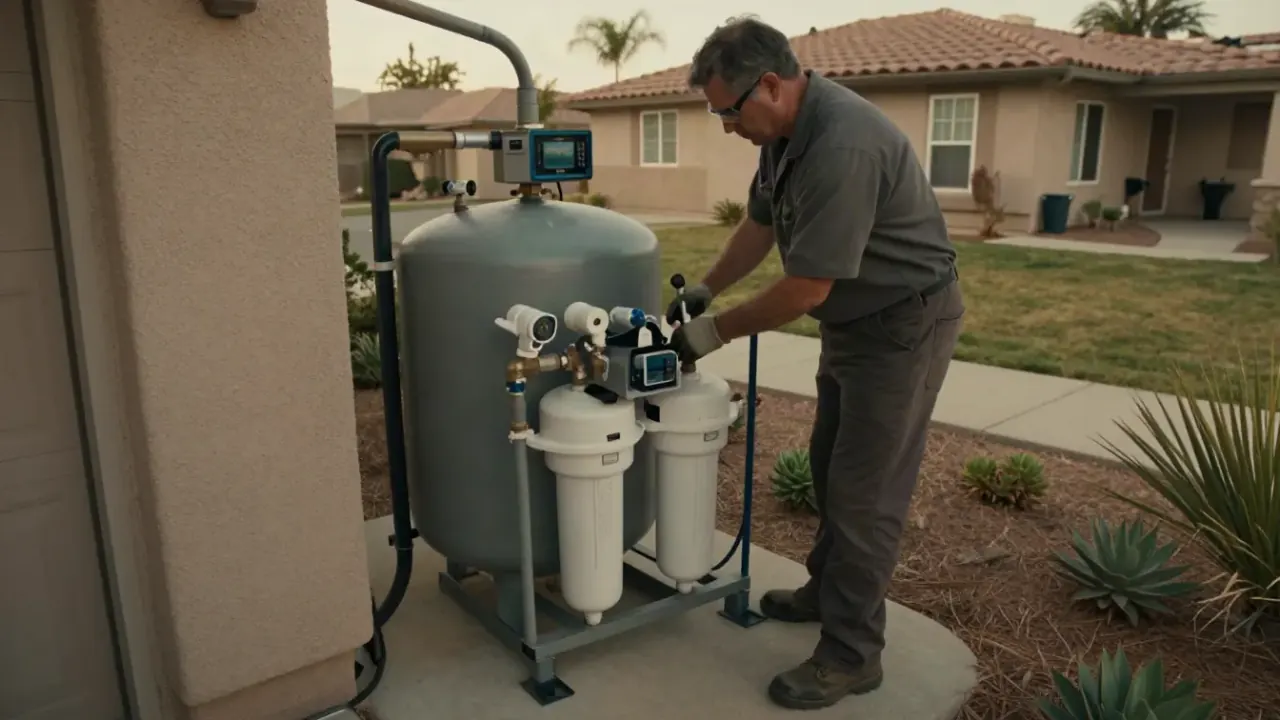
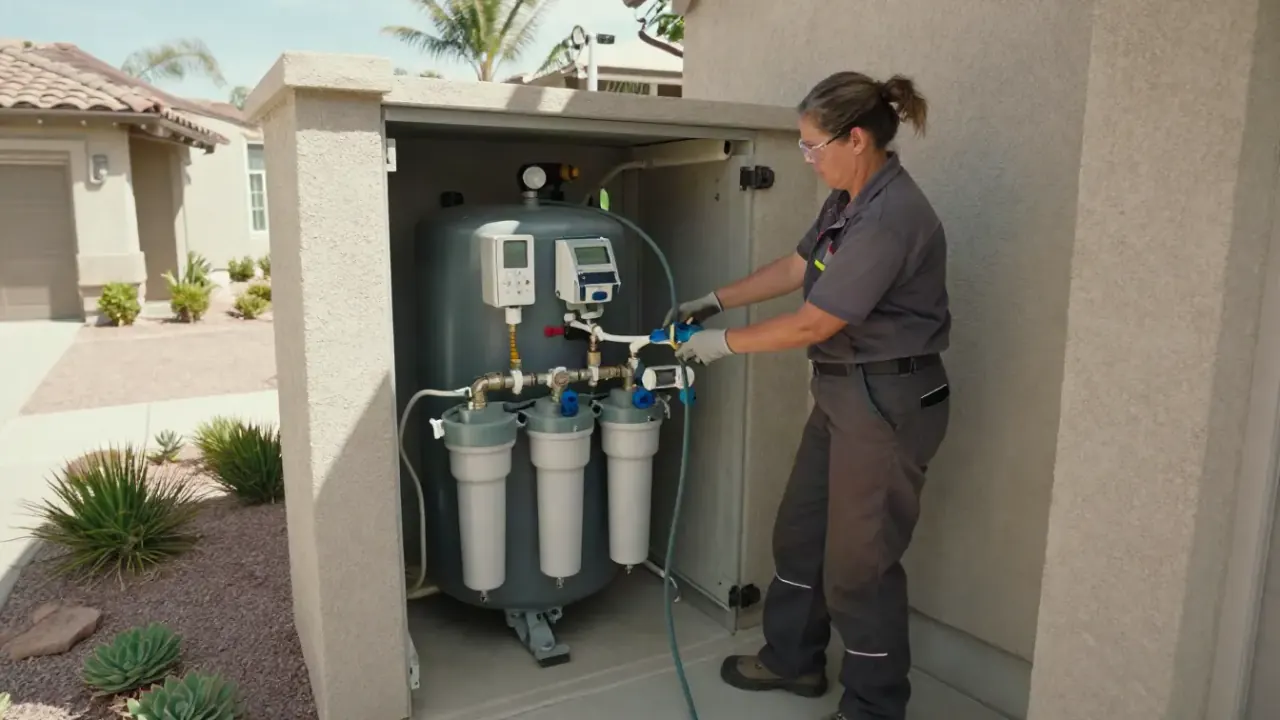
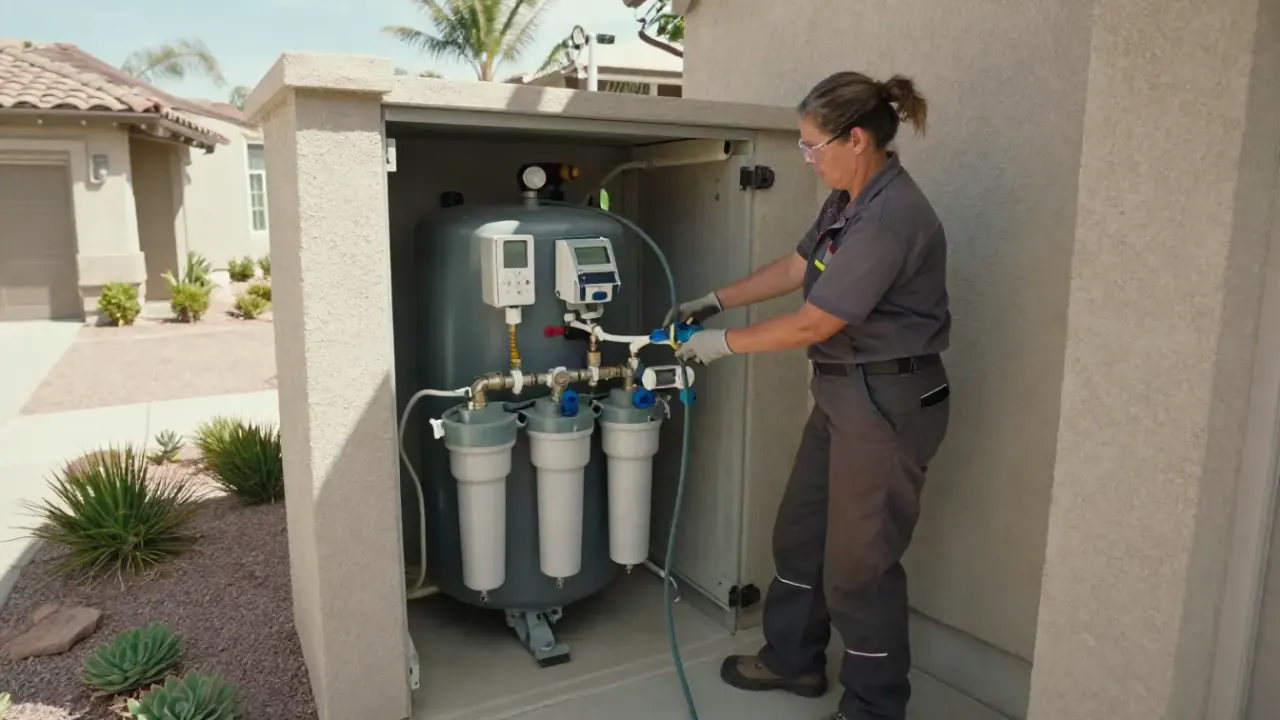
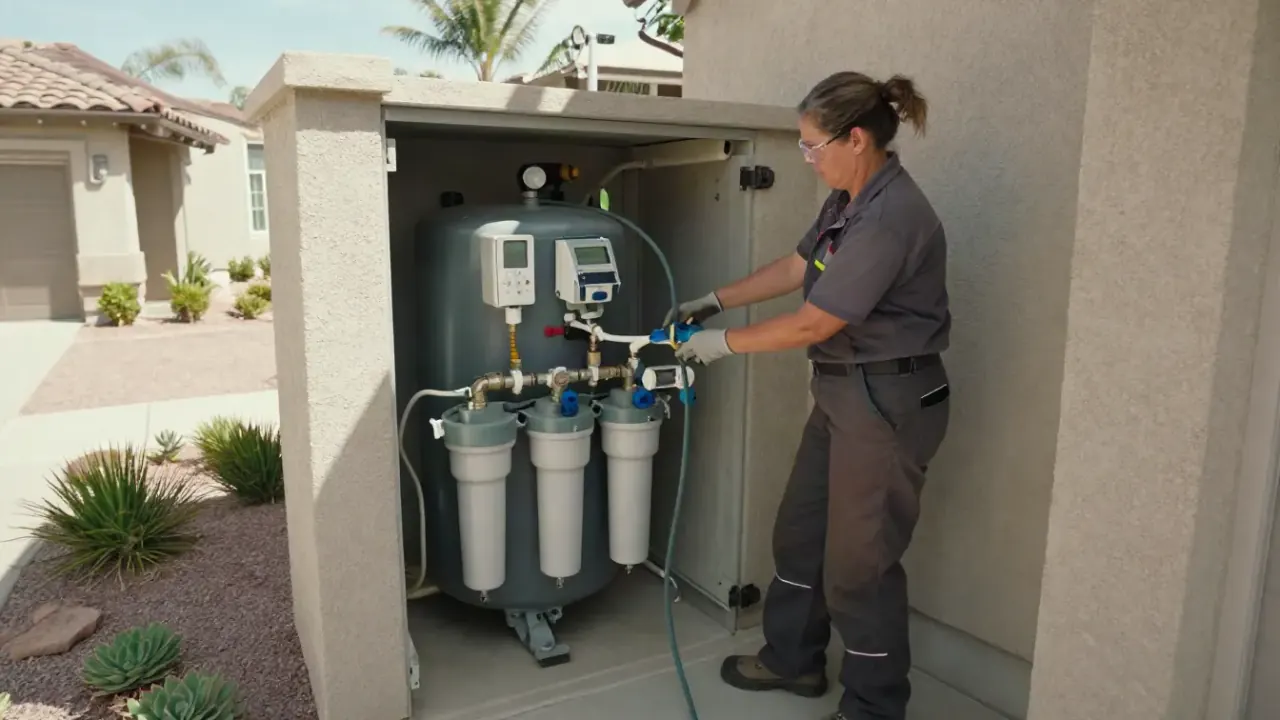
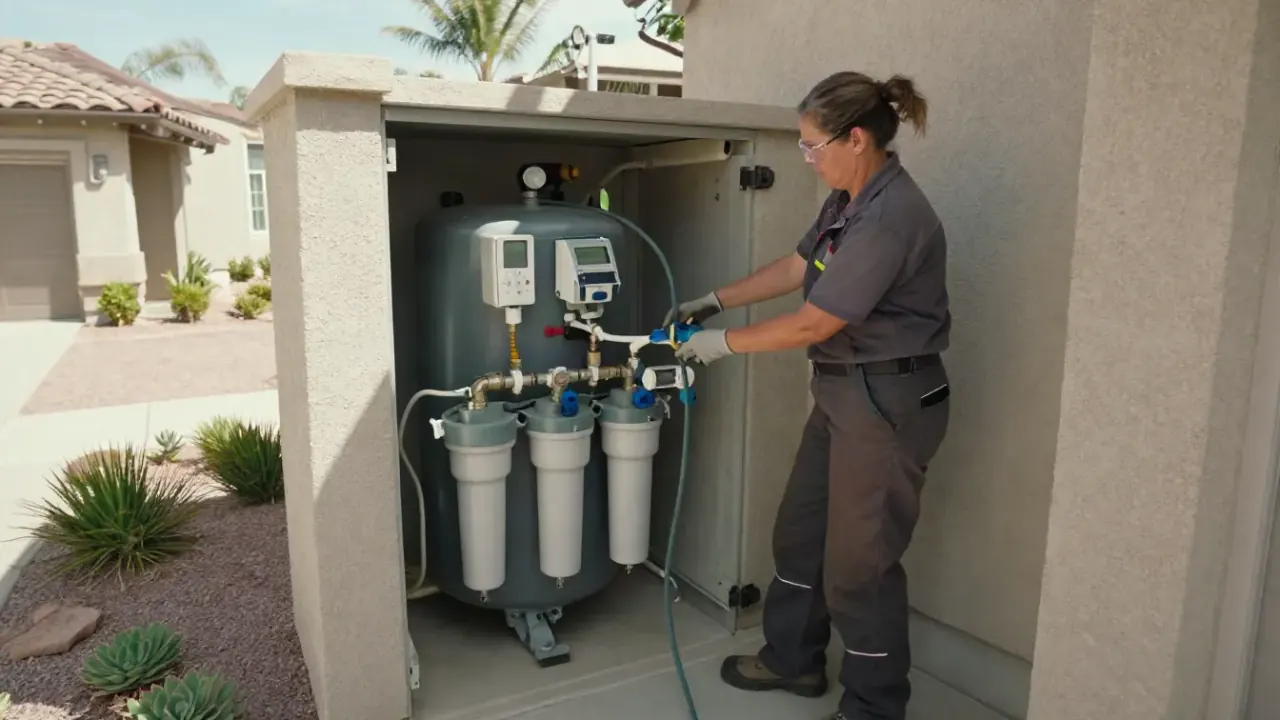
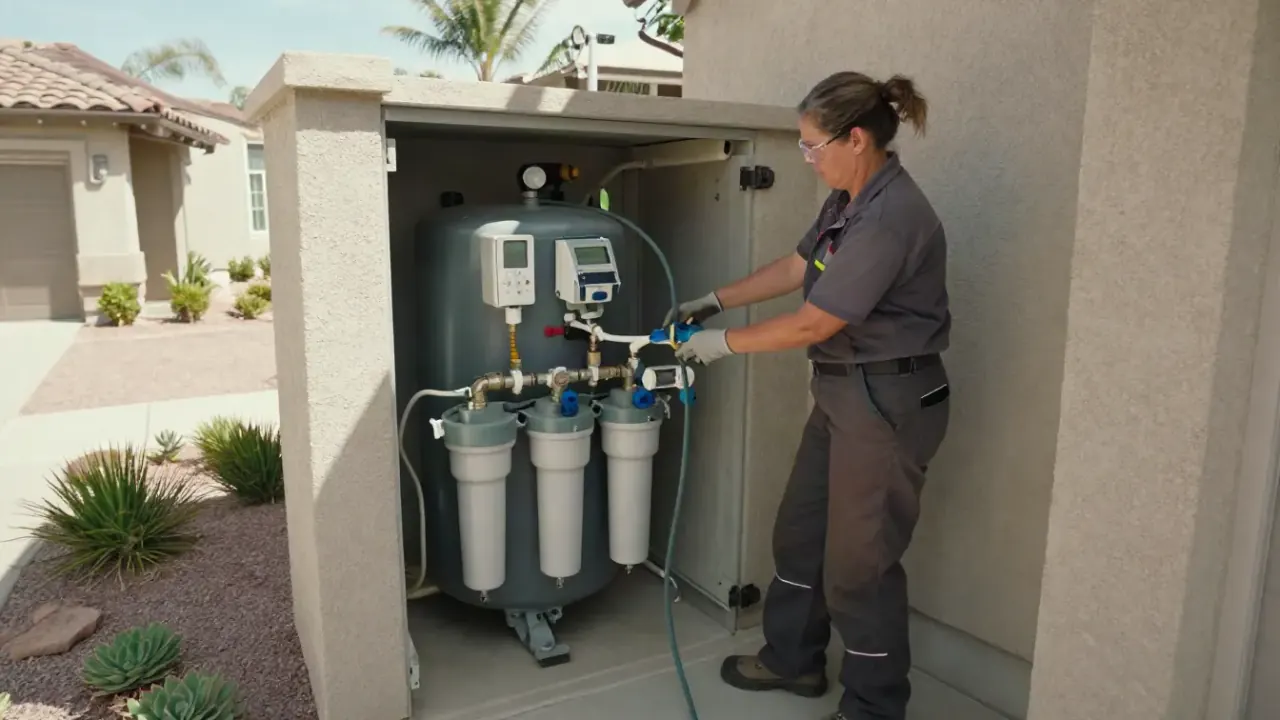
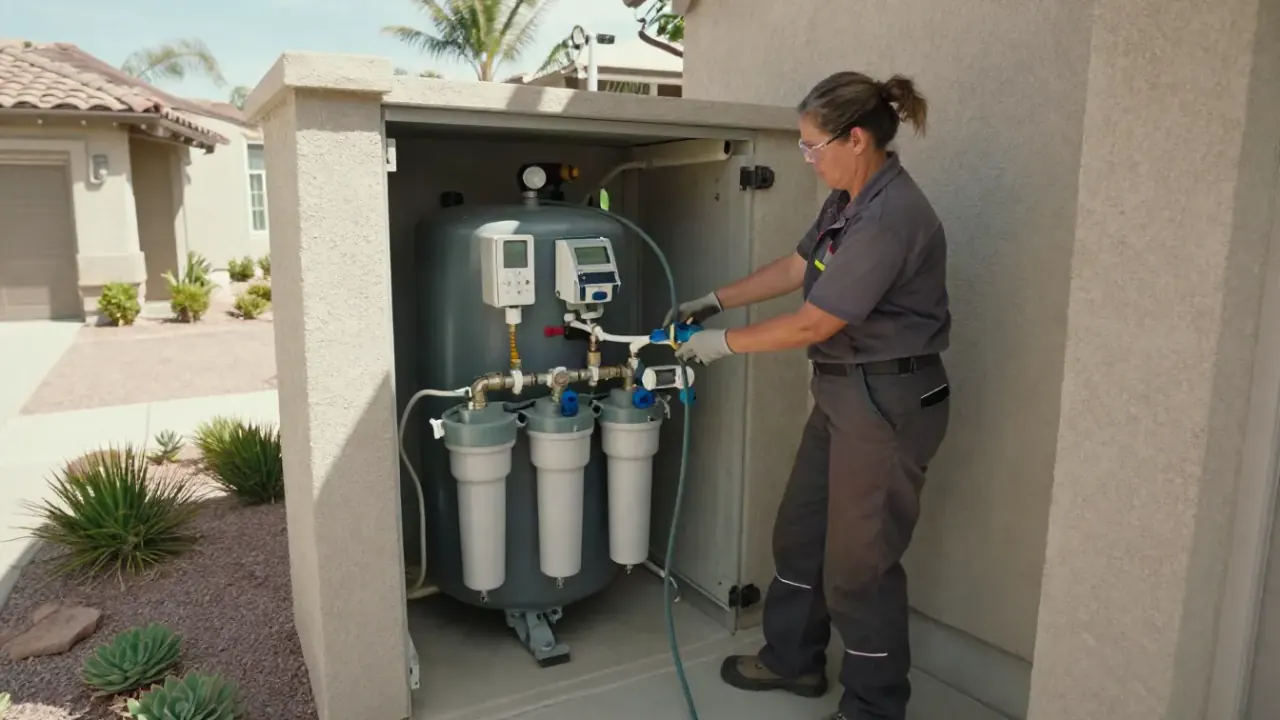
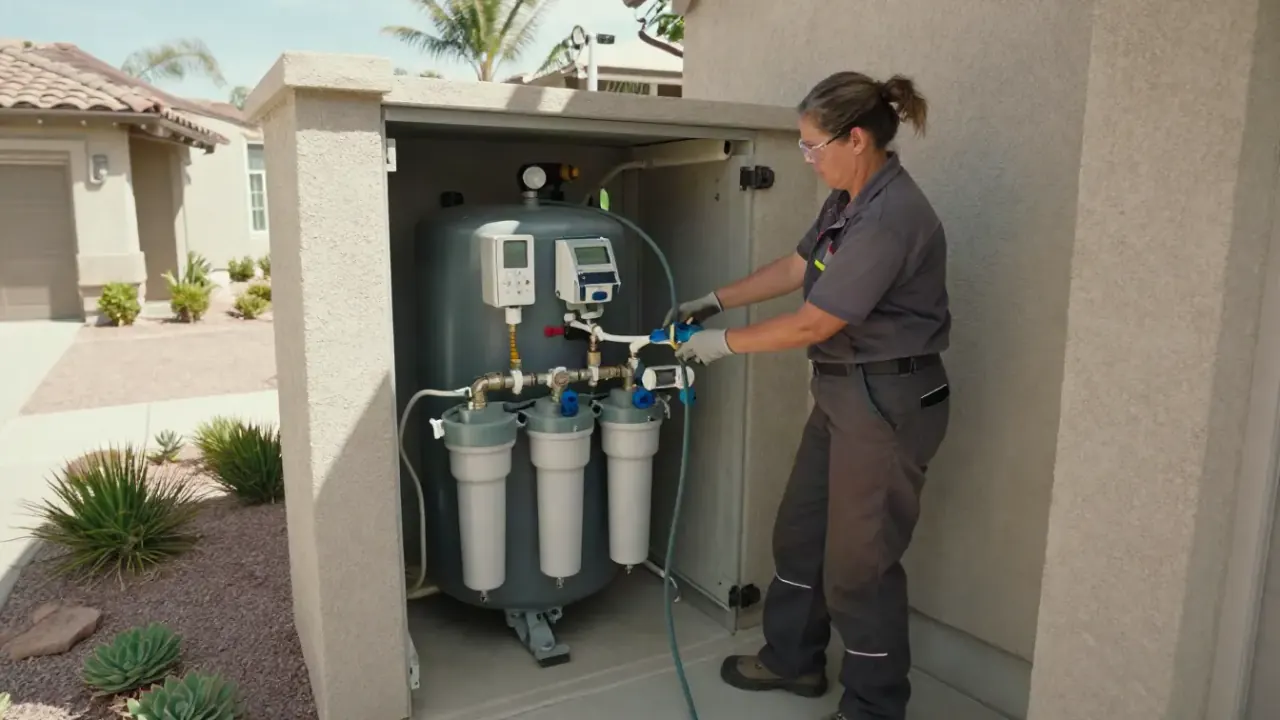
We install salt-free conditioning tanks at the main cold line so every fixture in your house is treated. You get scale control without salt bags, a brine tank, or a regeneration cycle to manage.
We install and service salt-free systems for rental units, small offices, and multi-family buildings. Each property gets tested separately because hardness can vary from one building to the next.
Salt-Free Water Conditioners Diamond Bar CA is a scale-control system that conditions water without removing calcium and magnesium through ion exchange. Instead of a brine tank and water softener salt, these units use a media tank that alters how hardness minerals behave, so they pass through without sticking to pipes, fixtures, or heating elements. You keep the minerals, you lose the crust. Most homes here run 10 to 18 grains per gallon of hardness, which is exactly the range where scale damage starts showing up on faucets and inside water heaters.
Diamond Bar sits in Los Angeles County where imported Colorado River and State Water Project supplies blend together, and that blend shifts hardness season by season. That is why a salt-free water softener Diamond Bar setup has to be sized to your actual grains per gallon, not a generic box off a shelf. We pull a sample, run a water hardness test kit and TDS meter, and match the media tank and bypass valve to what your water is doing right now. If you have been searching for salt-free water treatment near me, this is the local version of that answer.
We test your water first, then size the tank to your actual hardness.
We keep it simple: test, size, install, verify. Most jobs are done in a single visit, and you will know exactly what we found before we start cutting pipe.
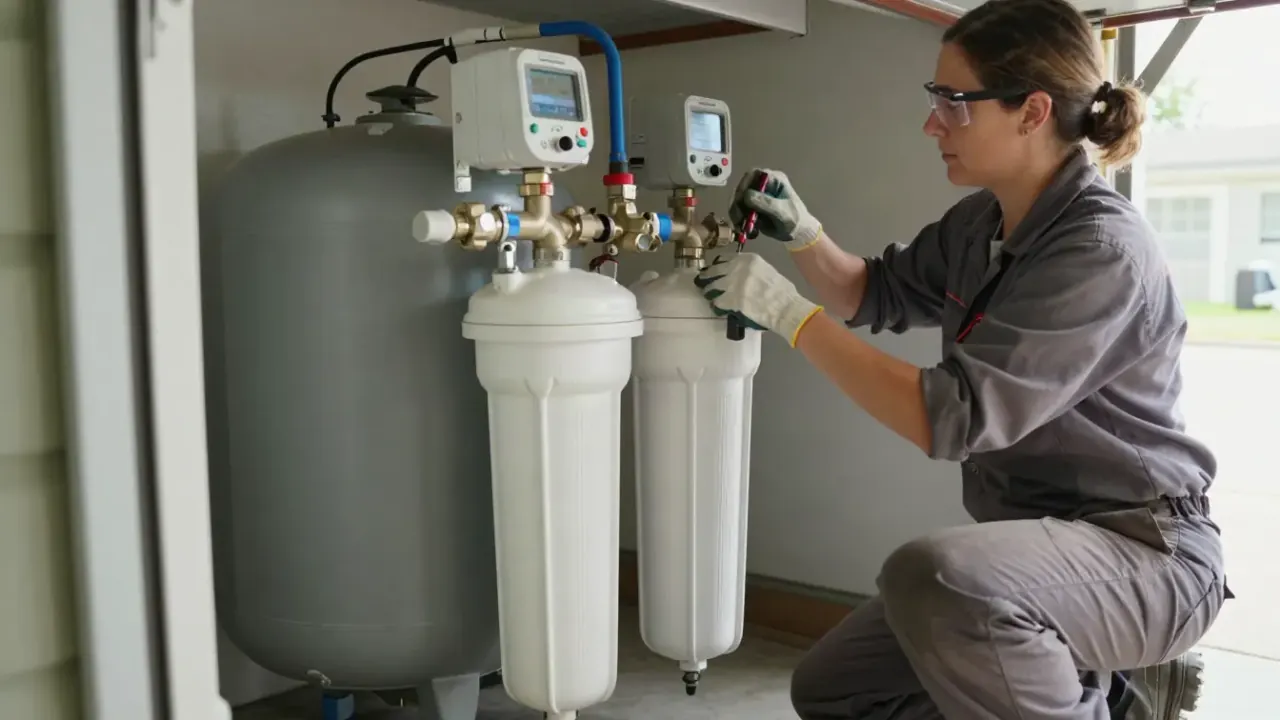
We pull a cold-water sample at your hose bib and run a water hardness test kit plus a TDS meter to get grains per gallon and total dissolved solids. We also check static water pressure and look for sediment or chlorine issues that would change the recommendation. This takes about 20 minutes and tells us whether a salt-free unit is the right call or whether you need something else.
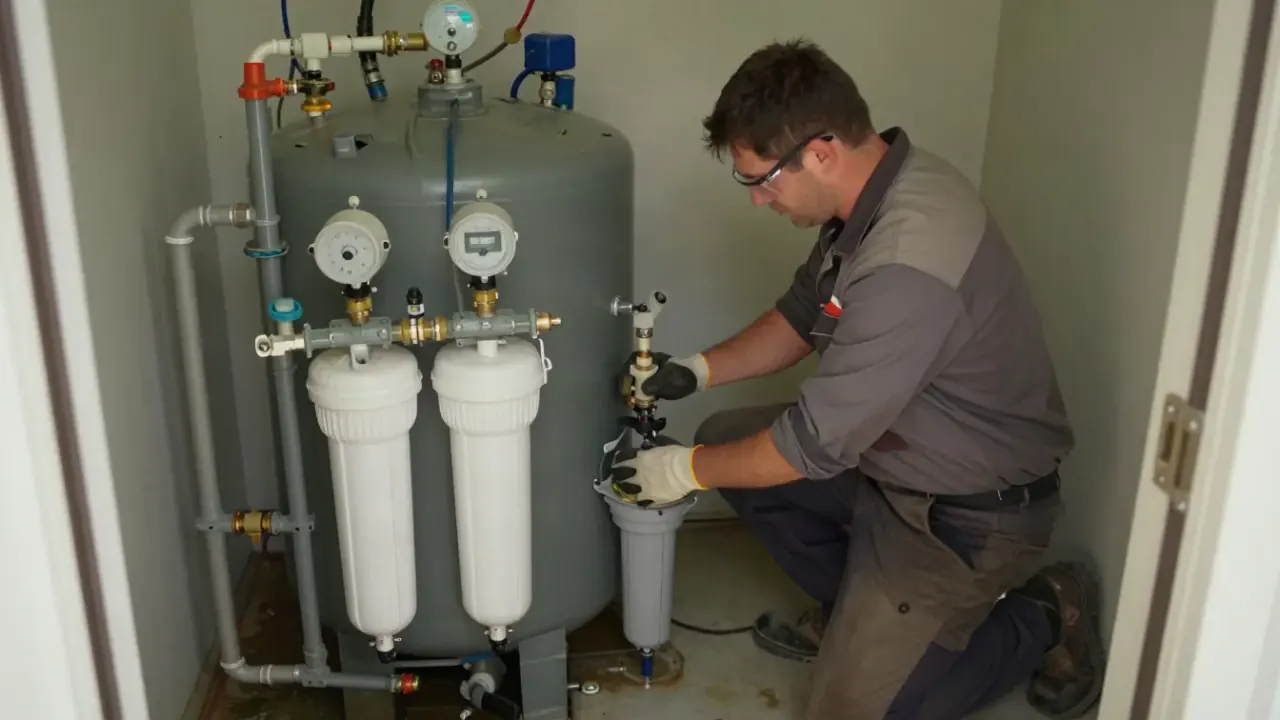
Based on your hardness number, household size, and fixture count, we spec the media tank and control head. A family of four at 14 grains gets a different tank than a couple at 9 grains. We walk you through the options, including Fleck, Clack, and Autotrol control heads, and explain what each one does for your setup.
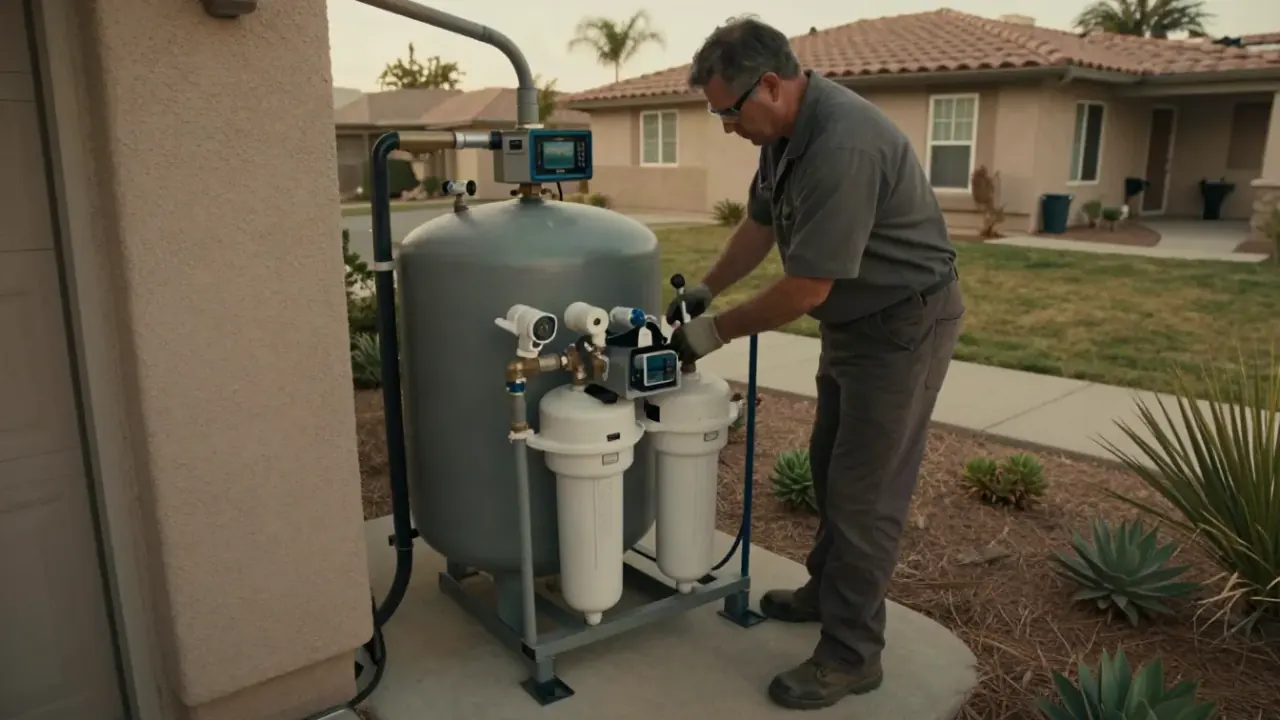
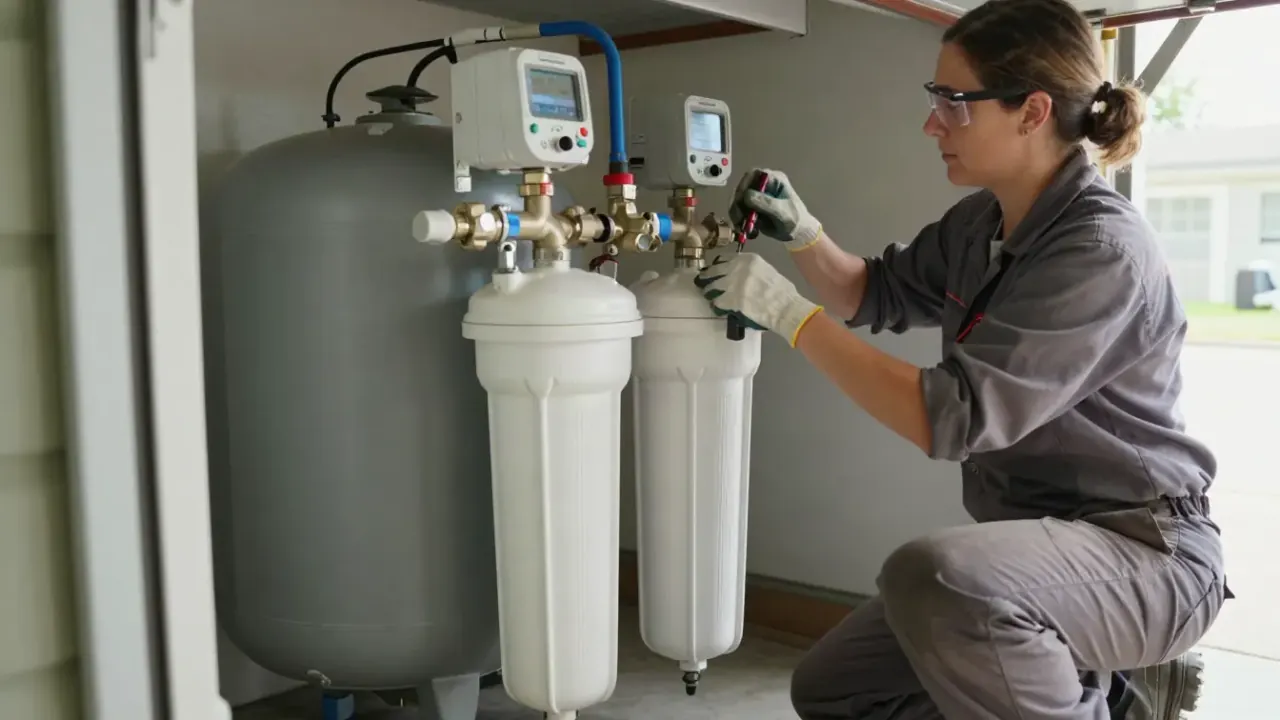
We shut off the main, cut into the cold line at the point of entry, and install the tank, bypass valve, and sediment filter. A tubing cutter and pipe wrench keep the work clean, and we sweat copper with a soldering torch where the existing plumbing calls for it. Most installs take three to four hours, and we protect the floor while we work.
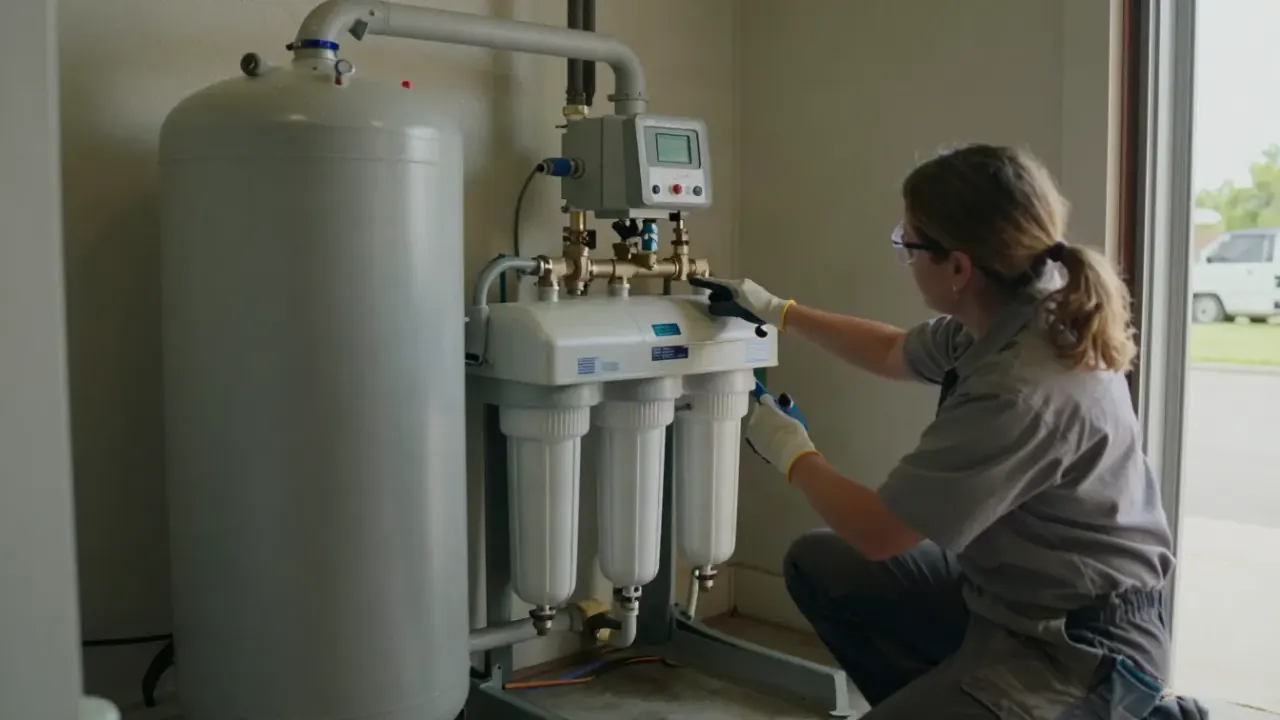
After the connections are pressure-tested, we flush the tank per the manufacturer's spec, usually 10 to 15 minutes, then recheck hardness at the tap. You get a walkthrough of the bypass valve, the filter change schedule, and what normal looks like. If anything reads off, we adjust before we pack up.
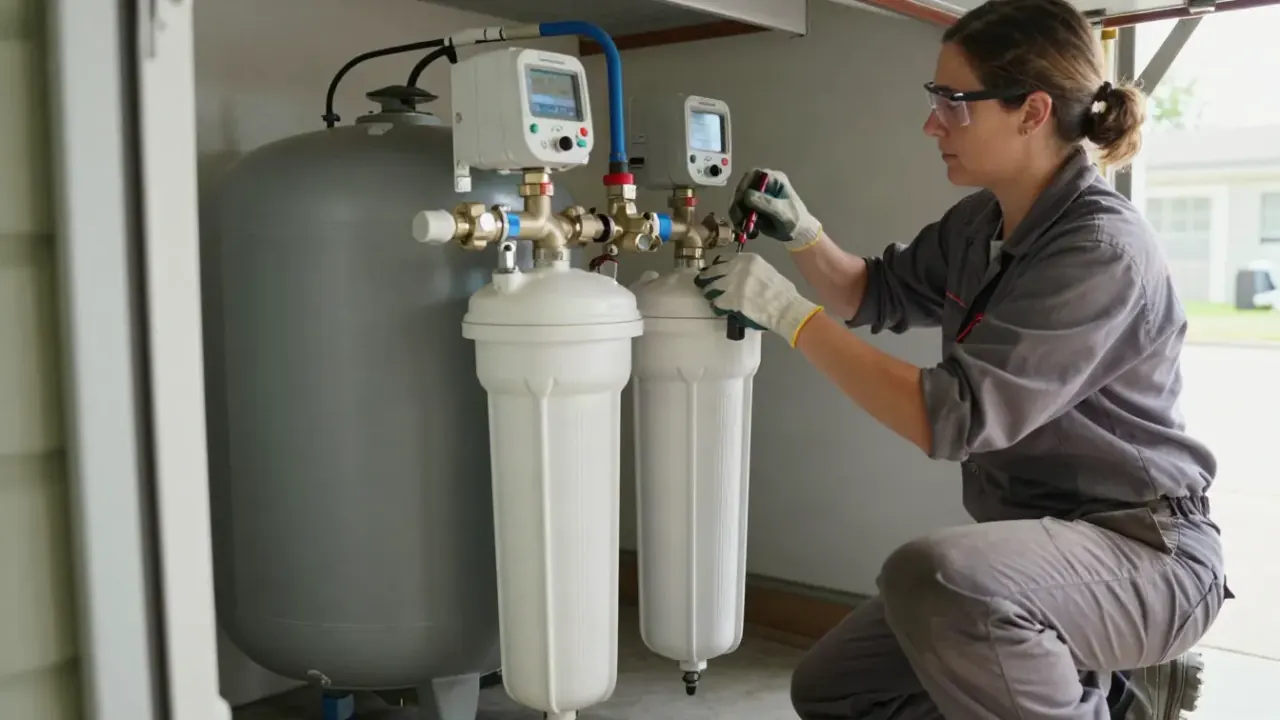
We call you two to three weeks out to confirm the water feels right and no leaks have shown up. If you want, we come back at no charge to retest hardness and recheck the fittings. That follow-up is when most customers tell us the shower glass has already stopped spotting.
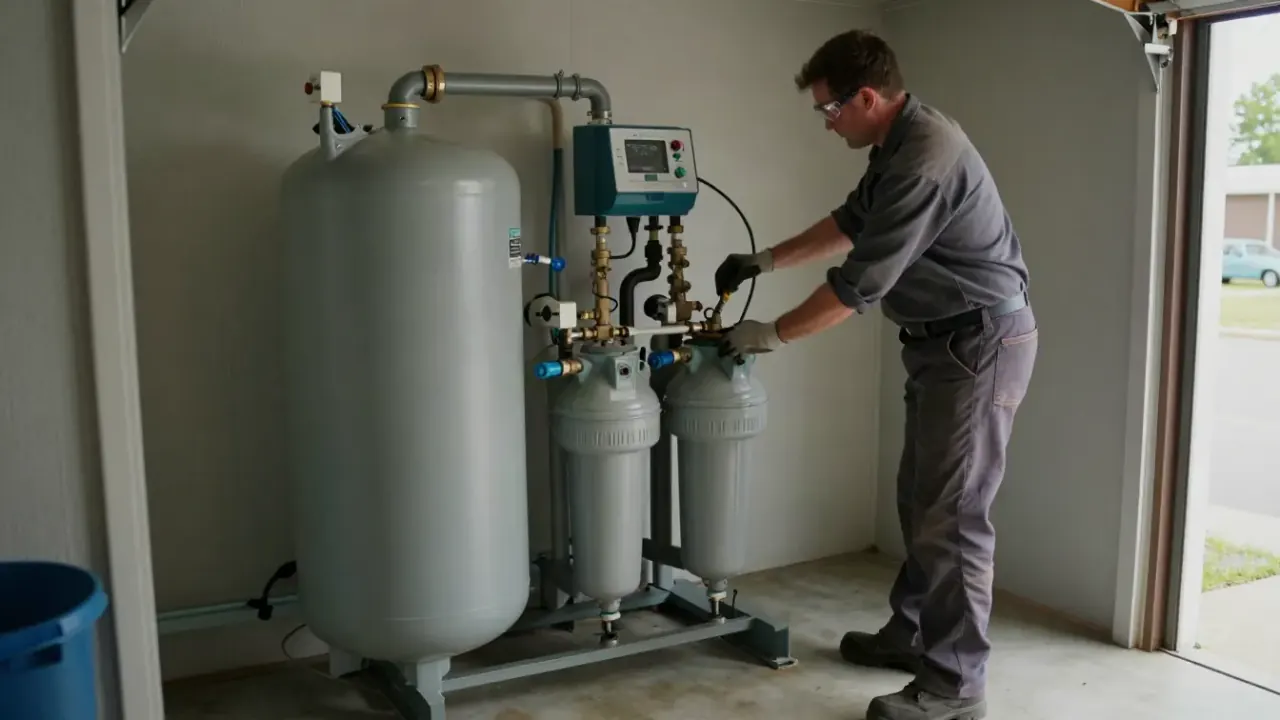
Measures grains per gallon at your tap so we size the tank correctly. We test before and after install to prove the system is working.
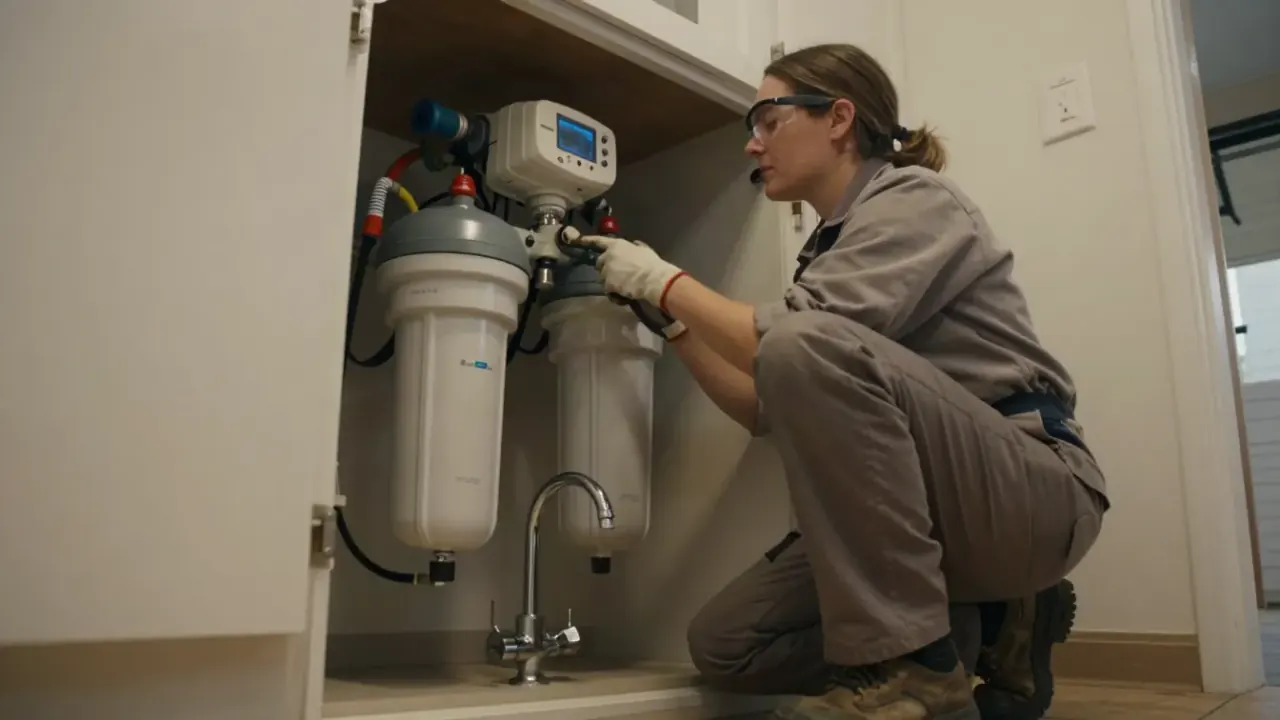
Reads total dissolved solids to flag issues the hardness test misses. High TDS often points to a need for reverse osmosis on drinking water.
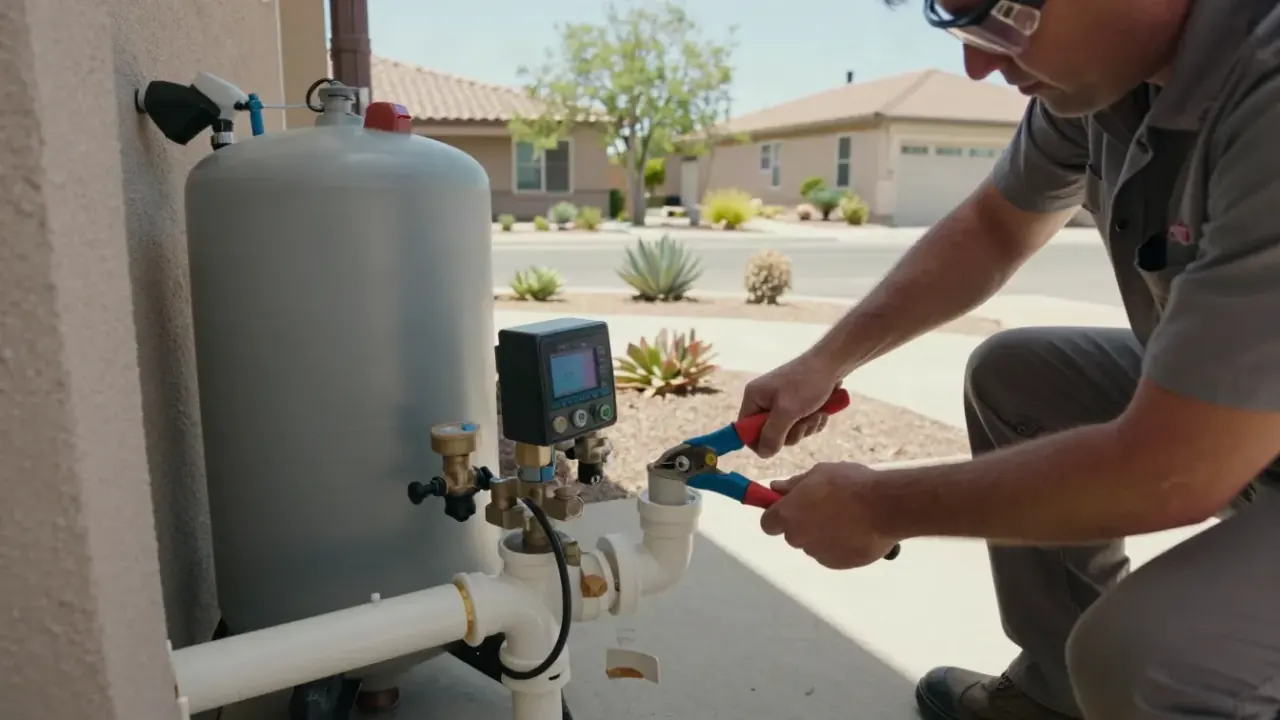
Used to cut into the cold line cleanly and make tight connections at the tank and bypass valve. Clean cuts mean fewer leaks down the road.
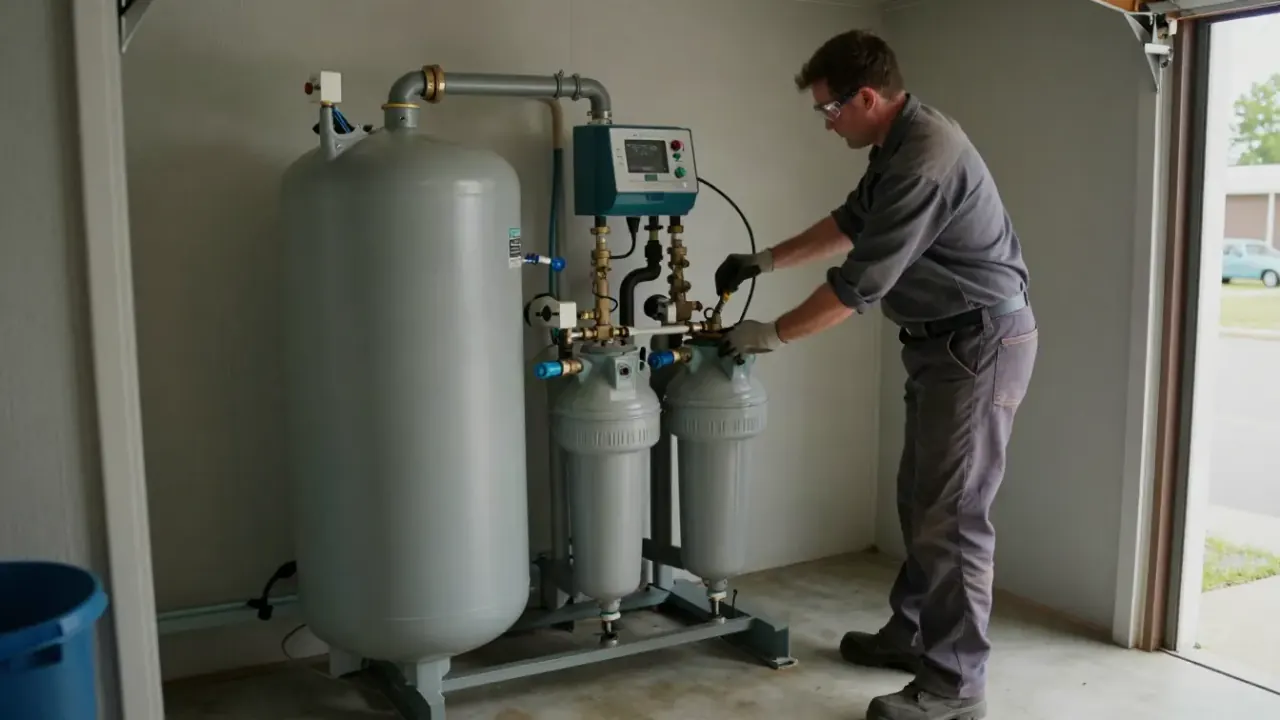
Sweats copper joints where the existing plumbing is copper. We match the material already in your home instead of forcing a adapter.
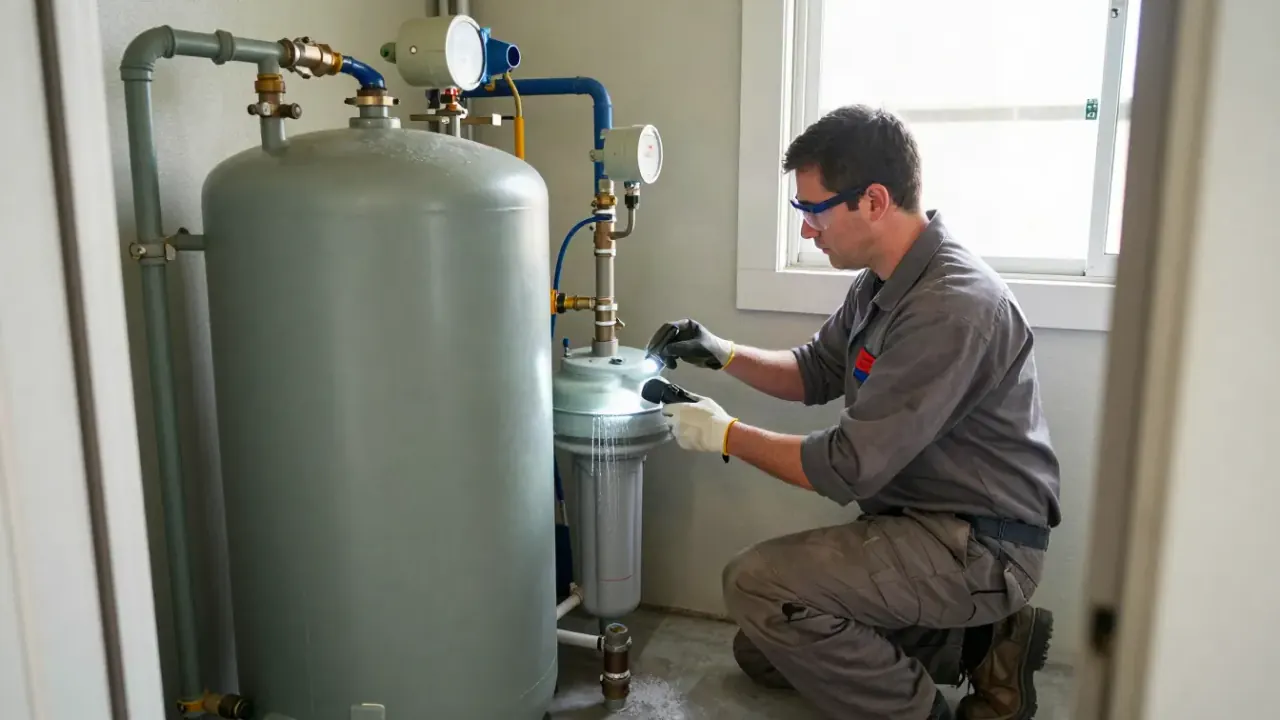
Lets you isolate the system for service or irrigation without shutting off the whole house. Standard on every install we do.
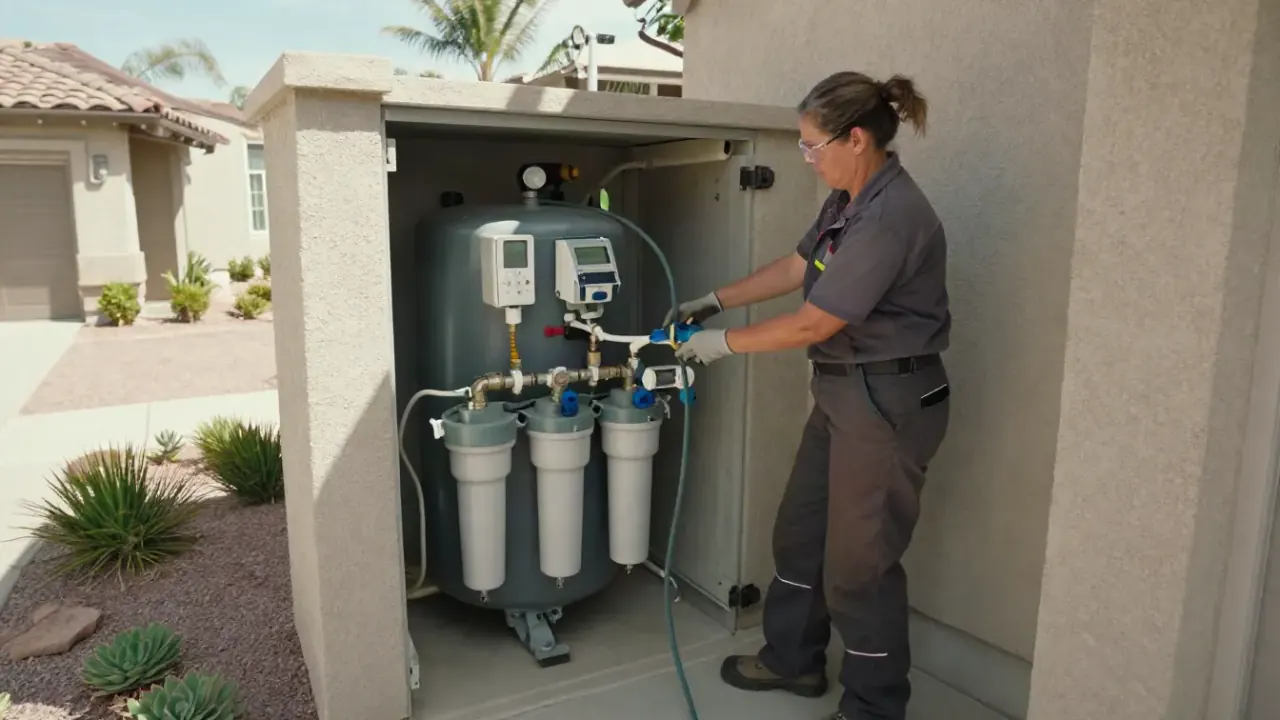
Catches grit and debris ahead of the media tank so the conditioning media lasts longer. We size the micron rating to your water.
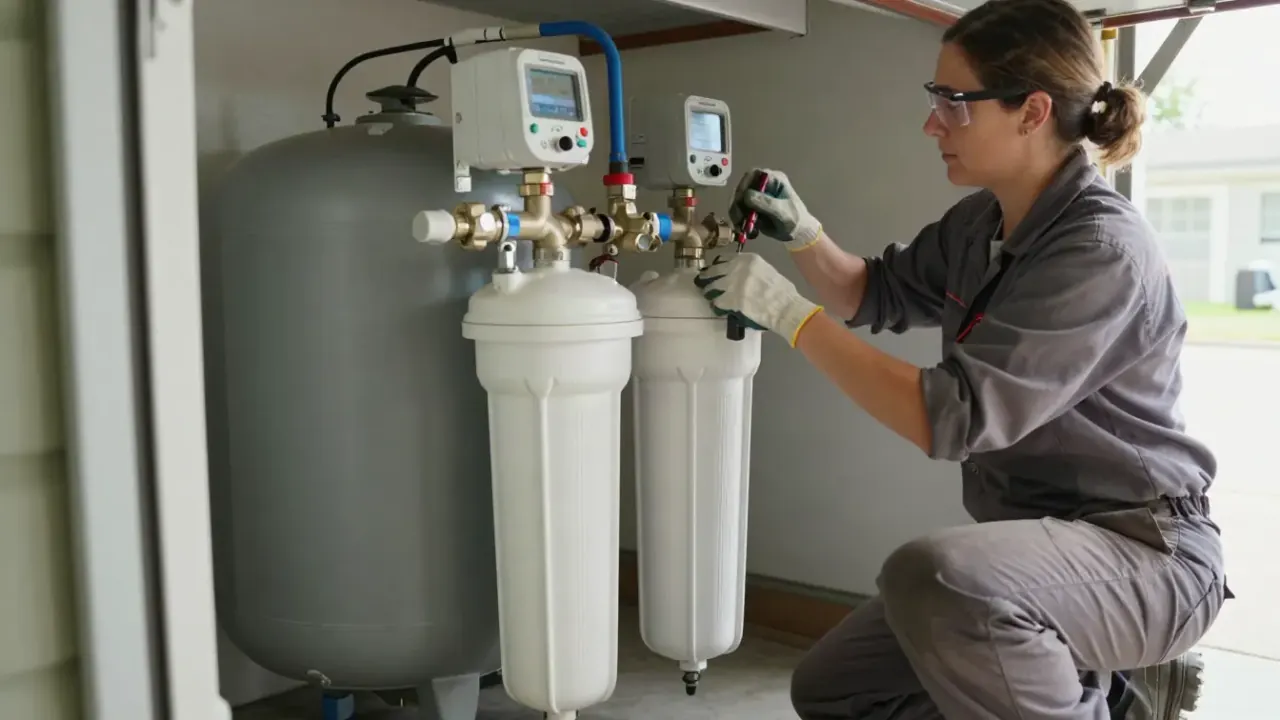
This is the standard for residential cation exchange and conditioning equipment. We follow it on every system we install, which means the tank, media, and control head meet tested performance criteria rather than marketing claims.
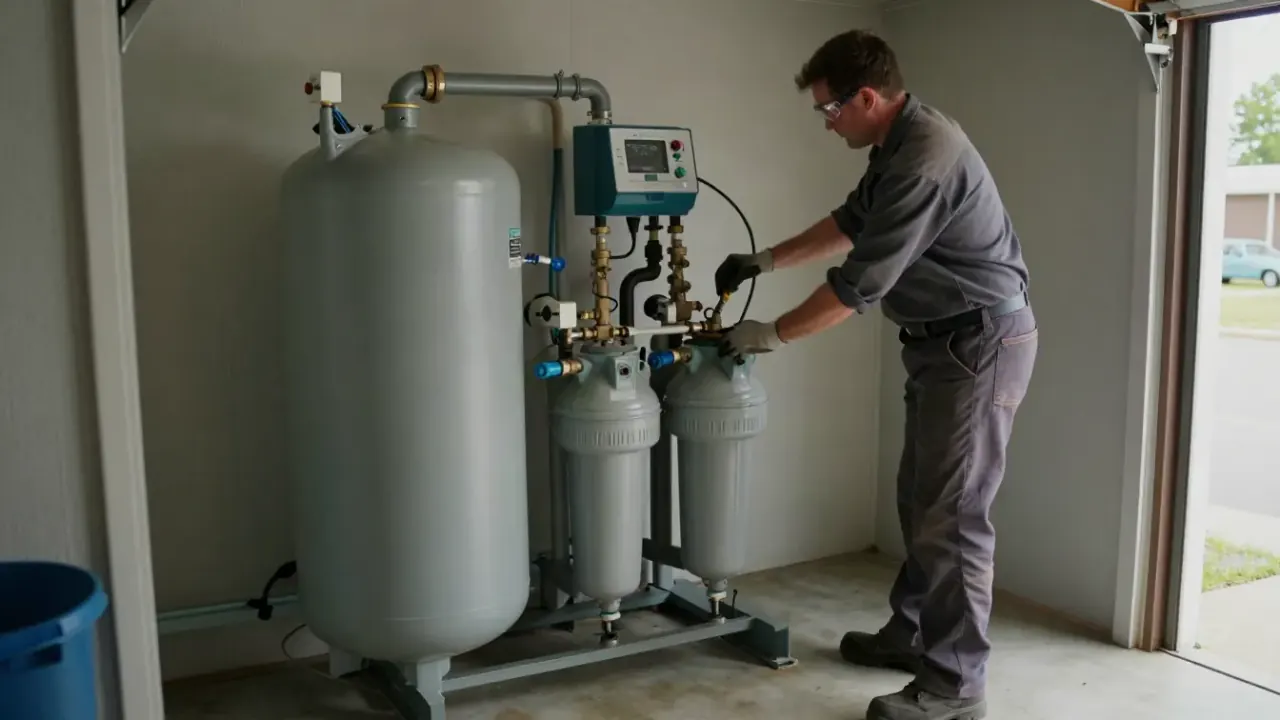
We specify equipment that carries WQA Gold Seal where available. That third-party testing confirms the unit performs as rated for capacity and pressure loss, which matters when you are comparing brands.
We install a salt-free tank that needs no salt, no brine tank, and no regeneration cycle. We test your hardness first to confirm the media will handle your numbers, then set the bypass valve so you can still irrigate with untreated water. You stop buying roughly 300 pounds of salt a year and stop cleaning brine tank sludge. Annual service is a short visit with nothing to refill.
We run a hardness test, size the tank to your grains per gallon, and install at the point of entry. If sediment or chlorine is also an issue, we add a sediment filter or carbon filter ahead of the tank. Spotting slows within two to three weeks and the crust stops rebuilding. Glass and chrome stay cleaner with normal wiping instead of heavy scrubbing.
Salt-free conditioning has no regeneration cycle, so no backwash water goes to the drain. We install the tank and bypass valve and confirm there is no discharge line needed. You get scale control without the water waste of a regenerating softener, which fits homes on smaller lots and anyone tracking monthly usage.
We explain the difference between salt-free conditioning and ion exchange before you buy. If you want true hardness removal, we quote a traditional softener instead. If scale control is the goal, salt-free is the fit. You end up with the system that matches your actual goal, not the one that is easiest to sell. We put the comparison in writing before any work starts.
Diamond Bar gets its water from a blend of imported supplies in Los Angeles County, and that blend shifts hardness through the year. Summer demand pulls more from sources that run harder, while winter blends can read lower. That is why we test on install day instead of trusting a citywide average. Homes here are mostly slab-on-grade with the main line entering through the garage or a side yard, so the install point is usually straightforward. We watch for older copper that needs a soldering torch and for galvanized sections that should be replaced while we are in there. If you have been looking for salt-free water conditioning cost Diamond Bar numbers, the honest answer is that tank size and plumbing condition drive the price more than the brand. We also see a lot of homes in 91789 and 91765 with existing softeners that are limping along, and we can swap those to salt-free in a single visit.
A Windwood homeowner was wiping down shower glass daily and still seeing white spots within hours. The water tested at 15 grains per gallon, and the glass had etched in two spots that no cleaner would remove.
We installed a salt-free tank sized for 15 grains and a family of four. Three weeks later the glass stayed clear with a normal squeegee, and the etched spots stopped getting worse. Hardness at the tap read the same, but the spotting behavior changed.
Wipe glass after showers as usual and check the sediment filter every six months. We retest hardness at the annual visit to confirm the media is still performing.
A Sycamore Canyon homeowner heard popping from the water heater every morning and assumed the tank was failing. The unit was only six years old, but scale on the element was trapping water and causing the noise.
We installed salt-free conditioning at the point of entry and flushed the heater. Within a month the popping had mostly stopped, and the heater was running shorter cycles. The homeowner avoided a premature tank replacement.
Flush the water heater annually and keep the conditioning system on the bypass valve only when servicing. We check the element scale at the yearly visit.
A Diamond Point property manager was replacing faucet cartridges and dishwasher racks every year across three rentals. The scale was so heavy that aerators clogged within months of replacement.
We tested each unit, found hardness ranging from 12 to 17 grains, and installed salt-free conditioners in all three. A year later, no cartridges had been replaced and the tenants stopped reporting low flow at the kitchen faucet.
Tenants check the aerators monthly and report any flow change. We service all three systems on the same annual visit to keep scheduling simple.
Hard water damage shows up slowly, then all at once. These are the issues we see most in Diamond Bar homes and how a properly sized system addresses them.
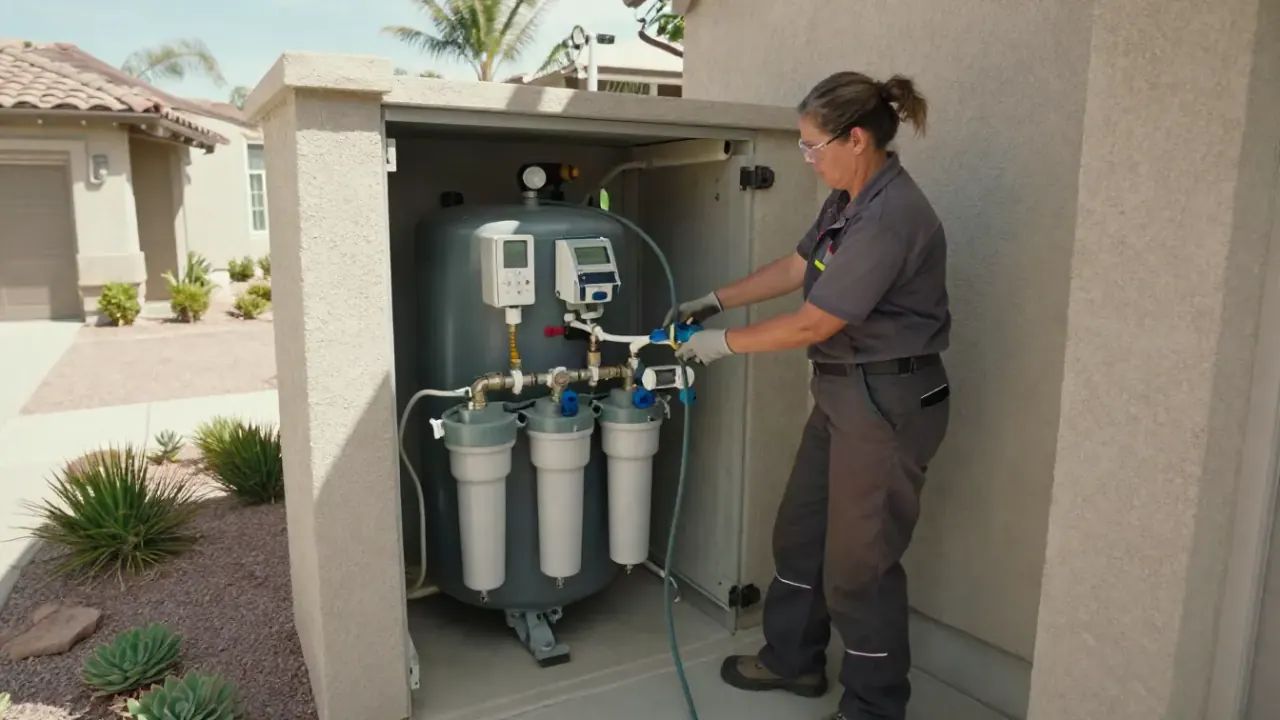
A salt-free water conditioner Diamond Bar CA unit changes how hardness minerals behave so they rinse away instead of bonding. Most homeowners see the spotting slow within two to three weeks and stop altogether once the system is dialed in. Mineral crust bonds to surfaces and etches glass over time. Once it hardens, scrubbing does not remove it and you are looking at replacement fixtures or a full shower door swap.
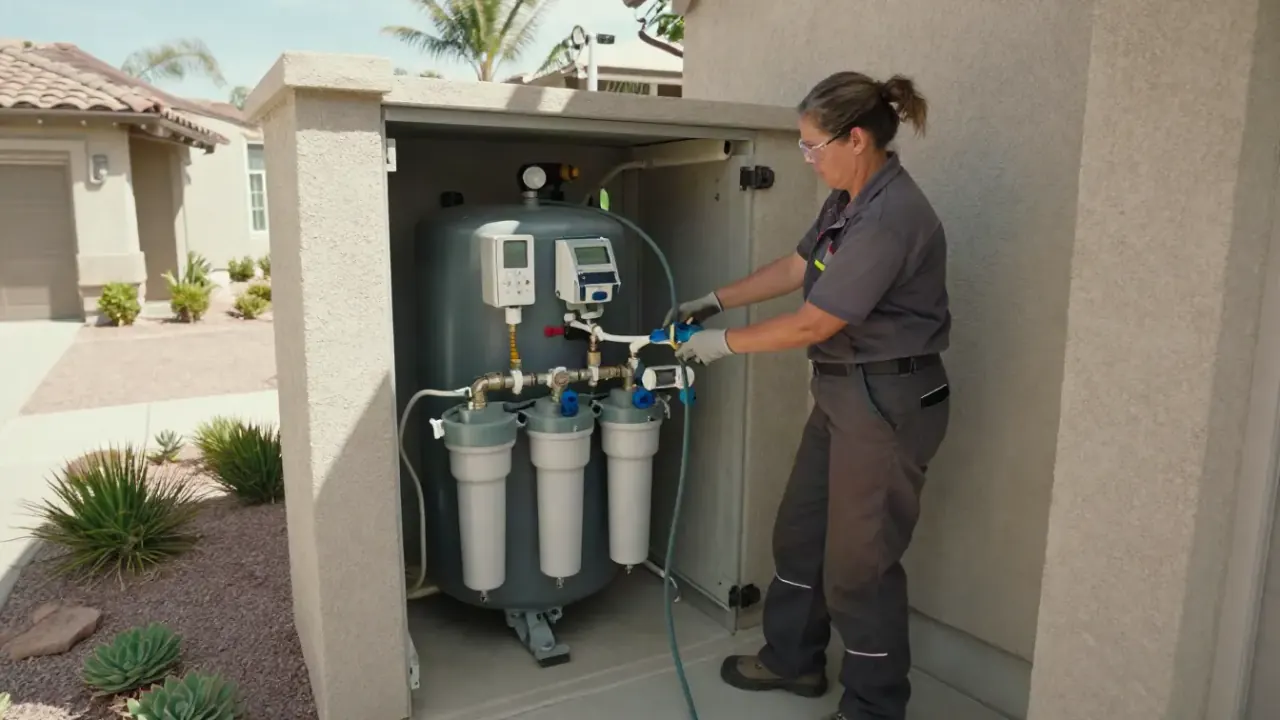
Conditioning slows new scale from forming and helps existing deposits release over time. We size the tank to your grains per gallon so the media has enough contact time to actually do the job. Mineral deposits narrow the inside of supply lines, which drops pressure at fixtures and forces pumps and heaters to work harder. Left alone, it can mean repiping sections of the home.
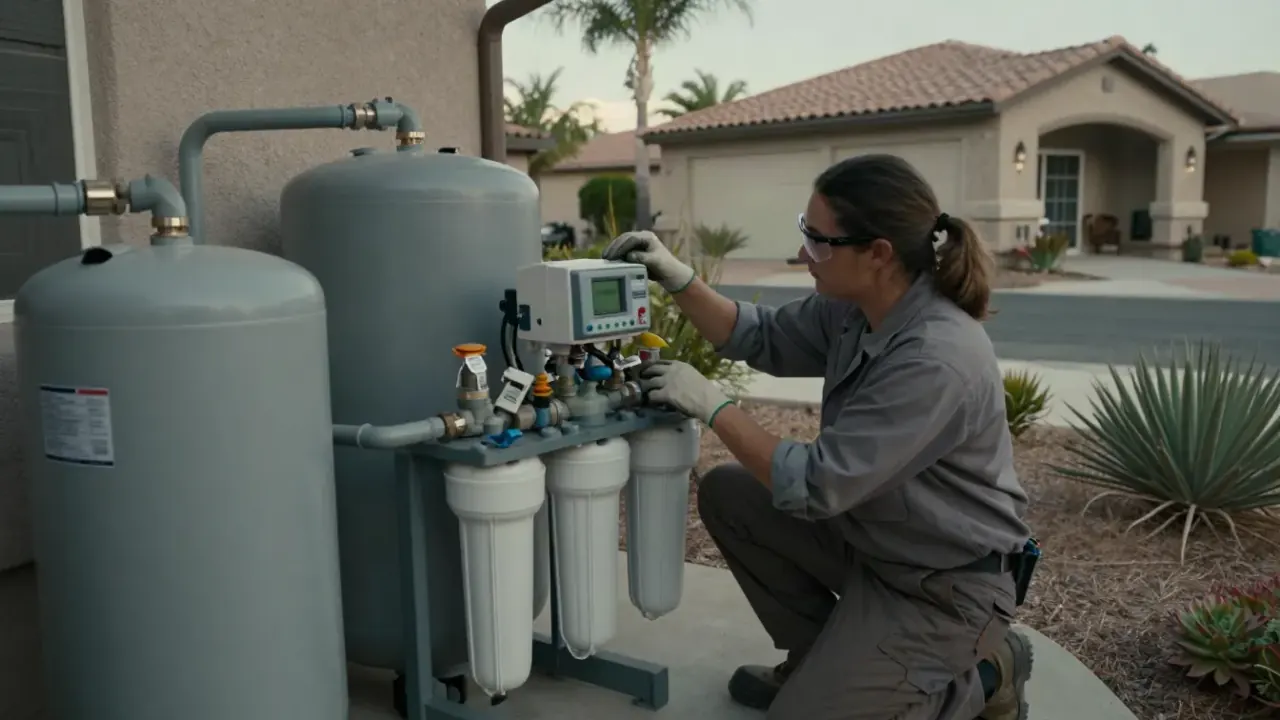
Salt-free systems have no brine tank and no salt to buy. If you are switching from a salt-based unit, we pull the old resin tank and brine tank, cap the lines, and haul the equipment away. Traditional softeners burn through 40-pound bags and collect sludge in the brine tank that stops regeneration. You end up hauling salt and cleaning a tank every few months.
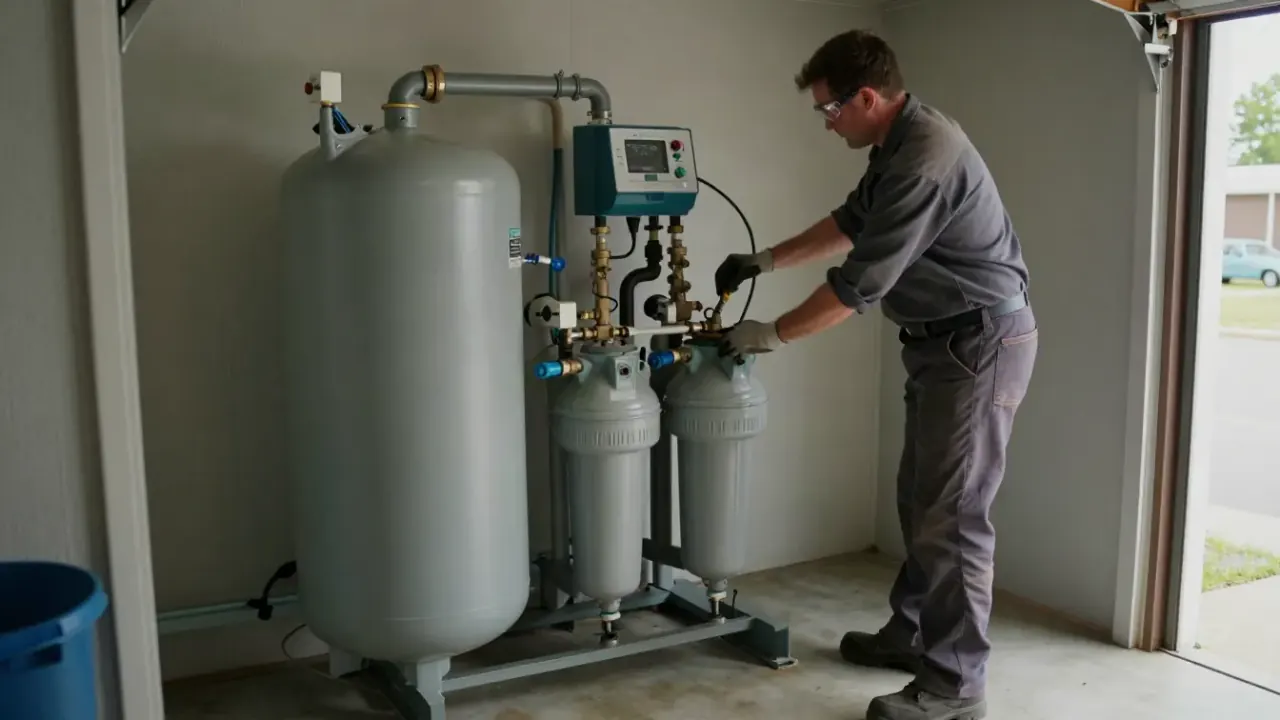
We install conditioning at the point of entry so the water feeding the heater is treated. Combined with an annual flush, that slows element scale and helps the tank last closer to its rated life. Scale on the heating element traps water underneath and causes the popping sound. It also insulates the element, so the heater runs longer and dies sooner than it should.
You stop buying 40-pound bags of water softener salt and stop cleaning brine tank sludge. There is no potassium chloride to restock and no salty discharge going to the drain. For households in 91789 and 91765 that were refilling a brine tank every six to eight weeks, that is roughly 300 pounds of salt a year you no longer handle.
Hard water spots on shower glass and faucet aerators come from minerals bonding to surfaces. A no-salt water conditioner Diamond Bar CA unit changes that bonding behavior, so scale releases instead of baking on. Homeowners typically notice cleaner glass within two to three weeks and less crust on the water heater element over the first heating cycle.
Scale buildup in pipes narrows flow and forces your water heater to work harder. Conditioning slows that accumulation, which helps hold water pressure steady and extends the life of the tank, dishwasher, and washing machine. On a 50-gallon heater, even a sixteenth of an inch of scale can raise energy use noticeably over a year.
There is no regeneration cycle, so no backwash water is wasted and no electricity is burned recharging a control valve. Annual service is usually just a media check and a bypass valve inspection. That makes salt-free water conditioning Diamond Bar California a fit for homes on tighter lots or anyone watching water use.
Typical 2026 pricing in Diamond Bar for an installed salt-free system runs $1,800 to $3,400. That covers the media tank, control head, bypass valve, sediment filter, and labor. The low end fits a two-person home at moderate hardness with an accessible main line. The high end covers larger households at 16-plus grains, longer pipe runs, or plumbing that needs reworking before the tank goes in. There is no salt to buy afterward, so the ongoing cost is mostly an annual service visit. If you want a firm number, we test your water first and quote from the actual readings.
What your estimate is based on
$1,800 - $3,400 depending on tank size, control head, and plumbing condition You pay once for the equipment and install, then skip the salt bags and brine tank upkeep for the life of the media. For most households, the salt savings alone cover a chunk of the difference over several years, and the fixtures and water heater last longer.
Clear records you can keep and share.
Grains per gallon and TDS at your tap
Equipment, labor, and add-ons itemized
Hardness check two to three weeks later
Salt-free conditioning stops scale from bonding to pipes and fixtures, but it does not remove hardness minerals. A traditional softener uses ion exchange resin to pull calcium and magnesium out of the water entirely.
It changes how hardness minerals behave so they rinse away instead of sticking. Your water keeps its minerals and does not feel slippery.
It removes hardness minerals through ion exchange and needs salt and a brine tank to regenerate. Water feels slippery and tests at near zero grains.
Choose salt-free if scale control is the goal and you want no salt to handle. Choose a softener if you want hardness removed entirely and do not mind the upkeep.
Outside these areas? Call and ask about your street. (909) 415-2296
A salt-free water conditioner in Diamond Bar CA is a tank-based system that stops hardness minerals from sticking to pipes and fixtures without using salt or ion exchange resin. Water keeps its calcium and magnesium, but the media changes how those minerals behave so they rinse away instead of forming scale. There is no brine tank, no regeneration cycle, and no salty discharge. It is a scale-control device, not a true softener, and for most Diamond Bar homes that distinction matters less than the result on your fixtures.
Yes, for scale control they do. Diamond Bar water runs roughly 10 to 18 grains per gallon, and salt-free media performs well in that range when the tank is sized correctly. What they do not do is remove hardness minerals the way an ion exchange system does, so water will not feel slippery the way softened water does. If your goal is stopping white crust on glass, faucets, and heater elements, a properly sized salt-free water softener Diamond Bar unit handles it. If you want zero hardness, we will tell you that up front.
Most installed salt-free systems in Diamond Bar run $1,800 to $3,400 in 2026, depending on tank size, control head, and how much plumbing has to be reworked. A basic single-tank setup for a two-person home sits at the low end. Larger homes with 16-plus grains and a long run from the main land higher. That price covers the tank, bypass valve, sediment filter, and labor. Annual upkeep is minimal since there is no salt to buy and no brine tank to clean.
A standard install takes three to four hours, and we usually finish in one visit. That includes cutting into the cold line, mounting the tank, installing the bypass valve and sediment filter, pressure-testing, and flushing the media for 10 to 15 minutes. If your main line needs rerouting or the existing shutoff is seized, add an hour or two. We schedule a follow-up check two to three weeks later to confirm hardness and look for leaks, and that visit is included.
We test your water, size the system, and install it in one visit. Most jobs are scheduled within three to five business days, and the follow-up check is included. Call (909) 415-2296 and we will tell you what your hardness number means.
Call (909) 415-2296 or email us and we will get back to you the same business day. We answer questions about hardness readings, salt use, and system sizing before you book anything. Serving Diamond Bar and Los Angeles County.